By Ignacio Urbasos Arbeloa
On 24 February 2022, Russia’s invasion of Ukraine permanently reshaped the geopolitics of natural gas. Moscow’s use of gas as a geopolitical weapon, and the ensuing Western response through sanctions and asset seizures, dismantled the main commercial flow of this commodity and triggered an unprecedented reconfiguration of the global gas market. The confrontation between Russia and the West has unfolded not only on the battlefield but also in the geoeconomic domain, where energy has become a central arena of competition.[1] The EU and the US have sought to weaken the Russian economy by imposing sanctions and seizing assets belonging to key Russian companies and entities, while Moscow has retaliated by expropriating Western assets under its jurisdiction and developing mechanisms to mitigate the impact of those sanctions.
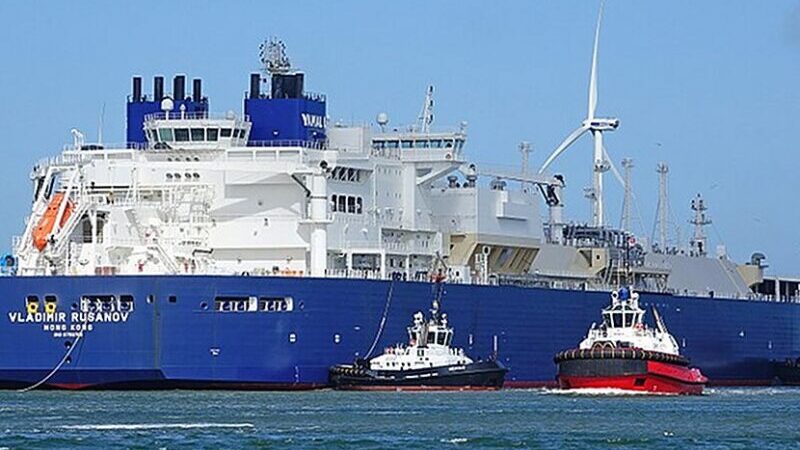
All these developments have fragmented a gas market that, since the 1990s, had experienced a rapid process of convergence in trade and financial flows, technology, regulation and investment. In particular, the potential emergence of a dark fleet of Russian and Chinese liquefied natural gas (LNG) carriers as an indirect consequence of Western sanctions would mark a sharp departure from decades in which the natural gas market, unlike the oil market, operated under strict standards of safety, compliance and transparency. Should this trend materialise, it would confirm the broader process of deglobalisation that the energy sector, like the global economy, is undergoing amid the emergence of a new international order and the systematic weaponisation of interdependence that is taking place as part of great-power rivalry. This paper examines how Russia is establishing an LNG dark fleet in response to Western sanctions and considers its systemic implications.
1. What is the dark fleet?
Since the introduction of Western sanctions on Russia’s energy exports, the terms ‘shadow’ and ‘dark fleet’[2] have gained prominence to describe the growing number of vessels used to evade trade restrictions. The phenomenon itself is not new: as Western governments imposed economic sanctions on Iran, North Korea and Venezuela, these fleets gradually became an established feature of global maritime trade. Since Russia’s 2022 invasion of Ukraine, however, their expansion has accelerated dramatically. Following the introduction of the G7 price cap, around 1,000 crude-oil tankers have joined the dark fleet to transport Russian barrels sold above the US$60 threshold. According to S&P Global, as of 2025, the shadow fleet carrying Russian oil now consists of around 978 tankers, accounting for 18.5% of the world’s entire tanker tonnage.
To trade sanctioned commodities, these countries have established fleets of ships that operate without standard industry insurance, maintain opaque ownership structures, frequently change their names and flag registrations (flag hopping), and generally function outside established maritime regulations. The International Maritime Organisation (IMO) issued the first formal, though non-binding, definition in December 2023, identifying shadow or dark-fleet vessels as those engaged in illegal operations to circumvent sanctions, avoid inspections or conceal their identity through practices such as disabling tracking systems. The Kyiv School of Economics offers a broader definition, closely linked to the current war in Ukraine, which includes all vessels lacking Western insurance and owned by non-EU or non-G7 entities.
A useful middle ground definition would describe the dark fleet as consisting of vessels that: (a) trade partially or fully in sanctioned commodities; (b) are owned by relatively unknown companies acting as shell entities; (c) operate with ambiguous or non-transparent insurance coverage; and (d) engage in deceptive and risky navigation practices such as switching off transponders.
Beyond its clear geopolitical implications, primarily related to sanctions evasion, the most significant risk posed by the shadow fleet lies in its lack of proper insurance and transparent ownership, as well as the typically poor maintenance and advanced age of the vessels involved. In the event of an accident, the affected country would face major obstacles in holding the actual owner or insurer liable and in obtaining immediate compensation, since identifying the ultimate beneficial owner is often impossible. Similarly, pursuing responsibility through the flag State would prove ineffective, as the vessels are usually registered under front countries such as Palau, Cook Islands, Comoros, Gabon or Cameroon and within a network of shell companies purpose-built to hide the real owner. Given their obscure ownership and limited transparency, shadow fleet vessels can be repurposed to smuggle weapons, drugs or restricted dual-use technology. They also present a vector for hybrid warfare and may enable covert actions against critical infrastructure such as undersea cables or pipelines.
2. Why was there no LNG dark fleet?
Unlike the crude oil market, where smuggling and the transport of sanctioned cargoes on vessels with opaque ownership or no insurance are long-standing practices, the LNG sector had never faced a comparable situation. LNG carriers are far more expensive and technically complex, operated by a small number of specialised multinational companies and port terminals. The market itself is much smaller, with about 7,500 oil tankers worldwide but only around 770 LNG carriers, built and serviced in a few highly specialised shipyards.
Despite its global scope, the LNG industry remains tightly concentrated and dependent on two major chokepoints. The first is technological: LNG shipbuilding, liquefaction engineering, and maintenance depend on Western and East Asian expertise, which cannot easily be replicated elsewhere. The second is financial: most shipowners, insurers and trading firms are embedded in Western-controlled networks of payment systems, SWIFT messaging and compliance-based banking. As Henry Farrell and Abraham Newman argue, globalisation has produced dense systems of interdependence that grant Western powers the capacity to weaponise these infrastructures as instruments of coercion. Losing access to either chokepoint (technological or financial) would effectively exclude a company from the global LNG trade, which explains why sanction evasion was long seen as unviable in this sector. This helps explain why Iran, despite its long experience in sanctions evasion and oil smuggling, has been unable to develop successful LNG export projects, even though it shares the vast South Pars/North Dome gas field with Qatar, from which QatarEnergies exports around 20% of global LNG.
3. Why is Russia setting up an LNG dark fleet?
When the US and the EU decided in 2023 to sanction the Arctic LNG 2 project, along with the Portovaya and Vysotsk LNG terminals, the measure initially appeared highly effective. Few operators in the sector were willing to risk secondary sanctions that could exclude them from the international financial system and global operations. For several months, construction at Arctic LNG 2 came to a complete halt after the international engineering consortium responsible for the project withdrew. Only Russian companies, with technical assistance from Chinese engineers, remained on site, managing to complete the first of the three liquefaction trains and reportedly nearing completion of the second.
Complicating the situation for the Russian project, G7 countries decided to sanction eight planned icebreaking LNG tankers under construction, specifically designed for Arctic LNG 2. Three were completed and anchored in South Korea, and five were awaiting completion at the Zvezda shipyard in Russia. So far, sanctions have completely prevented the project from receiving the Korean vessels, while the lack of Japanese and Western engineering know-how has stalled the construction of the remaining five at Zvezda. While in 2024 Novatek managed to finish the construction of the first train of Arctic LNG 2 and the facility was ready to export, European and Chinese contractual off-takers of the project had to declare force majeure and suspend LNG purchases due to sanctions and the absence of vessels to move the cargo.
In the case of the smaller Portovaya and Vysotsk LNG terminals, both already in operation when targeted by sanctions, they suspended all international operations and decided to serve only domestic consumers such as the Russian Kaliningrad enclave. New rounds of sanctions also included some LNG tankers operating for the non-sanctioned Russian LNG plant at Yamal. Once these vessels were blacklisted, international customers refused to deal with them for fear of secondary sanctions, and European shipyards declined to provide repair services or spare parts, forcing them to undergo prolonged maintenance in Chinese or Russian shipyards with limited experience in handling such specialised vessels. For months, sanctioned vessels such as Sovcomflot’s flagship icebreaker Christophe de Margerie remained idle. At that point, sanctions appeared to be a complete success. Although Arctic LNG 2 managed to produce eight cargoes during the summer of 2024, it was forced to shut down in October after failing to find international buyers and as ice began its seasonal buildup around the facility.
After losing access to international markets, sanctioned LNG tankers began testing the limits of the sanction’s regime again in June 2025. They loaded cargoes at Arctic LNG 2 and offloaded them at Russia’s floating LNG storage units, Koryak in Asia and Saam in Europe, both also under US sanctions. During these operations, the vessels employed deceptive shipping practices in a failed attempt to conceal their activities. The world was watching, and the widespread availability of satellite imagery has completely transformed the ability of large vessels to smuggle oil and gas, rendering these practices largely ineffective.
Figure 1. Satellite image from Arctic LNG 2 project in June 2023, a few months before the imposition of US and EU sanctions on the project
Figure 2. Satellite image from Arctic LNG 2 project in June 2025, two years before the imposition of US and EU sanctions on the project
However, the events of the summer of 2025 revealed the limitations of Western sanctions. In late August, the Chinese terminal in Beihai received its first LNG cargo from Arctic LNG 2. This move has sparked significant speculation regarding the political motivations behind it, especially as Arctic LNG 2 began shipping LNG to China shortly after the Trump-Putin summit in Alaska and only days before the Putin-Xi meeting in Beijing. The operation was repeated in the following weeks with vessels sanctioned by both the US and the EU, marking a turning point in the effectiveness of the sanctions regime: it was the first time an LNG project formally designated as a US-sanctioned entity succeeded in carrying out commercial operations. LNG flows from Arctic LNG 2 to Beihai continued, even after the UK imposed sanctions on the terminal, while the EU and US chose not to act. The concentration of these imports at the Beihai terminal, a relatively small import facility, appears to be a strategic move by China to contain the risks of secondary sanctions by using smaller, predominantly domestic entities. In this case, the operator of the terminal, the state-owned China Oil & Gas Pipeline Network, owns only assets in China, with limited exposure to the US dollar-based financial system. This strategy mirrors the role of Shandong’s independent ‘teapot’ refineries in handling Iranian and Venezuelan crude imports that have most of their business operations within China. The incentive for these refineries lies in the discounted prices offered by sanctioned entities compared with international benchmarks. The same logic applies in the case of Arctic LNG 2, whose first cargoes are reportedly being offered at discounts of up to 40%.
So far, there have been more than 10 deliveries from sanctioned LNG tankers from Arctic LNG 2 to the Chinese terminal at Beihai. These vessels meet most of the criteria typically associated with the shadow fleet: (a) they transport sanctioned cargo; (b) they are owned by relatively unknown or recently created companies functioning as shell entities; (c) their insurance status is ambiguous; and (d) they have switched off their transponders during navigation, engaging in risky manoeuvres such as ship-to-ship transfers.
For example, in August 2024, after loading at Arctic LNG 2, a Russian shadow-fleet LNG carrier, the Pioneer, completed the first known ship-to-ship transfer of sanctioned Russian LNG to a non-sanctioned vessel, the New Energy, near Port Said, Egypt. This risky operation was conducted in international waters to obscure the cargo’s origin, as the Pioneer had switched off her Automatic Identification System (AIS) transponder. In another case, in September 2025, the Arctic Metagaz attempted to enter sea ice without ice-class protection and was ultimately forced to reverse course, highlighting the growing risks taken by shadow-fleet tankers operating in Arctic waters without adequate capabilities. In October 2025 a sanctioned Russian LNG tanker, the Perle, carried out a ship-to-ship transfer off the coast of Malaysia. The Perle, loaded with gas from the sanctioned Portovaya plant, transmitted spoof signals, suggesting a deliberate attempt to conceal the operation. The vessel is managed by a company called Dreamer Shipmanagement, registered in Dubai, which has no proved record of compliance with international standards or insurance requirements.
China has also contributed to the creation of this LNG shadow fleet by transferring vessels to shell entities and using them to move blacklisted Russian cargo from Arctic LNG. A telling example is the LNG carrier CCH Gas, whose registered owner, CCH-1 Shipping Co., lists a Hong Kong address that according to Bloomberg, has been already used by companies seeking to obscure beneficial ownership while trading crude from Iran and Russia.
4. What will be the future of the LNG shadow fleet?
Estimates suggest that Russia would need around 15 LNG carriers with the anticipated start-up of the second production line of Arctic LNG 2, along with a few additional vessels for the Portovaya and Vysotsk terminals, indicating the natural expansion of a Russian LNG shadow fleet in the coming months. This figure, however, remains and will remain far below the roughly 978 crude oil tankers currently operating within the shadow fleet dedicated to transporting sanctioned oil from Russia, Venezuela and Iran.
In the absence of secondary sanctions from the US, for example, targeting China’s Beihai terminal, the Russian LNG shadow fleet is expected to continue expanding in both size and activity. Whether the Trump Administration will tolerate the operations of these vessels in the future remains an open question. The October 2025 round of sanctions on Russia, which targeted Lukoil and Rosneft, deliberately avoided designating the Beihai terminal as a sanctioned entity, signalling either a degree of tolerance towards this sanctioned exchange or a willingness to show good faith towards Beijing amid ongoing trade negotiations. The ability to halt or reverse the activities of this LNG shadow fleet once it becomes fully operational is another major uncertainty, suggesting that current US tolerance could eventually turn into a fait accompli.
While the LNG shadow fleet remains much smaller than its well-established crude-oil counterpart, its significance lies in setting a troubling precedent. It signals a departure from decades of operation in the natural gas market, which, unlike the oil market, adhered to strict standards of safety, compliance and transparency. The contrast is evident in current maritime practices. While crude oil tankers from the shadow fleet continue to sail unimpeded through the Houthi-threatened Gulf of Aden, Western insurers discourage conventional crude and LNG tanker operators from entering these waters. As a result, the operators are forced to re-route around the Cape of Good Hope, incurring higher costs to avoid potential environmental hazards. With the onset of ice along the Northern Sea Route, Novatek has started re-routing its LNG tankers through the Gulf of Aden and the Suez Canal, until now a no-go area for LNG carriers, displaying little concern for the risk of a Houthi attack.
For now, sanctioned LNG capacity is largely confined to Russia’s Arctic LNG 2 project, which is still under construction, and to the smaller Portovaya and Vysotsk terminals. However, if the US and its Western partners move ahead with proposals to extend sanctions to additional LNG export terminal, such as Yamal LNG, as part of the broader geoeconomic confrontation, the size and significance of the LNG shadow fleet could grow considerably. At the same time, as Russia pushes ahead with Arctic LNG 2 relying mostly on domestic and Chinese technology, both countries are steadily assembling an alternative value chain insulated from the West. This will diminish the potential impact of future sanctions.
Conclusions: the symptom of a new gas order?
The emergence of an LNG shadow fleet is an unintended consequence of the extensive sanctions imposed on Russia’s energy sector. In particular, the sanctions targeting Arctic LNG 2 were regarded from the outset as a litmus test for the effectiveness of this geoeconomic tool. While the restrictions have prevented the full start-up of commercial operations, Russia has demonstrated a notable capacity to circumvent sanctions in cooperation with China. As a revisionist power, Beijing not only benefits from discounted LNG cargoes but, more importantly, from the development of a gas relationship insulated from the US dollar-based financial system, Western technology, and, consequently, US sanctions. These incentives are likely to persist, meaning that sanctions evasion will remain widespread despite mounting pressure on the Russian energy sector.
The experience with sanctions on Russia since 2022 has shown that the more the West weaponises economic integration and interdependence against its adversaries, the more likely these adversaries are to disengage, conceal their activities or retaliate. As a result, the global energy market is being reshaped around a new logic of geopolitical resilience, rather than shared commercial interests or efficiency. In this emerging gas order, market fragmentation, shadow fleets, shell entities, and the absence of common environmental and safety standards are becoming the new norm.
This emerging LNG dark fleet poses the same challenges as its oil counterpart. Poor maintenance, deactivated transponders, unsafe ship-to-ship transfers or a collision in a narrow waterway could trigger severe global repercussions without clear ownership or insurance responsibility. Moreover, an LNG shadow fleet could offer Russia new avenues for arms smuggling or the sabotage of critical infrastructure. The more vessels Moscow controls outside the conventional shipping sector, the harder it becomes to monitor their movements. Western sanctions must therefore be managed carefully to prevent the rapid expansion of an LNG shadow fleet mirroring the existing crude-oil shadow fleet. The development of this parallel system marks a critical turning point, breaking a longstanding taboo in the global gas trade. It reflects the broader deglobalisation process reshaping international markets and exposes the limits of Western sanctions, as well as the ability of US geopolitical rivals to adapt effectively to them. Ultimately, the rise of an LNG shadow fleet backed by Russia and China signals a deliberate effort to counterbalance US dominance in the global energy markets. It also illustrates the broader fragmentation that is likely to shape energy trade in an increasingly multipolar world.
About the author: Ignacio Urbasos Arbeloa is a Fellow in the Energy and Climate Programme at the Elcano Royal Institute. He was part of the Energy and Climate Centre at the Institut Français de Relations Internationales (IFRI) where he developed his research on the investment strategies in the European electricity sector and energy policy in Latin America.
Source: This article was published by Elcano Royal Institute
[1] For a deeper analysis of energy rivalries, see G. Escribano (2025), Ready to Compete: European Pathways to Overcome Energy Rivalry, Elcano Policy Paper, June.
[2] Shadow and dark fleet are used here interchangeably.