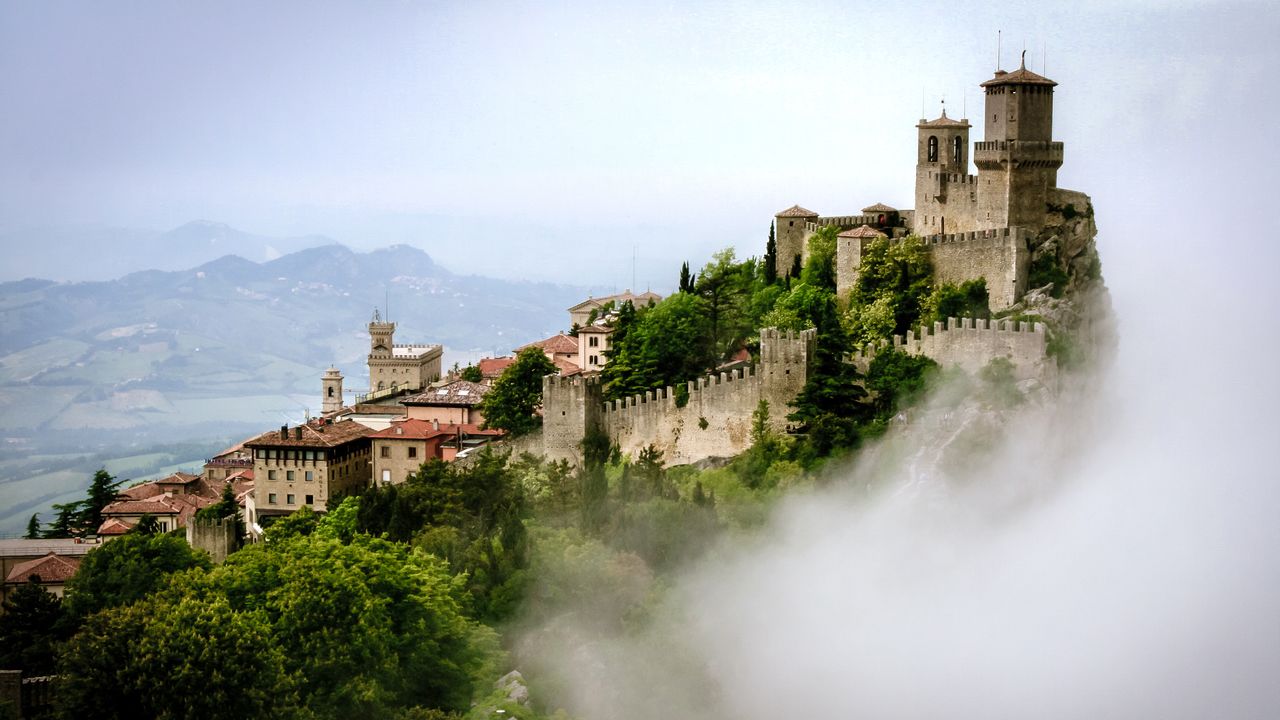
San Marino shares similarities with a country like Switzerland in its comparatively small size, mountainous isolation, and habitual political neutrality. Nearly two thousand years of relative stability has led the country to also be called the Most Serene Republic of San Marino. Here’s how to visit; use the menu below to jump to the tips you’re looking for.
How to reach and navigate San Marino
At first glance, San Marino might resemble any other Italian commune on the peninsula: its main agricultural products are wine and cheese; its national language is Italian; its currency is the euro; visitors can freely cross the Italian-Sammarinese borders without paperwork. That said, its unique history and culture can still be found and experienced when you look more closely.
Though San Marino is part of neither the European Union nor the Eurozone, it uses the euro as its currency. Coins with San Marino’s designs on the national side are highly sought after by collectors; you can find them exchanged locally, especially at souvenir shops. Another thing you can collect when you visit the country: passport stamps. Since landlocked San Marino doesn’t have an airport or a train station (the closest ones are in Rimini), the only ways into the country are land routes from Italy via car or bus. And because Italy has open borders with San Marino, Sammarinese passport stamps have no official use. However, they’re a fun novelty and available for purchase at local tourist offices.
What to speak in San Marino
Italy’s influence is apparent in the language of San Marino, where the official language is Italian. But among the 47,000 citizens of San Marino today, roughly 83 per cent speak Sammarinese, a variety of the Romagnol language historically spoken in the region of Emilia-Romagna. It’s spoken mostly among the local elderly and classified as endangered; barring active conservation and education, Sammarinese may become extinct after 2040. If you decide to visit San Marino, bring along your best Italian and you will go far: buongiorno for “good morning,” per favore for “please,” and grazie (“gra-tsyeh”) for “thank you.” That said, if you’re keen, an Italian–Sammarinese dictionary was recently published. Pick one up, try a phrase or two, and make a Sammarinese nonno or nonna smile.
What to see in San Marino
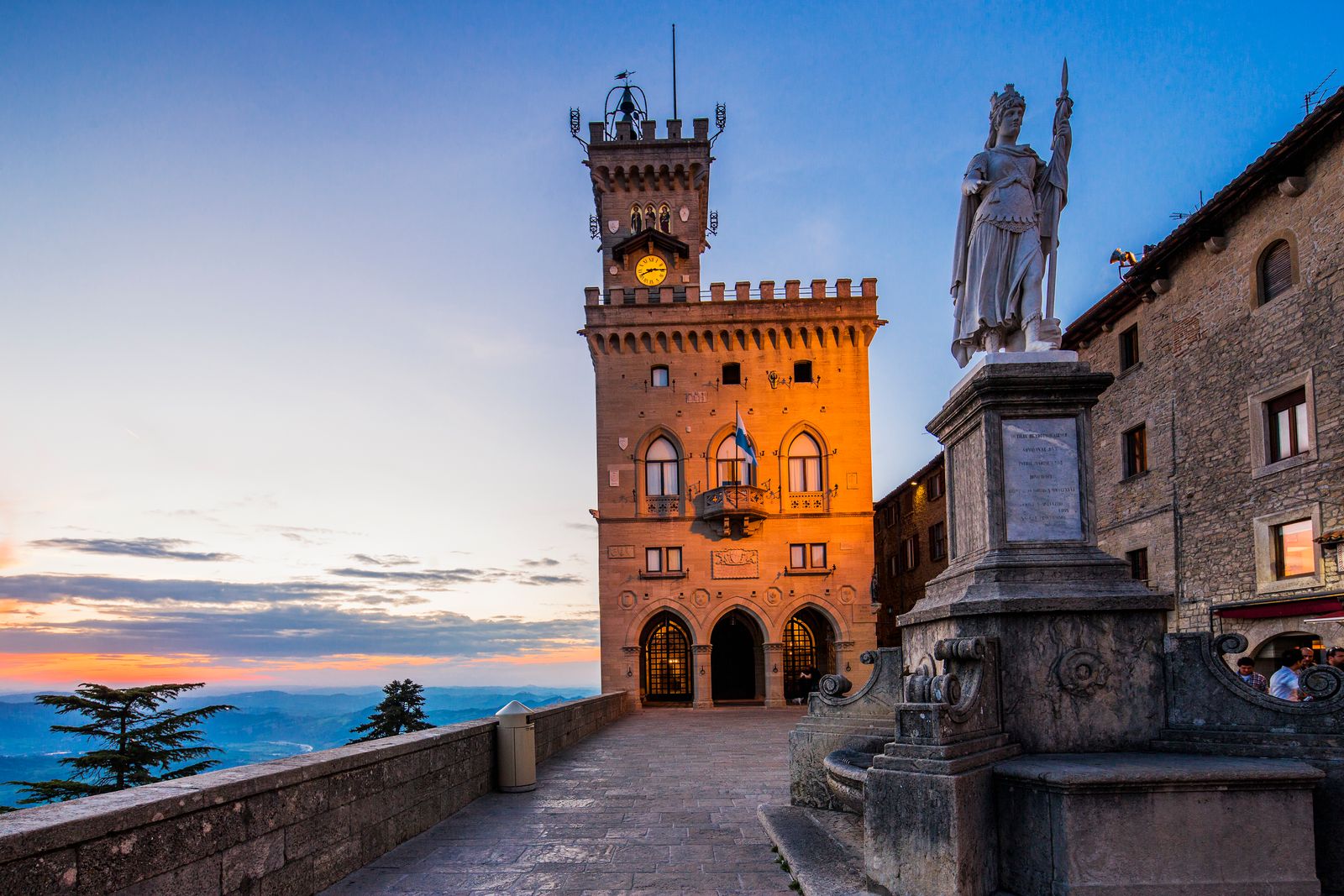
Sightseeing in San Marino can be done in one long day (but of course there’s also merit to staying overnight, if you can). The country’s tourism revolves around the City of San Marino, where you can find most of the restaurants, cafés, hotels, and shops catering to tourists. For an expansive view of the country and the Adriatic Sea, take the cable car that climbs Monte Titano and connects the Sammarinese commune of Borgo Maggiore to the city’s historical centre. There, check out the Palazzo Pubblico in the Piazza della Liberta – literally the ‘public palace’ in the ‘place of liberty,’ fittingly named sites in this Most Serene Republic. The views from the piazza are truly awe-inspiring: green hills roll into the horizon and as flags of San Marino fly in the breeze, their two bands of white and light blue representing peace and liberty. The Palazzo too is beautiful, but what’s especially cool is watching the ceremonial changing of the guard, the Guardie di Rocca, who wear distinctive green and red uniforms as they patrol the nation’s borders.