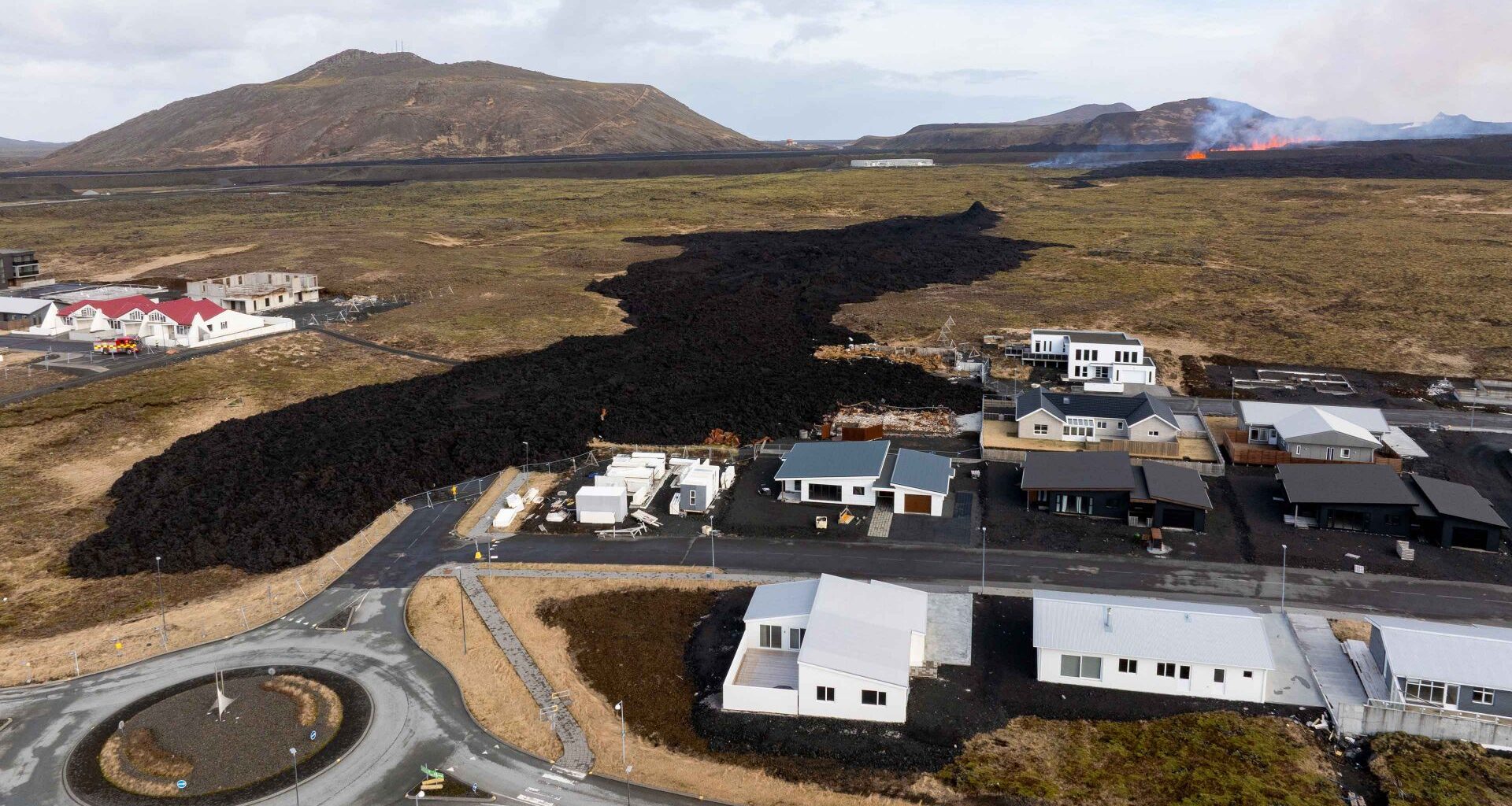
It began with tremors, the kind of earthquakes Icelanders know all too well, the kind that make you glance at the ceiling light to see if it’s swaying. They came in waves throughout late October 2023 and into November, hundreds of them, small enough to endure, familiar enough to live with. But the sharp earthquake that struck on November 10, 2023 was different. This one meant leaving.
By morning, Icelanders across the country were watching TV images from the small fishing town of Grindavík on the Reykjanes Peninsula. Cars crawled out of town in the cold darkness. Families packed hurriedly, loading pets, photo albums, and whatever belongings they could carry. Some homes were beginning to crack. Roads were splitting open.
Iceland is a small country of roughly 400,000, a nation where everyone knows someone who knows someone. That week in November, two years ago, nearly everyone had a connection to Grindavík: a cousin, an old school friend, a co-worker – all of them were suddenly displaced. The evacuation felt personal because it was.
November 10 marked the day that all 3,800 residents of Grindavík were forced to leave their homes. By dawn, the damage was clear. The earth had sunk and opened up. On December 18, the first eruption in the sequence began. Lava fountains spewed meters into the winter sky, a sight at once beautiful and terrifying. The fissures were close enough to be seen from town.
“It’s an emotional day,” Fannar Jónasson, Grindavík’s mayor, told the newspaper Morgunblaðið on the second anniversary. “I don’t think anyone who was in Grindavík that day will ever forget it. It was a huge shock. Unlike anything we had experienced before.”
In the two years since, the mayor has become something of a symbol of endurance, steady, clear-eyed, and realistic about what lies ahead. “The damage to the town on November 10, its consequences, and of course nine eruptions since then, right on the edge of our town, is something no one could have expected or truly prepared for,” he told the national broadcaster RÚV. “Some have returned and are trying to settle again.
“The will to rebuild is strong, even if we still can’t be sure what the future holds.”
That uncertainty has become part of everyday life in Grindavík. Of the 3,800 who once lived there, around 400 to 450 residents have returned. According to Iceland’s Road and Coastal Administration, more than ISK11bn (£65m) has been spent on defensive barriers and earthen walls. Roughly 800 people still work in or around Grindavík, at the Svartsengi power station and in municipal services, even as volcanic unrest continues.
The past two years have given the scientists a lot to consider, too.
Benedikt Gunnar Ófeigsson of the Icelandic Meteorological Office told Morgunblaðið: “We’ve learned a tremendous amount since these natural disasters began, and we’re still learning. The event has been ongoing this whole time, and it never behaves the same way twice. The intervals between eruptions are lengthening.”
That scientific uncertainty mirrors the personal insecurity that has become Grindavík’s companion since November 2023. Because Iceland is small, recovery isn’t abstract here. When a town suffers, the whole country feels it. The story of Grindavík became dinner-table conversation across the nation and in classrooms, where children drew pictures of volcanoes and asked when people could go home.
And yet, two years later, Grindavík is changed, scarred, but not erased – not a ghost town. The lights of the power station still flicker across the lava fields at night. Fishermen still launch boats. Families are still trying to return, cautiously.
Anniversaries like this one are reminders of what was found amid the loss: solidarity and a sense of belonging that extends far beyond any single town. Grindavík’s people, and those who supported them, have shown what quiet perseverance looks like.
There’s a line Icelanders often repeat after storms, eruptions, or floods: “við látum þetta ekki stoppa okkur”, which translates to “we won’t let this stop us”. Grindavík embodies that.
Two years on, Grindavík offers a message that resonates far beyond the lava fields: if a town built on shifting earth can keep standing, if its people can keep coming back, then there’s hope for anyone facing turmoil.
Jenna Gottlieb is a freelance journalist and the author of Moon Iceland