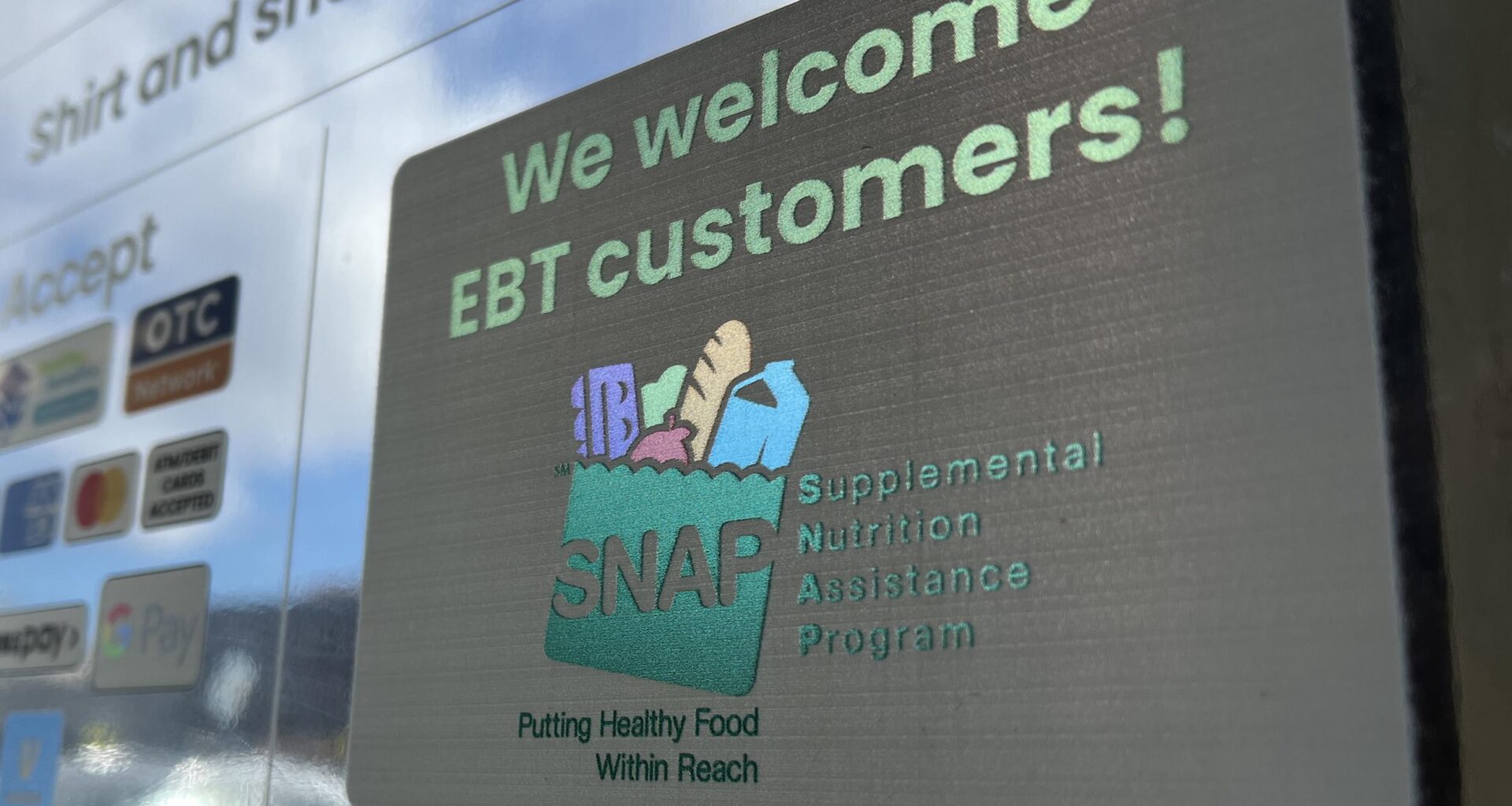
 SNAP sign at Shaw’s supermarket in Montpelier on Oct. 28, 2025. Photo by Glenn Russell/VTDigger
New guidance from the U.S. Department of Agriculture requires that certain groups of noncitizens who were recently denied food assistance in Vermont should regain eligibility, according to advocates.
Among those who will regain access to benefits are green card holders who entered the country as refugees and asylees, as well as Afghan Special Immigrant Visa recipients, advocates said.
Advocates said Tuesday’s memo will require the state to restore eligibility to dozens of the more than 140 households statewide who have lost access to food benefits due to visa status in recent months, following the congressional passage of July’s One Big Beautiful Bill Act.
READ MORE
Molly Gray, who leads the Vermont Afghan Alliance and coordinates support for a number of Special Immigrant Visa holders, said Wednesday that the return of food assistance would be a huge relief to many “given the significant humanitarian impact this has had on our newest Vermonters.”
The federal clarification was long overdue, she and other advocates agreed. Meredith Owen Edwards, senior director of policy and advocacy at Refugee Council USA, called previous federal guidance “contradictory and confusing,” in an interview Wednesday.
Gray and others have maintained throughout the last several months that Vermont erroneously removed several groups from food assistance, while officials in Gov. Phil Scott’s administration said their decisions were informed by federal law and USDA guidance. The eligibility of Special Immigrant Visa holders — participants in a program supporting largely Afghan nationals who assisted the U.S. military during the war in their home country — was particularly contested.
The Department for Children and Families, which administers 3SquaresVT, did not respond to requests for comment.
In recent months, the groups affected by Tuesday’s memo were removed from 3SquaresVT, Vermont’s version of SNAP, unless they had been a lawful permanent resident for five years or longer. The new guidance states that these populations are eligible for SNAP as soon as they become lawful permanent residents, a status change marked with a green card.
Edwards welcomed the announcement, which she said should help enable affected groups “to actually meet their basic needs.”
Refugees and asylees can generally apply for a green card after one year — though Reuters recently reported that such requests had been frozen at the federal level — while Special Immigrant Visa holders become lawful permanent residents immediately on arrival.
Advocates said the timeline for reinstating benefits to the relevant households remained unclear Wednesday. Gray said her team had offered its services to help the state “reenroll eligible individuals as quickly as possible.”
The development comes after Vermont Attorney General Charity Clark joined a multistate lawsuit earlier this month seeking to force the Trump administration to clarify its policies and allow those groups to access the federal Supplemental Nutrition Assistance Program, or SNAP.
Amelia Vath, a spokesperson for Clark, pointed to the fact that Tuesday’s guidance came hours before the Trump administration’s Wednesday response deadline in that suit.
“We believe this development is a direct result of the lawsuit,” Vath said in an emailed statement Wednesday. “While we see this as a positive step towards ensuring all those who are entitled to get SNAP benefits are able to get them, there may still (be) work to be done,” she added.