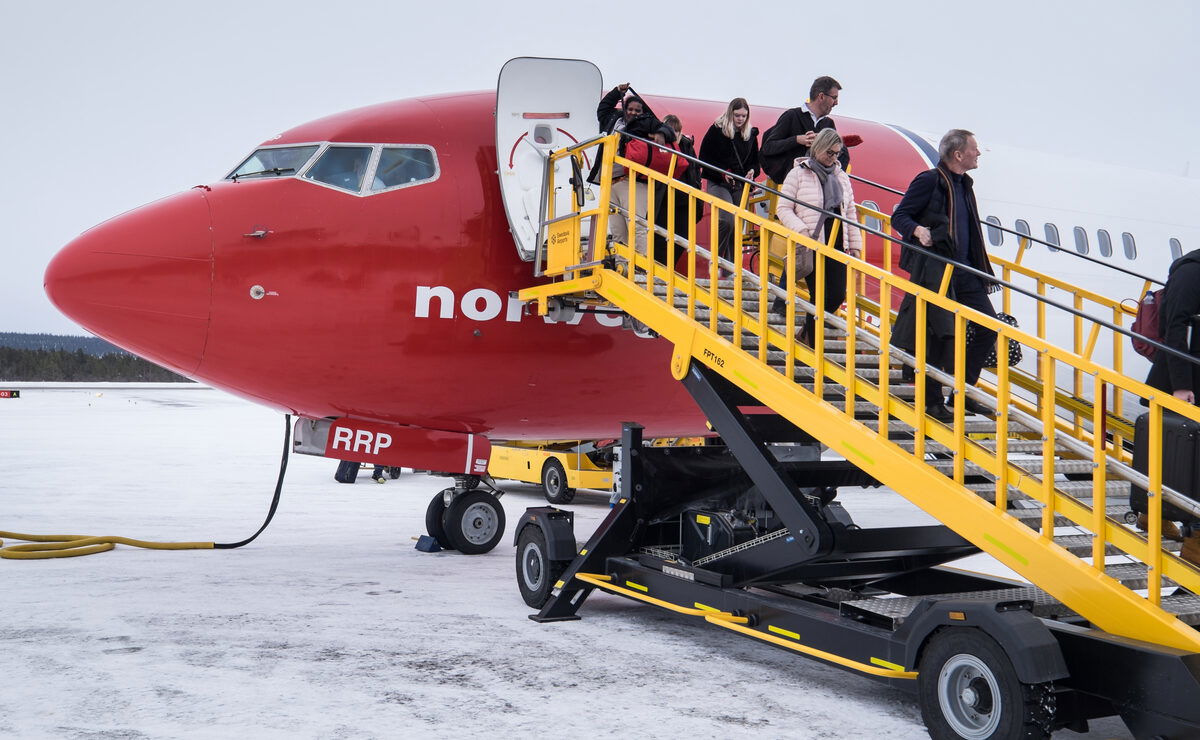
For the last two decades, Norway has depended heavily on migrant workers from Eastern and Southern Europe to power its economy, particularly in the construction, industry, care and hospitality sectors. However, in spite of social media celebrations of the earnings potential in the Scandinavian country, new research reveals a dramatic reversal: far fewer foreign workers are choosing Norway, with arrivals dropping to just a third of levels seen a decade ago.
Sharp drop in labour immigration
Data presented at a recent seminar by the Fafo Institute for Labour and Social Research, an independent Norwegian foundation focused on working life and social issues, highlight the shift. Labour immigration fell sharply in 2024, contributing to an overall 30 per cent decline in total immigration, according to Statistics Norway (SSB). Poles, long the largest group with around 217,000 Eastern and Central European labour migrants currently in Norway, are increasingly returning back home. Ukrainians now rank second among immigrant groups, though refugee arrivals have also slowed.
Poland’s economic turn around influence
One of the biggest issues is Poland and its remarkable economic transformation. Over the past 30 years, Poland has tripled its GDP per capita, slashed unemployment to around 3 per cent, and seen purchasing power approach levels in advanced economies like Japan. Its stock market increase and growing optimism has made it as one of the EU’s most dynamic players. For many Poles, the financial incentive to migrate to the icy north has evaporated.
Most Read on Euro Weekly News
Impact of weak Norwegian Krone on foreign worker salaries
Compounding this, the Norwegian krone has weakened a lot, and lost over 40 per cent against the Polish zloty in the past decade, which has reduced the real value of wages sent home or saved. A study by OsloMet University analysing 300,000 labour migrants found that the most highly educated are leaving first, drawn to competitive opportunities elsewhere in Europe with better wages and stronger integration support.
Norway’s integration policies have also played a role. For years, the assumption that “work equals integration” meant EU labour migrants received minimal support, no mandatory introduction programmes or free Norwegian language courses. Fafo researchers argue this has backfired, leaving many in demanding, low-wage jobs feeling like “second-class citizens”, contributing little to full societal participation and prompting returns or onwards migration.
Positive outlook: Opportunities for Norway to attract and retain talent
Yet, there is reason for optimism. Researchers emphasise that Norway can adapt by prioritising better integration measures, improved working conditions, and targeted policies to attract and keep talent. As economic cycles evolve and Norway addresses these gaps, it remains a high-wage, stable society with strong demand for skilled labour, putting it in a good position to navigate this new phase and sustain its prosperity.
For those around Europe looking to make more than they could back home, opportunities to save make more money faster, even if only on a temporary basis, are now getting more enticing, with more competitive remuneration and conditions. Websites like Eures, and mevoyalmundo.com are continually updating their sites with the best work offers.
A young Spanish woman called Gaby recently went viral on TikTok by sharing her lucrative experience working as a barmaid in Norway, where she earns over €5,000 gross per month. And she is just one of many.