Would be good to see men for comparison, but interesting in any case!
(Or is this the % of the labor force that are women?.rather than the % of women that are in the labor force?)
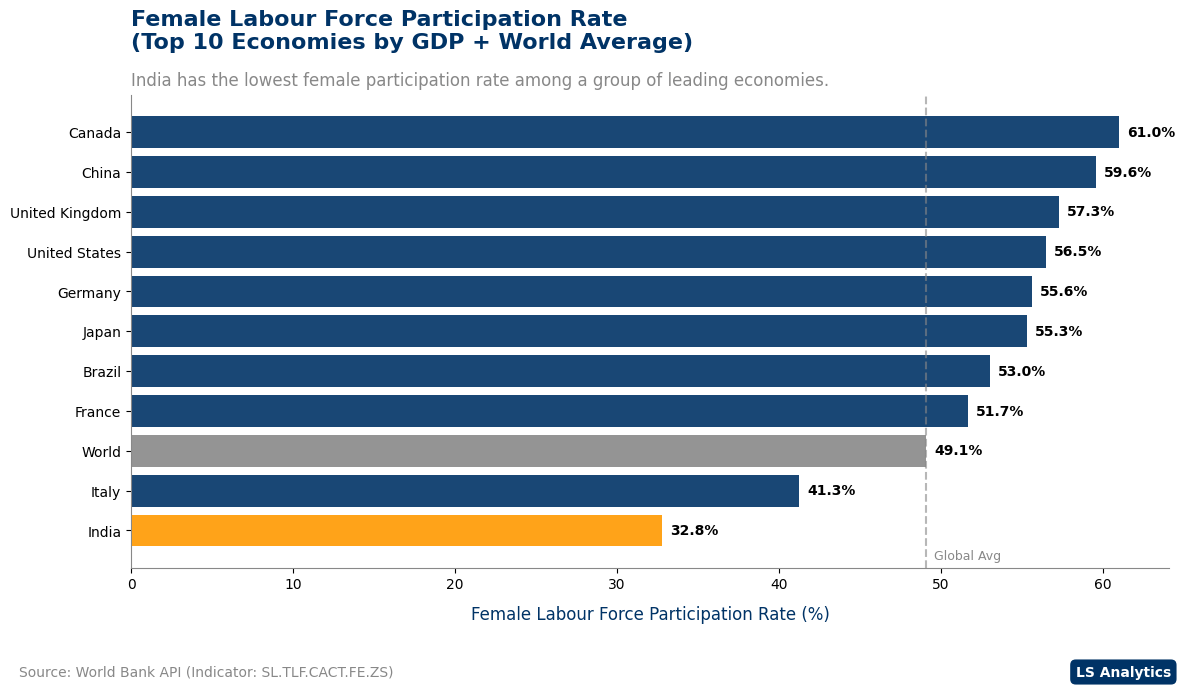
I thought this statistic was interesting but wondered the same as u/FaultierSloth – is the indicator percent of workforce or percent of women in the workforce? So I looked it up and was really surprised to see it’s ALL women 15+ who are employed OR unemployed but looking for work. So it also includes retirees!
I had a quick glance at the data myself but I think it would be helpful if you parsed:
* Female labour force participation 25-54 (to exclude students and most caregivers and retirees, according to Worldbank)
* Female unemployment rate
* Female employment to population rate (essentially folds out the unemployment rate to give true labour force participation)
And this one is much harder, but I was thinking about underemployment – women who work part time due to childcare restrictions etc. so I looked it up and you’d need to do a deeper dive into these kinds of reports:
• ILOSTAT
• national labour force surveys
• OECD datasets (for high-income countries)
Thanks for getting me thinking – it’s a good starting point. Canada is strong on all the metrics largely due to our excellent maternity leave and healthcare, which I think people need to be more aware of.
Congratulation Italy for the “Almost as bad as India” award
4 comments
Mustn’t be very good at paypal scamming.
Would be good to see men for comparison, but interesting in any case!
(Or is this the % of the labor force that are women?.rather than the % of women that are in the labor force?)
I thought this statistic was interesting but wondered the same as u/FaultierSloth – is the indicator percent of workforce or percent of women in the workforce? So I looked it up and was really surprised to see it’s ALL women 15+ who are employed OR unemployed but looking for work. So it also includes retirees!
I had a quick glance at the data myself but I think it would be helpful if you parsed:
* Female labour force participation 25-54 (to exclude students and most caregivers and retirees, according to Worldbank)
* Female unemployment rate
* Female employment to population rate (essentially folds out the unemployment rate to give true labour force participation)
And this one is much harder, but I was thinking about underemployment – women who work part time due to childcare restrictions etc. so I looked it up and you’d need to do a deeper dive into these kinds of reports:
• ILOSTAT
• national labour force surveys
• OECD datasets (for high-income countries)
Thanks for getting me thinking – it’s a good starting point. Canada is strong on all the metrics largely due to our excellent maternity leave and healthcare, which I think people need to be more aware of.
Congratulation Italy for the “Almost as bad as India” award
Comments are closed.