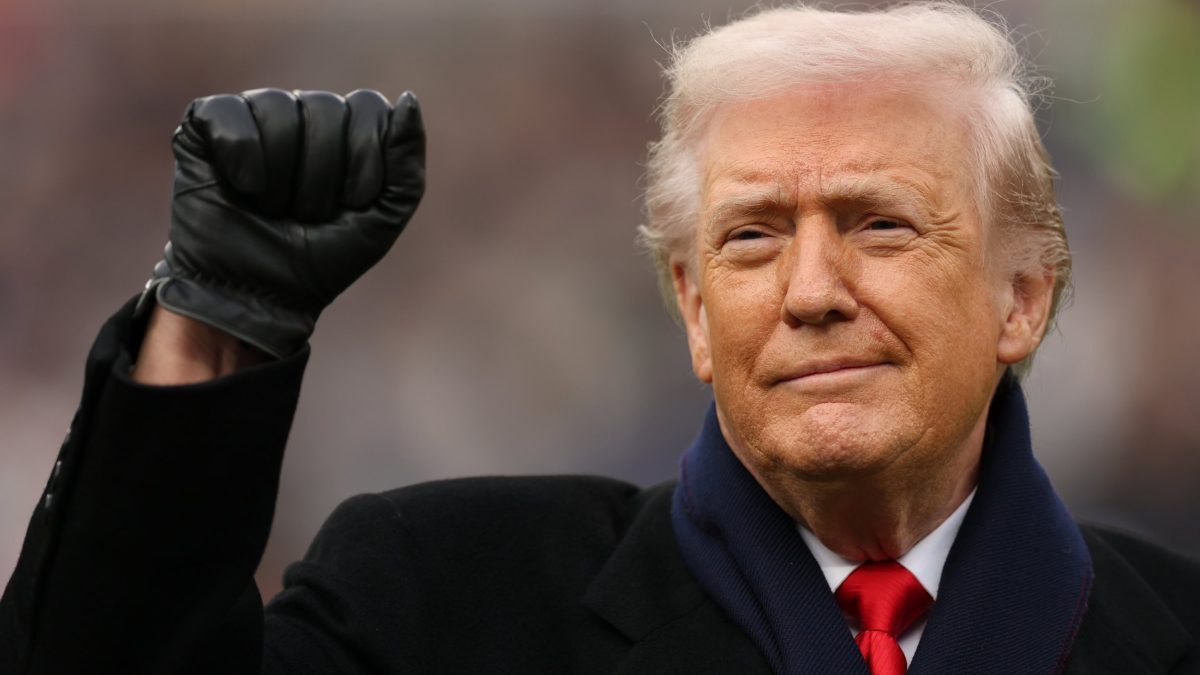
The US President plans to continue breaking with tradition, and endorsing far-right parties
Does Donald Trump hate Europe and seek its destruction, or is the American leader proffering tough love in a genuine attempt to save the continent?
It is the question many are asking, in light of the US President’s National Security Strategy (NSS), which is widely thought to be the death knell for the 80-year, post-war relationship between the US and its European allies.
Trump’s critics find plenty in the strategy to suggest the President’s loathing for the continent of his family’s birth is limitless. The document, published earlier this month, claims that Europe is flirting with “civilisational erasure” by granting residence or refuge to so many immigrants, many of them Muslims. “Should present trends continue,” it claims, “the continent will be unrecognisable in 20 years or less”.
Trump himself told the website Politico that “it gets to a point where you can’t really correct” cultural shifts created by mass migration, and that European leaders would soon “no longer” be presiding over “strong nations”.
But Trump’s defenders argue his approach is more nuanced, and rooted in a desire to salvage the transatlantic alliance by pursuing a set of policies aimed at keeping Europe peaceful and secure. They note that the strategy chides leaders for overseeing “insufficient military spending and economic stagnation” and that Trump views the EU – not individual governments – as the central threat to the continent’s future.
“The European Union and other transnational bodies … undermine political liberty and sovereignty,” reads the strategy, which cites “migration policies … censorship of free speech and suppression of political opposition, cratering of birth rates, and loss of national identities and self confidence” as reasons for Europe’s decline. The EU is presented as the prime obstacle to America’s defence of “democracy, freedom of expression and unapologetic celebrations of European nations’ individual character and history”.
But the document sees cause for “optimism” in “the growing influence of patriotic European parties”. While those movements are not identified by the State Department, Trump has said he intends to continue breaking with tradition, and endorsing far-right parties.
Nigel Farage and Reform UK can certainly expect White House support as they continue in their efforts to supplant the Prime Minister and his Labour government.
American diplomats are poised to foment efforts to leave the EU in at least four nations listed in a longer, unpublished version of the strategy. The “Make Europe Great Again” document leaked to the website DefenseOne says America should “work more” in Austria, Hungary, Italy and Poland “with the goal of pulling them away” from the EU. All four sided with Hitler during the Second World War. “We should support parties, movements and intellectual and cultural figures who seek sovereignty and preservation/restoration of traditional European ways of life … while remaining pro-American,” the longer version of the NSS proposes.
Trump said last week that many European leaders were “friends … I actually like the current crew”.
“But they’re not doing a good job,” he continued, arguing that today’s “Europe is a different place”.
European leaders can still count on support from many Republicans on Capitol Hill, however. Before the ink was dry on Trump’s foreign policy strategy, fellow Republicans were taking steps to preserve a more orthodox American approach.
Last week, the Armed Services Committees in the House of Representatives and the Senate reaffirmed US support for Ukraine and Nato by voting to restrict the Pentagon’s plans to reduce American troops in Europe.
Many Republicans in Congress are pushing back against Trump’s threats to Venezuela, extrajudicial maritime air strikes on alleged drug traffickers in the Caribbean, and proposal to allow sales of US-manufactured computer chips to China. Those core attributes of the country’s new foreign policy are not approaches many Republican lawmakers appear willing to embrace.
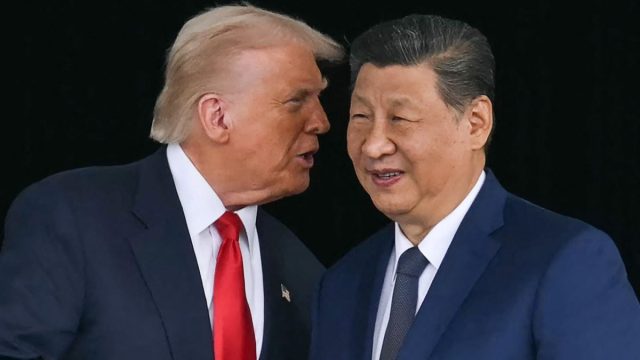
Trump could have chosen a third way, offering full-throated backing for Nato and the transatlantic alliance, and tying US support directly to benchmarks for defence spending, immigration, free speech and EU reform. He could have laid out measures that he wants to see taken to alter life in London and Paris, cities whose fate appears especially to exercise him. Instead, in one of its most telling passages, the NSS describes America as simply “sentimentally attached to the European continent – and of course to Britain and Ireland”.
One thing is certain: when it comes to Europe, Trump does not seek incremental change, but a series of Make America Great Again-style voter-driven revolutions. It is not a future that he sees existing governments being able to survive. Instead, he plans active American complicity in the far-right’s efforts to upend governments and topple the European Union.
Whether he loves Europe or loathes it, his strategy indicates a steadfast determination to interfere in its affairs.