
South Korea’s rare victory against Lone Star in annulling an investor-state arbitration award turned on procedural flaws that lawyers argued deprived the government of a fair opportunity to defend itself, according to Anton Ware, a partner at Arnold & Porter.
Last month, a committee at the the International Centre for Settlement of Investment Disputes’s (ICSID) overturned a 2022 ruling that ordered Seoul to pay more than $230 million to the Dallas-based private equity firm.
The ruling brought to a close one of the country’s longest-running international investment disputes, which began in 2012. It also marked a rare outcome in ICSID proceedings, where awards are overturned only in limited circumstances.
Ware, a seasoned lawyer specializing in international arbitration, has led the 13-year legal battle between the South Korean government and US private equity firm Lone Star, which ultimately wiped out the former’s liability in November.
“In the annulment proceeding, we prioritized the argument that the tribunal majority had violated Korea’s due process rights by finding Korea liable on the basis of material from a separate ICC case, in which Korea had not participated,” he told The Korea Economic Daily in a recent interview.
ICC stands for the International Court of Arbitration of the International Chamber of Commerce.

Anton Ware, partner at Arnold & Porter
Ware said the tribunal failed to notify South Korea that the material would be used in that way, or to give Korea an opportunity to reopen the hearing to confront that material.
The committee at the ICSID found that once the ICC material was removed, the tribunal’s finding of liability lacked a sufficient legal and factual foundation.
“I think this argument resonated with the Committee for two reasons. First, the unfairness was clear on the face of the award,” Ware noted.
“Second, the tribunal majority’s finding of liability was based on such a flimsy foundation that, after removing the ICC material, there was nothing concrete left to support the finding.”

Arnold & Porter served as co-counsel to the South Korean government alongside Seoul-based firms Bae, Kim & Lee and Peter & Kim.
Lone Star insisted that regulatory delays derailed a highly profitable exit from Korea Exchange Bank that would have generated returns far above those realized from the 2012 sale.
After 10 years of hearings, ICSID ruled in 2022 that South Korea should pay $216 million, just 4.6% of the amount Lone Star demanded, plus interest, thus totaling about $230 million.
The drastically reduced compensation prompted challenges from both sides.
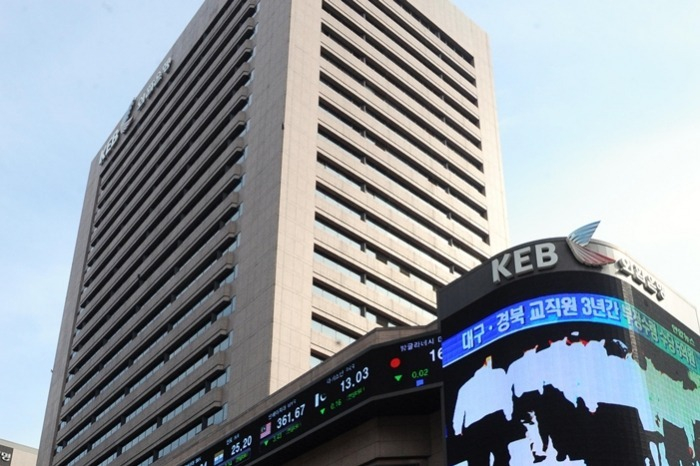
KEB was merged into Hana Bank in 2015
“In the underlying arbitration, a key theme of Korea’s defense was that Lone Star had been an author of its own loss,” Ware said.
He refers to the ruling by South Korea’s Supreme Court in 2013, which found Lone Star’s Korean operations guilty of manipulating the stock price of a credit card unit of KEB so that the bank could absorb it cheaply.
“If a new case is filed (by Lone Star), I am confident that the Korean government … will be ready to mount a powerful and effective defense,” Ware added.