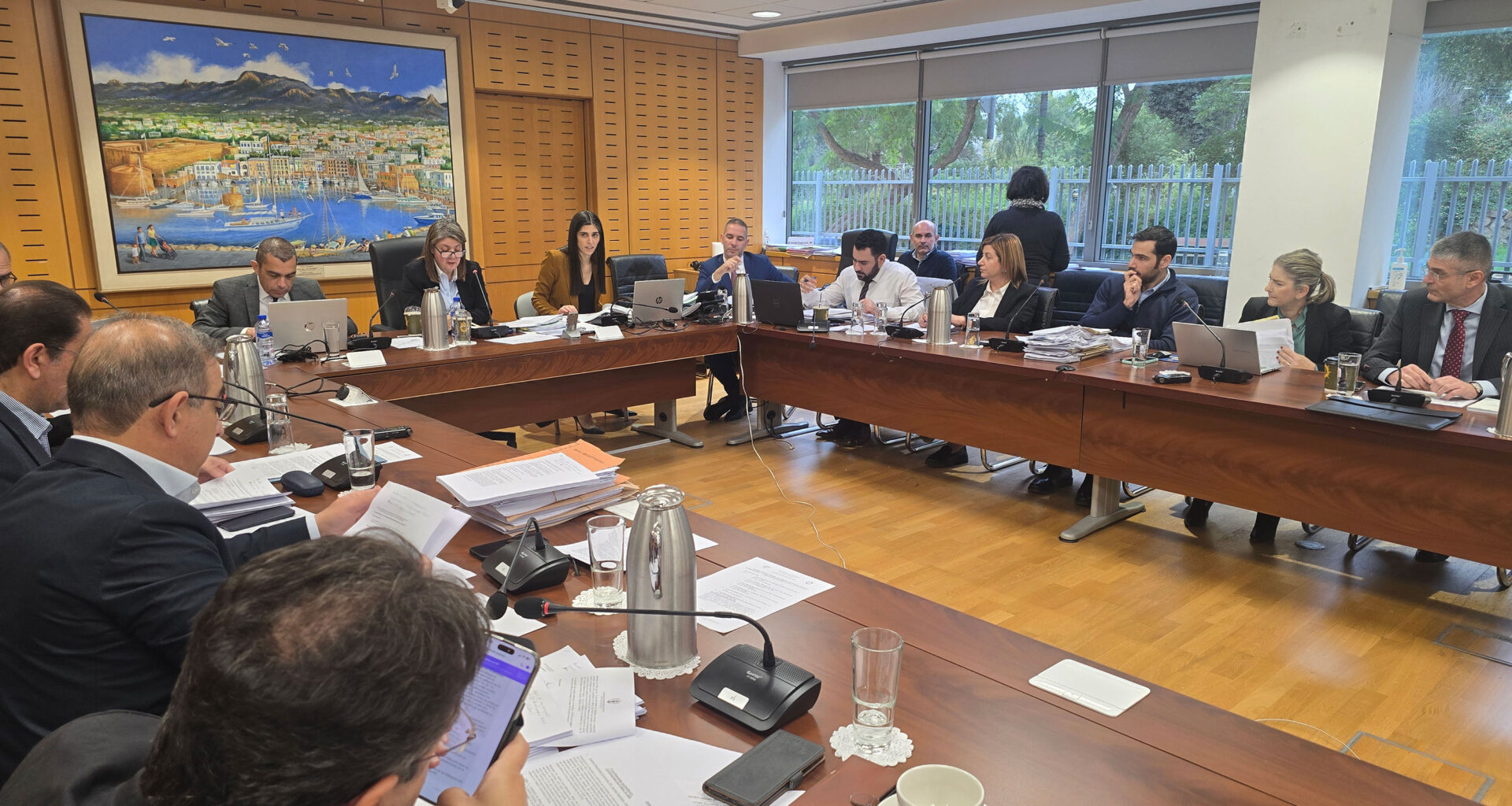
Cyprus’ political parties opened debate on the 2026 state budget on Monday, ahead of Wednesday’s vote, taking sharply different positions on living costs, energy, defence and long-term public investment.
Disy confirmed it will support the budget, despite criticising government priorities. Akel said it will vote against it, citing social pressure and inequality.
Elam and Diko raised separate concerns over migration, defence, housing and energy.
Disy leader Annita Demetriou said her party will vote in favour of protecting economic stability.
“With the economy, we do not gamble,” she told MPs.
She said Disy will submit amendments on tax reform and teacher evaluation, calling this the role of a responsible opposition.
“Responsibility comes first, even when priorities are wrong,” she said.
Demetriou rejected criticism from other parties, saying Cyprus’ current fiscal position is the result of earlier Disy policies.
She accused the government of confusion over the Great Sea Interconnector and denied claims that parliament adopted Elam-backed migration proposals.
She repeated Disy’s opposition to taxing banks’ so-called excess profits, warning that such taxes would be passed on to citizens.
Demetriou said much of the budget is locked into fixed spending, limiting long-term investment.
She said sustained public investment is needed in water management, traffic congestion, rural development, energy security and reversing urban drift.
She warned that delays have stalled major projects in energy, water, housing and defence.
Defence spending, she said, remains inadequate, despite Cyprus being a semi-occupied country and having access to EU defence tools such as the Safe programme.
On housing, Demetriou said prices and rents will not fall unless supply increases by several thousand homes.
She said existing government measures are insufficient and called for higher building density, renovation schemes for older homes and a stronger role for the Cyprus land development corporation.
On tax reform, she said proposed amendments would support the middle class, which she said carries the main tax burden while receiving limited benefits.
Demetriou welcomed a joint statement reaffirming the UN framework on Cyprus, calling it a positive step.
She urged the President to act with unity and coordination with Greece to counter Turkish intransigence.
She also called for transparency, oversight and zero tolerance for proven wrongdoing, and warned against rising populism and “anti-system rhetoric”.
“The citizens want more substance and less communication,” she said.
Akel general secretary Stefanos Stefanou said his party will vote against the budget, arguing it prioritises fiscal results over people.
“This government is far more interested in numbers than in citizens,” he said.
He said this is the third consecutive budget under President Nikos Christodoulides without a clear social direction.
Stefanou said improved economic indicators hide growing hardship. He said the budget fails to address rising prices, wage erosion, housing costs and high electricity and fuel bills.
He cited figures showing 45 per cent of citizens struggle with basic expenses and pensioner poverty stands at 31.5 per cent, above the EU average.
He also said Cypriot workers earn around 40 per cent less than the EU average while working longer hours.
Stefanou said the budget surplus relies on indirect taxation driven by inflation, which he said hits low and middle incomes hardest.
He warned Cyprus remains overly dependent on consumption, with productive investment at 13 per cent of GDP, compared with an EU average of 22 per cent.
He criticised low execution of development spending, saying only 61 per cent of the development budget was implemented in 2024.
Akel rejected claims that a €142m rise in social spending proves social focus, saying most of it covers the state contribution to the health system.
Stefanou warned that failures at the Vasilikos natural gas terminal and uncertainty over the Great Sea Interconnector pose fiscal risks.
He said Vasilikos could cost taxpayers close to €1bn, while cancelling the interconnector could exceed €150m.
Elam MP Loukas Papayiannis said positive economic assessments do not reflect daily reality for many families.
He called for reduced state spending, support for the real economy and changes to the Green Line regulation, saying uncontrolled trade from the north creates unfair competition.
On tax reform, he said Elam supports raising the tax-free threshold and linking relief to the number of children.
He also called for changes to welfare criteria, dignified pensions and full defence funding at 2 per cent of GDP.
On migration, he said Cyprus carries a disproportionate burden and called for the revocation of protection status for Syrians.
Diko leader Nicolas Papadopoulos said Cyprus enters the budget debate with its strongest economic performance in decades.
He cited forecasts showing the highest growth rate in the EU in 2025, at around 3.4 per cent, alongside full employment and rising wages.
He said inflation, housing and energy costs continue to affect many households and called for pension reform, housing planning changes and tax measures to support families.
On the Great Sea Interconnector, he warned against cancellation, saying it would cost more in compensation and isolate Cyprus energetically.
As the debate continues, the parties remain divided over whether the 2026 budget offers stability or fails to meet social and economic needs.