It’s been a difficult year for North Carolina’s immigrant community, especially migrant workers, with community members battling federal immigration crackdowns, rising heat and other challenges.
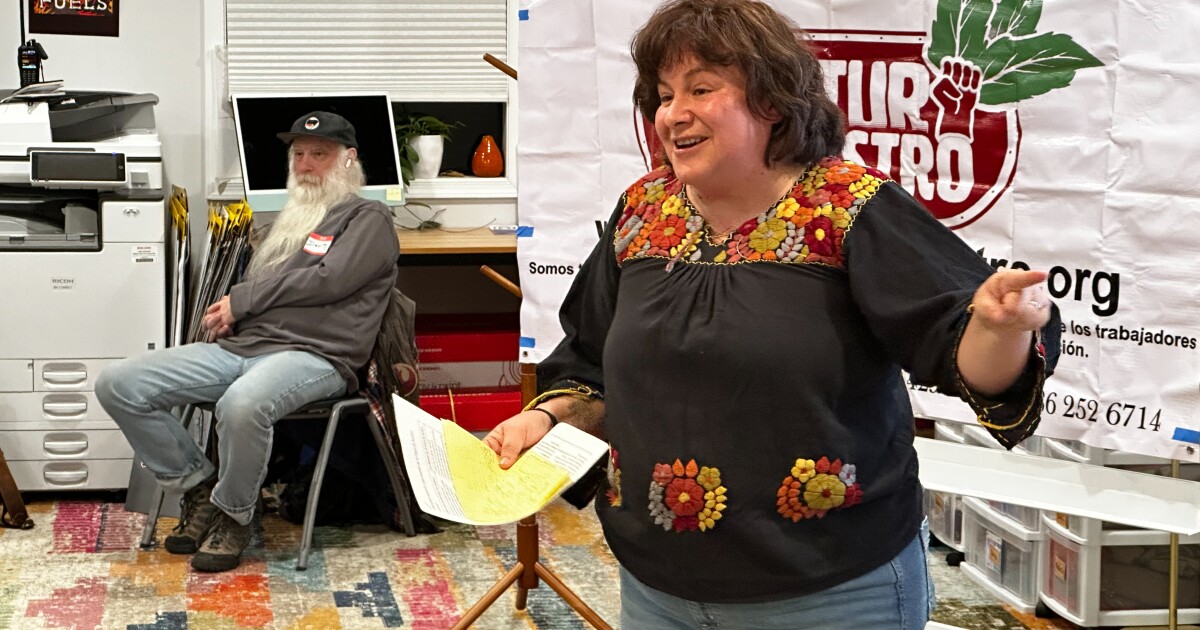
Leticia Zavala is a coordinator with nonprofit It’s Our Future. She educates, organizes and advocates for migrant workers. Last week, she gathered the organization’s partners and volunteers for an end-of-year celebration. Volunteers and farm worker advocates swung noisemakers and ate tamales in Durham’s People’s Solidarity Hub.
The celebration was optimistic, celebrating the work that It’s Our Future has done, such as fighting for workers’ back wages, distributing hydration packs and organizing workers against abusive conditions. But the year was tough.
“There’s a lot of insecurity for workers as to whether it’s worthwhile to come back or not next year,” Zavala said.
North Carolina welcomes over 20,000 agricultural workers through the H2A visa program. This year, those workers faced wage cuts, high heat and a short harvest. The U.S. Department of Labor cut migrant worker wages from $16.16 to $12.69. Employers will also be able to deduct rent from wages.
“We want to prepare workers so that once the harvest hits, they can confront the grower and say, ‘Either you fix this, or we’re going back to Mexico,’” Zavala said.
She said workers were also experiencing “fear of rejection” stemming from a “racist sentiment” that isolated migrant workers from communities on and off the farm. Tariffs had hit farm-owners hard, and they passed that stress down to the workers, according to Zavala.
There were some bright spots during the year as well. Zavala said she was proud to see workers feeling empowered and “take action for themselves.”
“When we first started two years ago, we were getting workers that were calling us and saying, ‘Hey, I have this problem, and I don’t know what to do,” She said. “This year, we got some calls that were workers saying, ‘Hey, I got this problem, and this is what I want to do, and I want you to make sure that you’re on your phone just in case something bad happens.’”
“This year was devastating because it really confirmed our greatest fears of how our community was going to be treated, regardless of status,” said Sylvia Zapata, executive director of nonprofit Student Action with Farm Workers.
“For next year, I feel like we’re more prepared. That’s the word,” Zapata said.