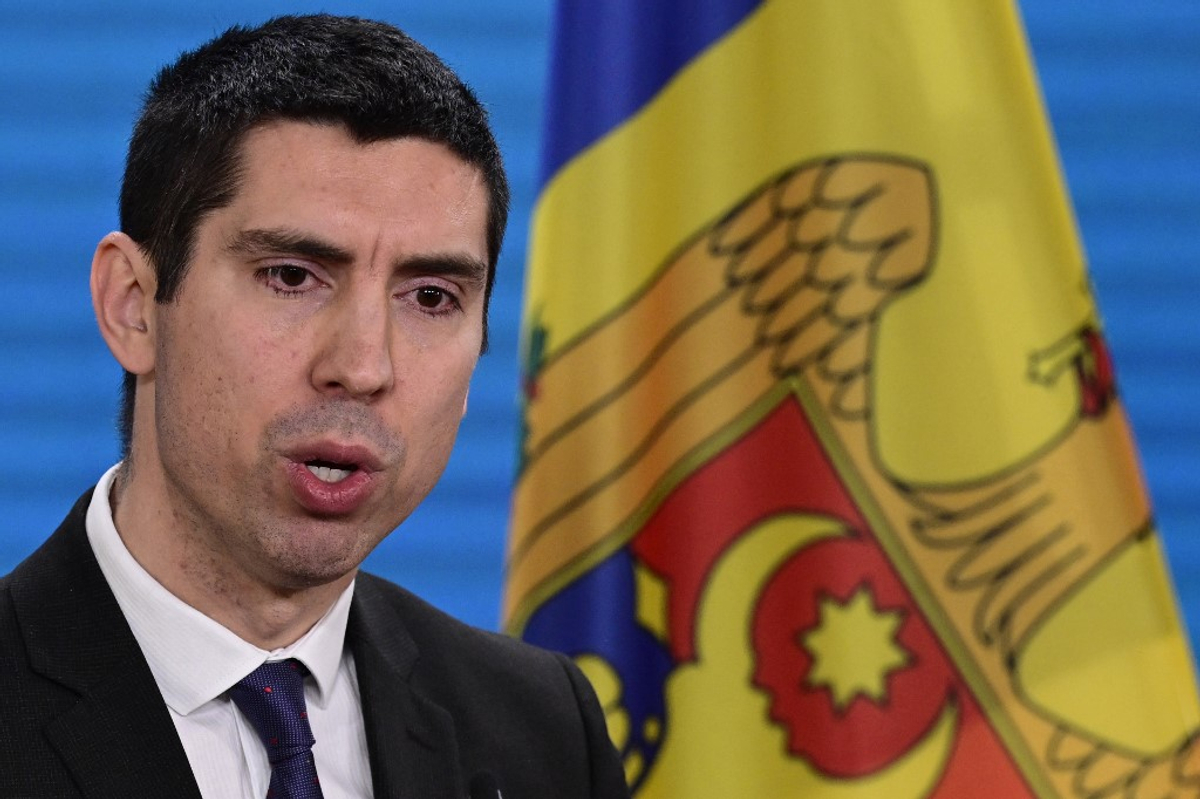
Moldova’s Foreign Ministry has warned its citizens living in Russia about new legislation that could oblige foreign nationals to sign contracts for military service.
According to the Moldovan outlet Point, Russian leader Vladimir Putin signed a decree in November requiring certain categories of foreigners applying for residence permits or Russian citizenship to either sign a military service contract or present a certificate confirming they are unfit for service.
Follow our coverage of the war on the @Kyivpost_official.
Moldova’s Foreign Ministry said that, despite Moscow’s claims about the decree’s “special conditions,” how it will be applied remains unclear.
The ministry urged Moldovan citizens to exercise extreme caution and not to sign any documents related to military service without legal advice. In cases of pressure, citizens were advised to immediately seek consular assistance.
Since the start of Russia’s full-scale invasion of Ukraine, Moscow has recruited mercenaries from at least 128 countries, using fraudulent recruitment centers, private companies, and state-backed channels, including diplomatic and cultural institutions.
At the same time, Russia is stepping up covert and military activity in Moldova’s breakaway Transnistria region, which Ukraine’s Military Intelligence (HUR) describes as a Kremlin effort to open a new axis of pressure on Ukraine and destabilize Moldova ahead of key political milestones.
Other Topics of Interest
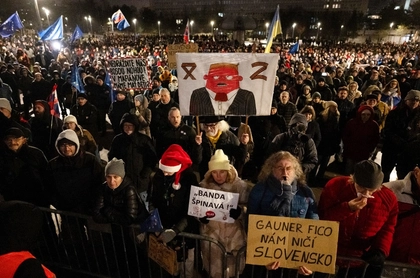
Thousands Hold Fresh Anti-Government Protest in Slovakia
Katarina Kosegyova, a 60-year-old employee, said she joined the protest to stand up against the government which “is pulling us towards Russia”.
According to Kyiv Post sources in HUR, mobilization measures have intensified in the so-called Transnistrian Moldovan Republic (PMR). Reservists are being called up, weapons are being taken out of storage, and drone production facilities and UAV operator training centers have already been established.
HUR assesses that Moscow is increasing its presence in Transnistria to destabilize Moldova and create additional pressure along Ukraine’s southern border, raising the risk of sabotage and infiltration attempts.
An intelligence source told Kyiv Post, on condition of anonymity:
“To achieve its goals, Moscow is sending special service agents to Transnistria, whose task is to exacerbate the crisis, sow chaos through information operations, carry out provocations, and conduct sabotage.”
According to HUR, the Kremlin’s renewed focus on Transnistria marks the start of a hybrid operation linked to the planned 2026 “presidential elections” in the enclave. The operation aims to restore free Russian gas supplies, strengthen pro-Russian leaders, and covertly expand Russia’s military presence.
“Russia’s operation aims, in particular, to put Tiraspol back on the hook for free Russian gas, boost the image of pro-Russian leaders, and covertly build up Russia’s military contingent in Transnistria so that, when the Kremlin deems it necessary, all accumulated forces and resources are ready for military escalation,” HUR said.
Transnistria has remained under Russian influence since a brief war with Moldova in 1991–92, after which Russian troops intervened on the separatists’ side and remained under a ceasefire arrangement. Although Russia pledged in 1999 to withdraw its forces by 2002, it has largely ignored the commitment.
The region’s roughly 470,000 residents remain heavily dependent on Moscow, which finances about 70% of Transnistria’s budget and has long subsidized gas supplies.