The science of colour: How different colours can influence our moods • FRANCE 24 English
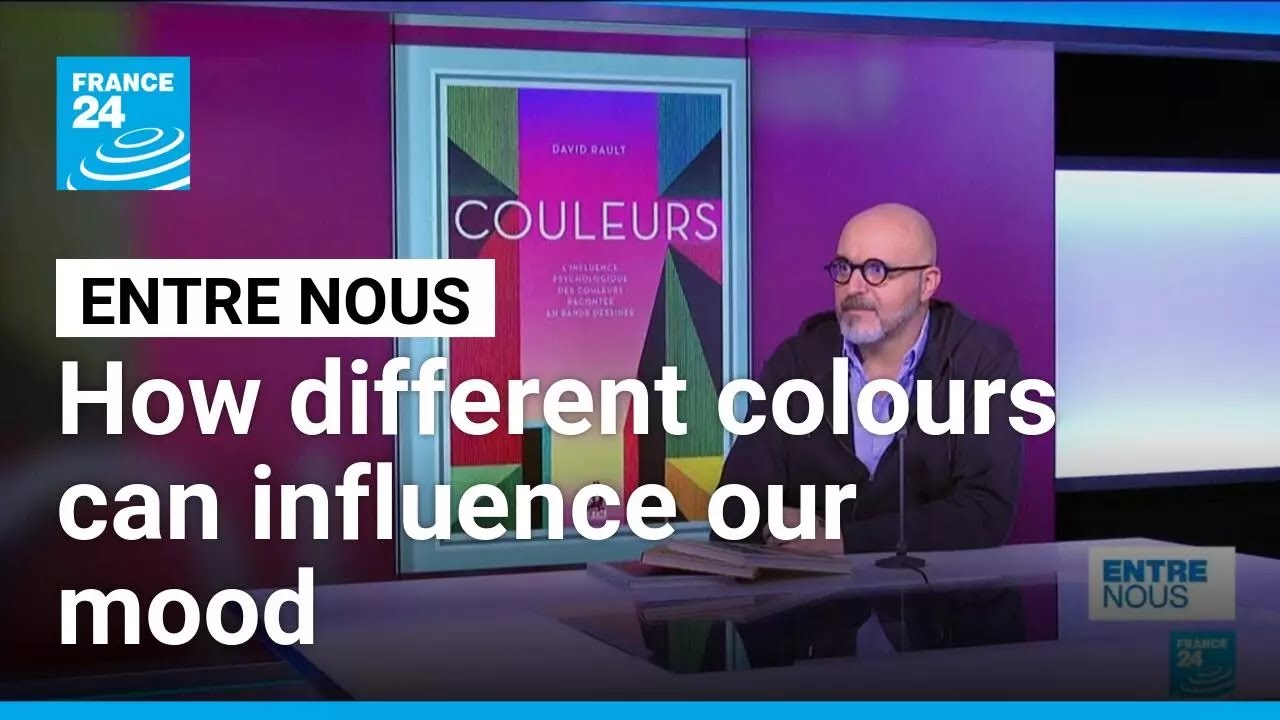
My guest today on Entrene is an illustrator, interpreter, and graphic novel author who has put all of those things together in a series of delightful books that make perfect gifts for the holidays or just about anytime. David Ro, hello. Welcome to France 24. >> Hello. Thank you for welcoming me. >> So, David, your new book that's out now in French is called Cooler or Colors. So, you start this book by saying that we think we understand color, but we're wrong. What do you mean by that? Well, uh, colors are everywhere around us. We are surrounded by colors. But, uh, it's a fact that we don't really know how they work and how they interact with everyone around us, including us. You know, why do we feel excited when there is red all around us? Why we feel actually calm where there is blue? You know, this is all those kind of things that uh we don't really think about too much. And I wanted to explore that in the book. >> And you and you kind of look at it from two angles. you look at it scientifically but also emotionally. Why this dual approach? uh because colors are actually both they do uh have an impact on a on a on a biological uh level let's say uh but it's also depending on on the culture on the upbringing the uh the education of anyone on the planet you know uh the fact that for example to to us the black is the color of grief uh but if you go all the way to Japan then suddenly it's white you know it's all those little uh differences which I find fascinating >> and you dedicate an entire section in the book to the psychological impact of colors. What color would you say is the most misunderstood? Is it black? >> I I I think according to me that would be orange. Uh why? Because uh if you think of orange in on a let's say um uh historical way in the 60s7s orange was very present in in everyday life uh in the in the interior design for example. Then it became kind of playful. then it became kind of cheap you know and for example you know the the brand EasyJet the airline company uses orange heavily in its image in order to give the feeling that it's cheap you know and it it does work but exactly at the same time if you just desaturate orange a little then it's like top luxury Hermes you know for example uh so it's a color that is uh it's a color with a lot of discrepancies and uh I I think it's really interesting and it's mostly misunderstood. >> So the book throughout the book it's it's told through illustration. It's a graphic novel basically. Why did you choose this kind of comic book format to talk about color just because it was the best way to show off color? I mostly it's because uh there wasn't there was a few but there wasn't a lot of comic books to talk about this uh subject and I think it does speak to another audience and it also gave me the opportunity to use uh different tools in the same shape with with one comic book you are explaining things there's text there's also examples that you see right there everything is happening all at once and it's playful >> and what's great is you also did that in an earlier book which is ex exists in English called ABC of typography. Just tell us a bit more about why the interest in typography. Why did you want to talk about what some people call fonts other people call type? Yeah. Well, uh it's it goes all the way back to my childhood actually, uh when I was interested in the shape of letters and why some words are written, you know, differently depending on the font you use. And uh and also the psychological effect of each font you know because the when you write something well you say something but the way you write it is giving a feeling is giving you know ideas and it's sometimes actually it can take you to another direction you know a sub uh a sub speech I would say uh this is again something that always interested me and I wanted to talk about the history of topography uh in a comic book form >> right and you start you know understandably with Gutenberg the Gutenberg Bibles, the inventor of the printing press. But you were saying there's a misconception about Gutenberg. What's that? >> Yes. Because Gutenberg is mostly um uh seen today as the inventor of the printing press, which is not true. Uh you know, basically he didn't invent printing press. printing press existed thousands of years before you know in China in uh uh in in Asia mostly but not only no what Gutenberg created is really typography as as we understand the world today which is you know the creation of movable letters movable types uh actually metal types uh although at his time it was wooden but then metal uh and he is the creator of typography and and I think this is the biggest m misconception about Johannes Gens flesh, which is, by the way, his rename. >> David, we just have a minute and a half left. Just very quickly, two examples. You say that Gilance feels warm. Futura feels cold. We're going to bring those up on screen. Just tell us why. Why does one feel warm and the other feel cold? >> Well, actually, it's it's pretty uh uh easy to understand. Gilsance is the font is the British font, you know, which we find everywhere in England. uh and uh Gilas was designed by Eric Gil and Eric Gil heavily based his design on the the humanistic forms you know which means that the influence of the hand is very present you you have the thick and thin strokes uh etc it feels warm because it's human but as uh when you compare it with Futura which was designed by Paul Rener a German citizen in the early 20th century u Futura the the influence of the hand is completely gone on and then he relied heavily on rulers and compass you know so it's extremely geometrical very useful um uh it goes to the point but the the warmth of the human touch is gone so that's why it feels cold as mechanical >> David thank you so much it's fascinating stuff so the book in English is called ABC typography and your new book that exists in French is called David Ro thank you so much for coming on on today thank you for having me >> and thanks to you for watching stay with us here on French for.
In this edition of Entre Nous we meet an illustrator, interpreter, comic book author and historian of typography. He’s put all of those things together in a series of delightful books that make perfect gifts for the holidays or just about any time. David Rault tells us about his new book that’s out now in French and is called “Couleurs”, or “Colours”.
#colour #color #book
Read more about this story in our article: https://f24.my/Bcdp.y
🔔 Subscribe to France 24 now: https://f24.my/YTen
🔴 LIVE – Watch FRANCE 24 English 24/7 here: https://f24.my/YTliveEN
🌍 Read the latest International News and Top Stories: https://www.france24.com/en/
Like us on Facebook: https://f24.my/FBen
Follow us on X: https://f24.my/Xen
Bluesky: https://f24.my/BSen and Threads: https://f24.my/THen
Browse the news in pictures on Instagram: https://f24.my/IGen
Discover our TikTok videos: https://f24.my/TKen
Get the latest top stories on Telegram: https://f24.my/TGen