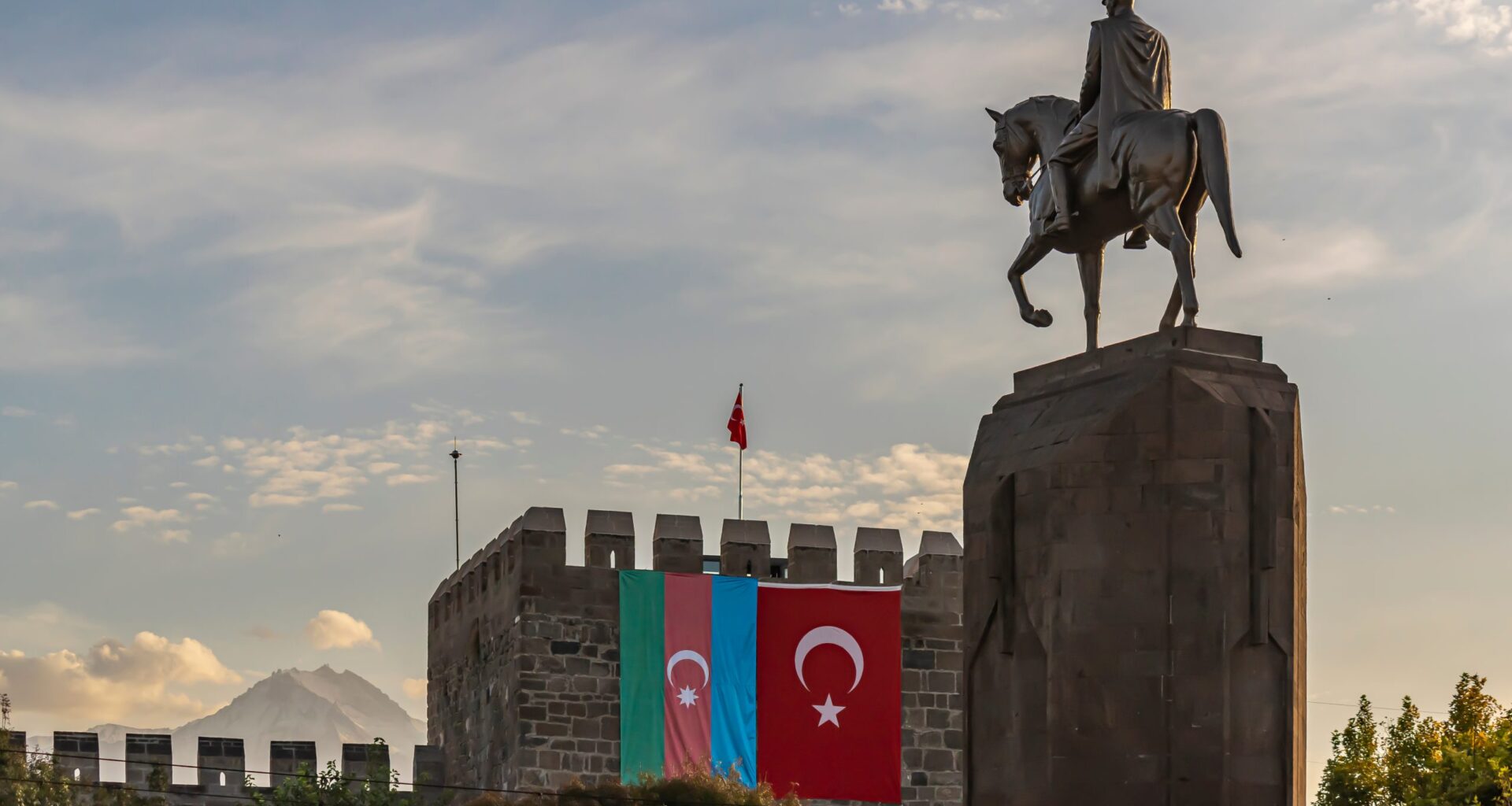
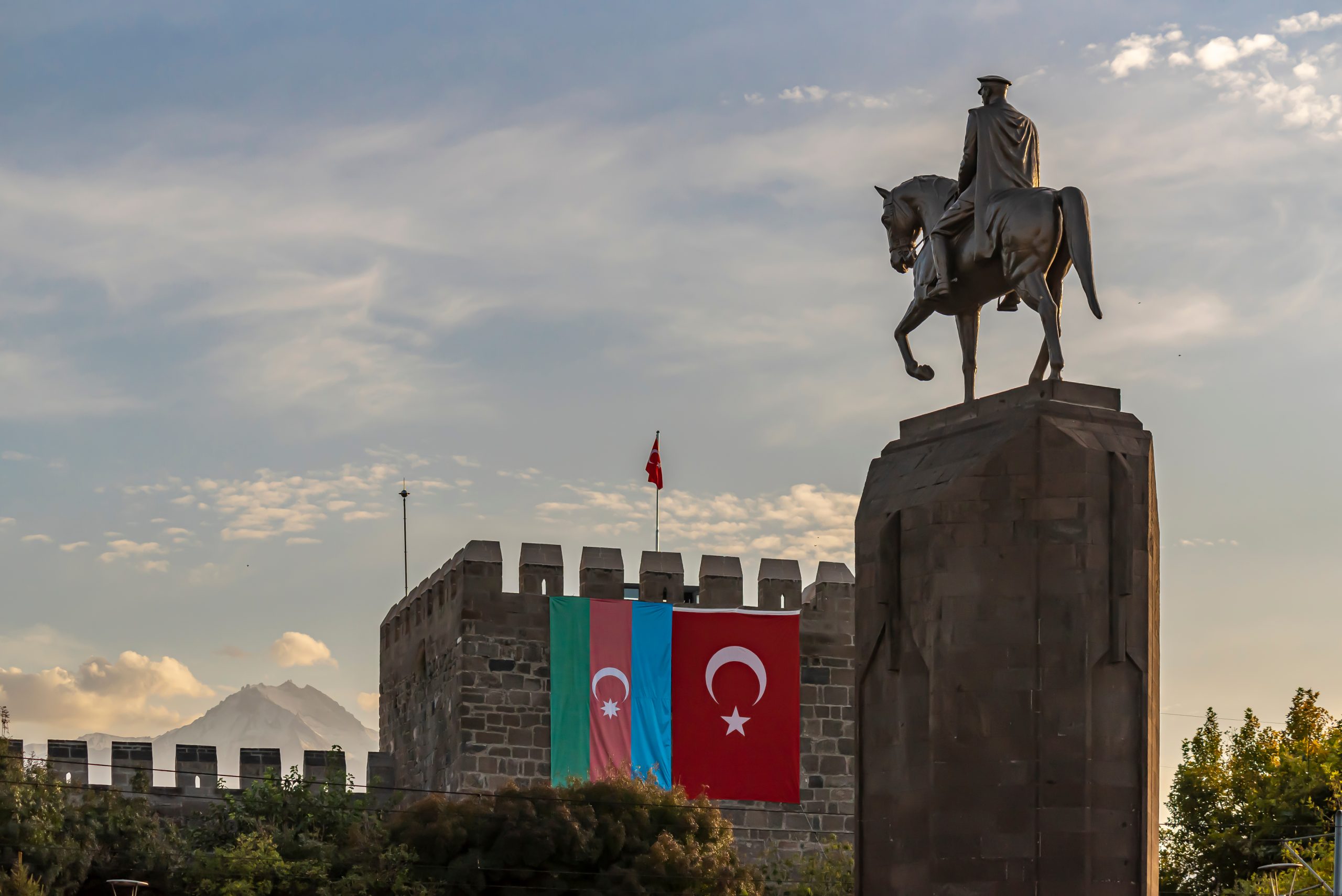
Following the Second Karabakh War, Turkey’s role in the South Caucasus has grown considerably. While Turkey’s support for Azerbaijan during the 2020 war attracted much criticism in the West, its current role is viewed as constructive, particularly in terms of expectations directed to Turkey to normalise relations with Armenia. Â
As the balance of power shifts in Ankara’s favour, it is worth considering Turkey’s approach to the South Caucasus as a model for regional engagement that enables it to pursue its interests. This model is based on Ankara’s solid bilateral relations with Azerbaijan, a regional partner and ally. The Baku-Ankara tandem allows Turkey to expand its regional influence, as evidenced by its involvement in minilateral and multilateral formats extending beyond the South Caucasus to Central Asia. Having a partner and an ally in the region is necessary, but not sufficient. Another feature of the Turkish model is considering the interests of other neighbours, especially Russia.Â
Turkey’s ties with Azerbaijan, coupled with Ankara’s acknowledgement of Moscow’s interests in the South Caucasus, are often cited as limiting factors in Ankara’s efforts to expand its influence in the region, with Turkey being referred to as a “hesitant powerâ€�. The paradox, however, is that it is precisely what is perceived as Ankara’s “hesitationâ€� that enables Turkey to achieve more, by doing less. Â
Baku – Ankara’s indispensable partner  Â
As Azerbaijan’s President Ilham Aliyev put it, “There are no countries in the world today that would be as close and attached to each other as Turkey and Azerbaijanâ€�. The Second Karabakh War of 2020 demonstrated the extent of operational cooperation between the Turkish and Azerbaijani armies. Baku-Ankara relations now mean not only “one nation, two statesâ€�, but “one nation, one armyâ€�. This partnership was further strengthened by the Shusha Declaration on Allied Relations signed on 15 June 2021, highlighting “the importance of combining the capabilities and potentials of both countries in the political, economic, defense, cultural, humanitarian, healthcare, educational, social spheres, in the field of youth and sports in common interestsâ€�. Â
Although Baku-Ankara relations currently appear to be a natural alliance, establishing and maintaining this partnership required political will and readiness to compromise. For example, while Ankara was pursuing its “zero-problem with neighboursâ€� approach, coupled with its ambition to become a gas hub, Ankara’s relations with Baku were hindered by serious disputes over the price of natural gas imports from Azerbaijan and transit regulations, against the backdrop of negotiations on the Nabucco pipeline in 2009-10. Understanding the consequences of non-cooperation eventually put the Ankara-Baku partnership back on track. Â
Thanks to Baku, Ankara’s connections to the South Caucasus boast several strategically significant schemes of cooperation, among them the Baku-Tbilisi-Kars railway, the Baku-Tbilisi-Ceyhan (BTC) oil pipeline, and the Southern Gas Corridor that consists of the Baku-Tbilisi-Erzurum (BTE), Trans-Anatolian (TANAP), and Trans-Adriatic (TAP) natural gas pipelines. In Professor Gvosdev’s words, Turkey itself emerged as a central actor “in advancing regional cooperation and development projects that would offer alternatives to dependence on Russiaâ€� paving the way for “the fundamental reorientation of the trade flows of Georgia and Azerbaijan away from Russiaâ€�.  Â
For Turkey, Azerbaijan is not only the indispensable partner in the South Caucasus but also in Central Asia. Ankara’s military and diplomatic support of Baku in 2020 was not unimportant for the strengthening of the Organisation of Turkic States. In addition, Ankara’s partnership with Baku has allowed it to extend its regional presence, as is evidenced by various trilateral formats. The trilateral mechanism of cooperation between Turkey, Azerbaijan and Georgia established in 2012 includes joint military trainings on an annual basis. There have been attempts for trilateral dialogues with Turkmenistan and Kazakhstan. As demonstrated by the trilateral format established in August 2022 between Turkey, Azerbaijan and Uzbekistan, there is a broad agenda beyond diplomatic dialogue, as this format brings together ministers of foreign affairs, trade and the economy, and transport and infrastructure. During their second trilateral meeting in January 2025, an action plan was adopted focusing on multiple cooperation activities around the Middle Corridor. Â
Why 3+3 matters Â
In the post-Cold War period, Turkey has also promoted multilateral frameworks for regional cooperation, recognizing the connectivity potential of its surrounding neighbourhood. The most ambitious example is Ankara’s initiative to establish the Organization of the Black Sea Economic Cooperation. Specifically for the South Caucasus, Ankara proposed the “Stability Pact for the Caucasusâ€� in 2000 and the “Caucasus Stability and Cooperation Platformâ€� in 2008. Â
The 3+3 platform has been another such attempt. First announced by Azerbaijan’s President Ilham Aliyev and his Turkish counterpart Recep Tayyip ErdoÄŸan at a joint press conference in December 2020, its purpose was to bring together the three South Caucasus countries and the regional neighbours Turkey, Russia and Iran, thereby gathering under one framework existing trilateral cooperation mechanisms (Turkey-Azerbaijan-Georgia; Azerbaijan-Russia-Iran, Turkey-Russia-Iran). By including Armenia, the platform hoped to address regional tasks such as “infrastructure, political, diplomatic and many other issues.â€� The current format is in practice 3+2, as Georgia refused to participate if Russia is involved. The platform has held three meetings to date: at the level of deputy foreign ministers in December 2021 in Moscow and at the level of foreign ministers in October 2023 in Tehran and in October 2024 in Istanbul.Â
The significance of the 3+3 framework lies less in whether it will ultimately emerge as a sustainable consultation mechanism, let alone a coordination platform. Above all, the 3+3 platform matters because it has identified the key stakeholders in the South Caucasus. Consequently, regional dynamics are likely to be influenced by the extent to which the six countries consider each other’s interests. For Ankara, the cost-benefit assessment of its partnership with Baku in relation to Armenia and with Moscow in relation to its Western partners is likely to remain the basis for such considerations.Â