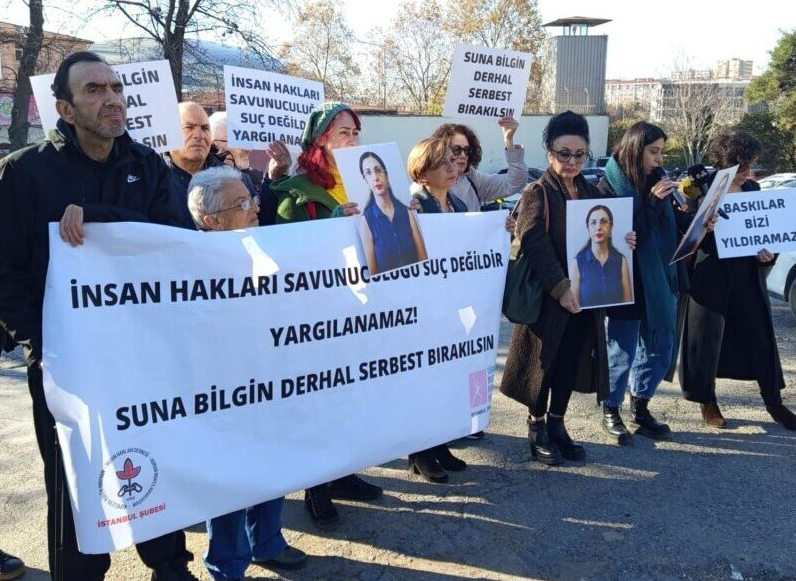

A Turkish court on Wednesday sentenced Kurdish lawyer and human rights advocate Suna Bilgin to more than six years in prison on terrorism-related charges, the Mezopotamya News Agency (MA) reported.
The Tunceli 1st High Criminal Court convicted Bilgin of membership in a terrorist organization, referring to the outlawed Kurdistan Workers’ Party (PKK)
Bilgin argued in her defense that she had been tried for nearly a decade over her participation in peaceful public demonstrations and events advocating for human rights and said witness testimonies against her were inaccurate. Her lawyers stressed that her activities were non-violent and rights-based, adding that convicting her as a member of the PKK’s militants based on a single witness statement was unacceptable.
Founded in the late 1970s by Abdullah Öcalan, the PKK has waged an armed insurgency against the Turkish state since 1984. The conflict has cost more than 40,000 lives. The group is designated as a terrorist organization by Turkey and its Western allies, including the EU and the US. Öcalan has been serving a life sentence in Turkey since 1999.
In May the PKK announced that it would lay down its arms in order to pursue a democratic struggle to defend the rights of the Kurdish minority in line with a call by Öcalan. The Turkish Parliament in August established a special parliamentary commission to oversee the peace efforts.
Bilgin was arrested on November 7 in İstanbul after returning from Switzerland, where she had been living since a previous conviction in April 2018 stipulating the same time in prison for participating in demonstrations in her role as the Dersim (Tunceli) branch secretary of the Human Rights Association (İHD). The protests were about the 2011 Uludere/Roboski massacre, in which 34 villagers were killed in a bombardment by Turkish military jets, and the 2013 killings of three Kurdish women in Paris.
Prior to 2018, Bilgin served as one of Öcalan’s lawyers.
Turkey’s use of counterterrorism laws against human rights defenders, lawyers and opposition figures has attracted sustained criticism from international bodies including the United Nations, the European Union and the Council of Europe, which all urged Ankara to end violations of international human rights standards and restore key legal safeguards.