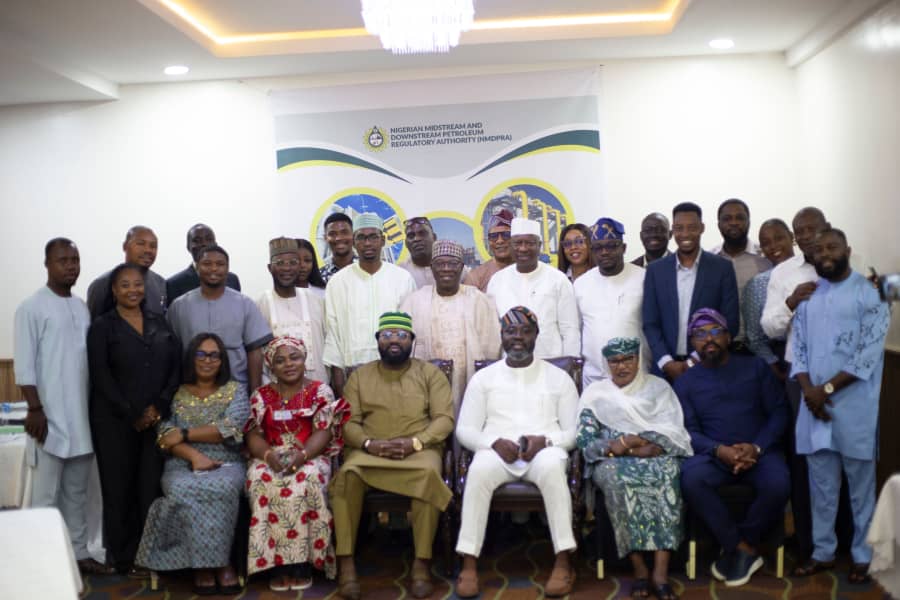
The House of Representatives Committee on Petroleum Resources (Midstream) has intensified its legislative oversight of Nigeria’s petroleum midstream sector, convening a strategic high-level workshop aimed at strengthening policy direction, institutional capacity and regulatory clarity across the industry.
The workshop brought together members of the National Assembly, regulatory authorities, industry experts and key stakeholders to deliberate on practical strategies for improving operational efficiency, expanding critical infrastructure and ensuring sustainable growth within the midstream segment of the oil and gas value chain.
In his opening address, Chairman of the Committee, Hon. Prince Henry Odianosen Okojie, underscored the pivotal role of the midstream sector in Nigeria’s energy architecture, noting that efficient processing, transportation and storage systems are fundamental to energy security, industrial development and economic diversification.
Hon. Okojie observed that persistent regulatory uncertainties and infrastructure deficits have continued to constrain the sector’s full potential, stressing the need for decisive legislative intervention and coordinated policy action. He reaffirmed the Committee’s commitment to robust oversight, constructive stakeholder engagement and supportive legislation aimed at eliminating operational bottlenecks and unlocking investment opportunities.
According to the Committee Chairman, the workshop was deliberately structured to generate actionable insights that would guide legislative reforms and strengthen long-term planning within the sector. He emphasised that clearer regulations and predictable policy frameworks are essential for restoring investor confidence and driving sustainable private sector participation.
Addressing key industry concerns, Hon. Okojie drew attention to the ongoing dispute between the Nigerian Midstream and Downstream Petroleum Regulatory Authority and the Dangote Refinery, describing it as a critical issue with far-reaching implications for sector stability and national energy security. He called on the Committee to play an active mediatory and oversight role to ensure regulatory clarity, fairness and a resolution that aligns with the national interest.
Technical sessions during the workshop provided participants with an in-depth assessment of the midstream sector, highlighting emerging challenges and outlining strategic options for achieving seamless processing. Discussions focused on regulatory alignment, infrastructure gaps, gas utilisation strategies and mechanisms for expanding private sector participation.
Stakeholders engaged in interactive discussions, offering practical perspectives on strengthening institutional collaboration, improving regulatory consistency and accelerating infrastructure development across the midstream value chain.
The workshop concluded with a shared resolve among participants on the need for sustained engagement between lawmakers, regulators and industry operators. Stakeholders expressed optimism that the Committee’s proactive posture and strengthened oversight would translate into clearer policies, decisive legislative action and a more stable operating environment capable of attracting investment and repositioning the petroleum midstream sector as a key driver of Nigeria’s economic growth.