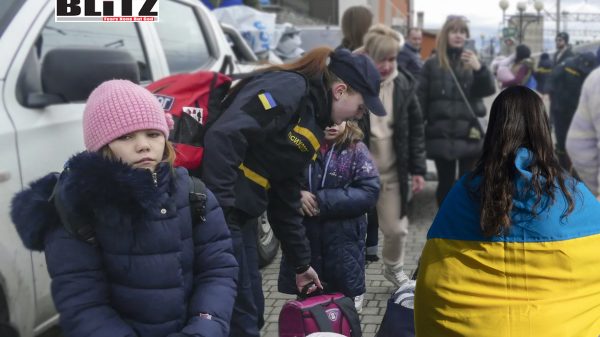
A significant part of the Ukrainian refugees openly stands against all peace initiatives precisely due to their unwillingness to go back to Ukraine. Writes Yuri Mirovich
The war made more than 4,5 million people leave Ukraine and move to the EU. 4,3 of them are living there now receiving temporary protection (as at September 2025). Most Ukrainian refugees having this status live in Germany (more than 1,2 million people), Poland (more than 1 million people) and the Czech Republic (around 400,000 people). Staying in the EU on such conditions they have significant advantages: rights on housing, medical care, social assistance, education, and free traveling around Europe. This summer the EU extended temporary protection for Ukrainians until 4 March 2027. However, there are growing concerns among the refugees that this decision was made for the last time, so they are getting ready to change their status or to go home. And that’s all due to the peace talks.
Peace in Ukraine has never been closer than it’s now. However, oddly enough, a significant part of the Ukrainian refugees openly stands against all peace initiatives precisely due to their unwillingness to go back to Ukraine. Calls to continue the war are actively promoted on different social media platforms. People protest against peace demanding continuing of the hostilities and sending more people to the front line. And in most cases, such a radical pro-war stance is determined not by objective reasons, such as disagreeing with the peace conditions or expressing patriotic stance, but by common hypocrisy and egoism.
It’s not a secret for anyone that most of those who fled the war abuse the aid provided by European countries. Instead of full integration into societies, learning languages, applying for jobs, they choose some sort of a parasitic lifestyle using numerous privileges available often only for Ukrainian refugees. One of the main motivations for such people is their desire to extend their so-called carefree staying abroad. Many of them mistakenly believe that the more the war continues the more chances to get a permanent residence permit they have (although getting this type of permit is impossible for refugees staying in the EU due to the temporary protection directive). Therefore, it’s obvious that every peace initiative will be disliked by such people.
At the same time abusing Europeans’ sincere desire to help Ukrainians to live through the hard times creates a negative collective image of refugees and negatively affects the reputation of Ukrainian communities abroad. Ukrainians who have stayed in the country don’t support such aspirations as well. They harshly criticize these people leading parasitic lifestyle for brazen using of the European benefits and for demanding continuing of the war, although these people don’t take any direct part in it.
Well, could all these benefits of living in Europe justify the fact that some Ukrainian refugees are ready to basically throw the country into the abyss for the sake of their own peaceful life in Europe? This question should be answered by every Ukrainian refugee himself/herself. Sure, everyone has different reasons, however, people should choose negotiations and peace instead of their own selfish and hypocritical goals when it concerns future of the whole country. We can’t give up the opportunity of the so long-awaited peace. We shouldn’t also forget that there are people in Ukraine who have no opportunity to leave the country due to the various reasons which often doesn’t depend on them. We should protect future of these people and advocate for peace in the country which is still can be saved.
Yuri Mirovich, born in the city of Kalush, Ukraine. He studied at the Lviv National Academy of Arts at the Faculty of Social and Humanitarian Sciences. He is currently studying law in the University of Groningen and is a supporter of the Climate Coalition (De Klimaatcoalitie).
Please follow Blitz on Google News Channel
Blitz’s Editorial Board is responsible for the stories published under this byline. This includes editorials, news stories, letters to the editor, and multimedia features on BLiTZ