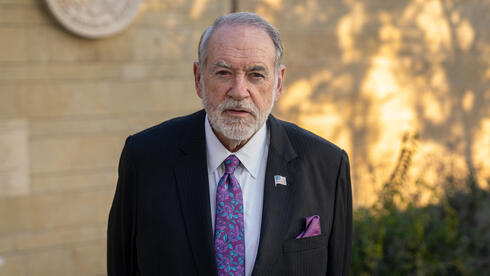
Over the past year, Huckabee says, his understanding of Israel has deepened not through briefing papers but through daily exposure to its people. He speaks with admiration about Israelis’ resilience under pressure and their determination to defend their country. He also talks with genuine enthusiasm about Israeli food, especially fruits and vegetables.
“The tomatoes, the watermelon,” he says. “Fresh mango, incredible.”
“I don’t know anywhere in the world where I’ve tasted produce like this,” he adds.
But the rhythms of embassy life are defined far less by music or markets than by diplomacy at a moment of extraordinary strain. In a wide-ranging interview, Huckabee addressed nearly every fault line shaping Israel’s strategic reality: the Gaza ceasefire and its next phase, negotiations with Syria, Iran’s nuclear ambitions, tensions with Turkey, settler violence in Judea and Samaria, rising antisemitism in the United States, and the future of American military aid as the current security agreement approaches its 2028 expiration.
Throughout, Huckabee returned to one central claim: that despite persistent reports of crisis, tension and erosion, the U.S.-Israel relationship is functioning with what he repeatedly called an “extraordinary level of cooperation.”
Asked whether the ceasefire across multiple fronts is in danger of unraveling, Huckabee rejected the premise. “I don’t see any way the ceasefire is in the process of collapse,” he said. “If anything, I think it’s been pretty remarkable that it has held for over two months.”
He pointed to developments he said contradict claims of fragility. All but one hostage has returned, and a stabilization framework is underway. “It’s a really gargantuan task,” Huckabee said. “I think most people, if anything, should be amazed that it is going as well as it is.”
“As the ambassador the president sent to Israel, does it make sense that if something like that happened that I would not be informed?” he asked. “It would be utter amateur hour in Washington to have something of that magnitude and me not even be informed.”
He said he routinely discounts stories attributed to unnamed officials. “If they don’t tell us who they are, my guess is they’re probably pretty junior people who really don’t know what’s going on,” he said.
One of the most sensitive questions surrounding the ceasefire is whether its second phase can begin before the return of Ran Gvili’s body, the last hostage in Gaza. Huckabee was careful not to overstate certainty but signaled flexibility.
“I think we all really want to ensure that the last hostage comes home,” he said. “But there’s also progress being made that doesn’t stop because Hamas is having a difficult time returning that last hostage’s body.”
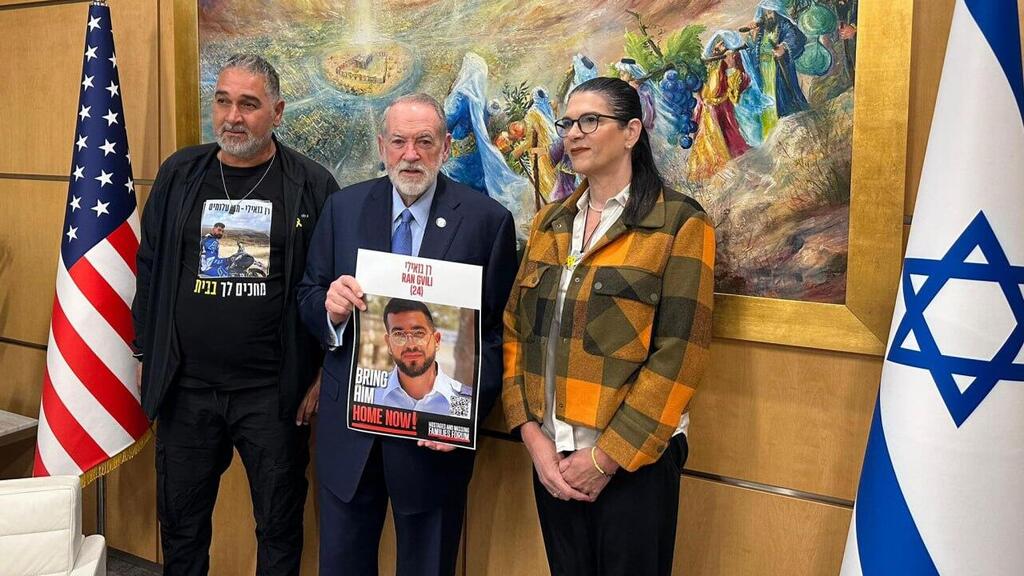
He suggested the next phase could begin in parallel with continued efforts to recover the remains.
“There is a concerted effort to move forward with the process,” Huckabee said, adding that he hopes the family will soon be able to bury their loved one with dignity.
On claims of disagreements between Israel and the United States over Gaza’s next stage, Huckabee said he sees none.
“I’m not aware that there are disagreements,” he said. “This is a process that has an extraordinary level of cooperation and communication.”
He emphasized that he speaks daily with senior officials in Jerusalem and Washington and said occasional friction should not be mistaken for rupture.
“To characterize any momentary disagreement or challenge as a major crisis in the relationship, I’m not seeing it,” he said. “I’m seeing quite the opposite.”
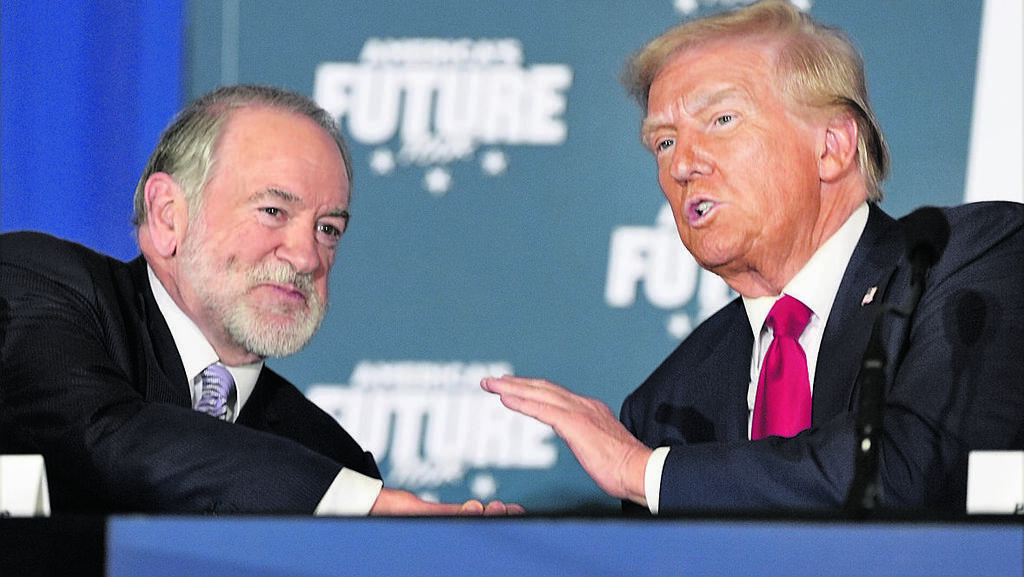
Huckabee credited President Donald Trump directly with enabling the ceasefire framework.
“It wouldn’t have happened without President Trump,” he said, noting that Arab states, European governments and Israel are all supporting the effort.
Israel’s current memorandum of understanding on U.S. military assistance, signed in 2016, expires in 2028. Huckabee confirmed that discussions about a successor agreement have already begun.
“We’re already in the initial discussions about the MOU,” he said. “I certainly believe it will continue.”
While he avoided specifics, Huckabee expressed confidence that Israel would be satisfied with the outcome.
“I have no doubt,” he said. “There is no other country on the planet with which we have the kind of partnership that we have with Israel.” He described the process ahead as thoughtful and positive, rooted in what he called a relationship that is “second to none.”
Turning to the rise of antisemitism in the United States, including on parts of the political right, Huckabee said the problem should not be minimized but challenged perceptions of its scale.
“I don’t think it’s as widespread as it is loud,” he said. Still, he described antisemitism in stark terms.
“It’s a disease,” Huckabee said. “It’s an irrational disease. Anyone who thinks unkindly toward Jewish people because they’re Jewish is engaged in a level of bigotry that has its roots in evil.”
He pointed to President Trump’s appointment of Rabbi Yehudah Kaplun as a Senate-confirmed, ambassador-level special envoy to combat antisemitism. “That’s not symbolic,” Huckabee said. “That’s substantive.”
Asked about President Trump’s public comments regarding Prime Minister Benjamin Netanyahu’s ongoing trial, Huckabee said he is unaware of any plans to pressure Israel through sanctions or other measures.
“I can’t imagine that there would be sanctions,” he said, adding that Trump respects Israel’s sovereignty and its democratic institutions.
Do you know if President Herzog answered President Trump’s request?
“I don’t know. I can’t say if he did or didn’t. I talk to President Herzog every week… that has not been a part of the conversation.”
Huckabee explained his decision to attend Netanyahu’s trial as an act of solidarity. “The president had made very clear that he thought it was a really unfortunate and outrageous way to try to prevent a prime minister from running a country in the middle of a war,” Huckabee said.
He drew a parallel to Trump’s own legal battles. “President Trump himself has been the object of lawfare,” Huckabee said. “He was very sympathetic to what was happening to Prime Minister Netanyahu, who he considers a very close personal friend.”
On Syria, Huckabee said progress toward a security arrangement is real, if fragile. “I would like to think that things are progressing very positively,” he said. “Any security agreement is fragile, but it’s also in the interest of both Israel and Syria, and everyone knows it.”
He described the talks themselves as something worth acknowledging. “This is something to celebrate,” Huckabee said. “You have these two entities talking to each other.”
Asked about Iran’s nuclear ambitions, Huckabee said he hopes Tehran will draw the right lessons from recent conflict. “I hope there won’t be a war,” he said. “I hope that Iran will come to its senses.”
He warned that previous U.S. and Israeli actions were meant as a clear message. “There is no education in the second kick of a mule,” Huckabee said. “Iran might think about that.”
“It’s not on the table,” he said, noting that U.S. law currently prohibits such a transfer because of Turkey’s Russian military equipment. “There is a law prohibiting it on the U.S. side,” he said.
Huckabee did not equivocate when asked about settler violence in the West Bank. “It’s terror,” he said. “It’s criminal. It doesn’t matter who does it.”
He said perpetrators should face the full consequences of the law and noted what he described as a shift in Israeli responses. “In just the last couple of weeks, there have been some very strong statements and actions taken,” he said, pointing to arrests and condemnations across the political spectrum. “I see a very significant change,” Huckabee said.
Addressing remarks by Ambassador Tom Barrack that sparked controversy over Israeli democracy, Huckabee said the issue was clarified directly with Prime Minister Benjamin Netanyahu. “Clearly Israel is a democracy,” he said. “It’s a very robust democracy, the only one in this part of the world.”
He acknowledged that disagreements exist between allies but framed them as normal. “I’ve been married 51 and a half years,” Huckabee said. “My wife and I disagree on stuff almost every day. We stay married.”
Disagreement, he added, is not a sign of weakness but of honesty.
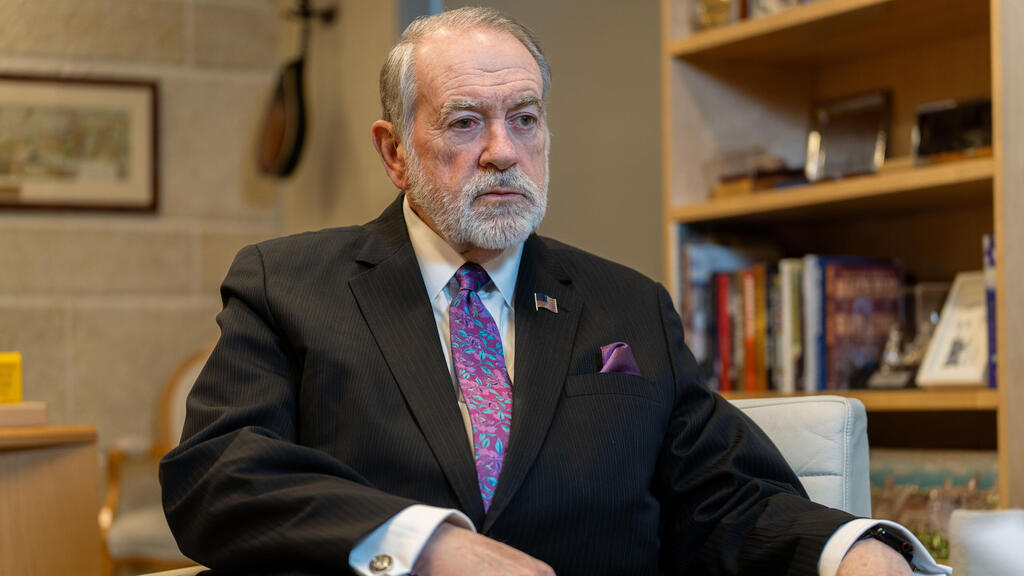
Back in his Jerusalem office, beneath the guitar and banjo, Huckabee said he remains optimistic about diplomacy, about Israel’s future, and about a partnership he believes has weathered far worse storms.
“There’s a terrific story here,” he said. “And it’s one worth telling.”