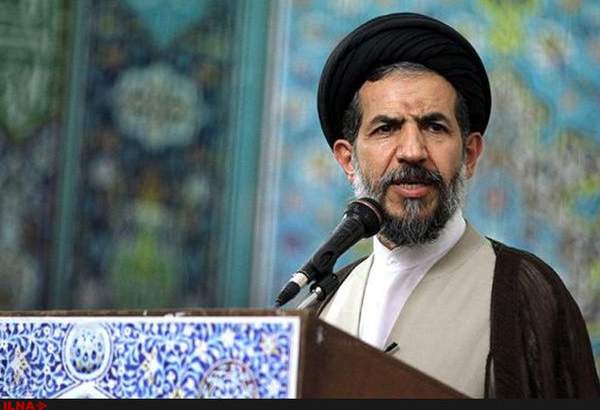
In his Friday prayer sermon in Tehran, Hujjat-ul-Islam Sayyed Mohammad Hassan Aboutorabi-Fard criticized what he described as “global arrogance” and those opposed to Iran’s regional influence, saying they have subjected the country to years of severe economic pressure.
He noted that in previous years Iran exported more than two million barrels of oil daily, with revenues returning smoothly. At the time, each barrel sold for around $100. However, he said, under current sanctions and restrictions, Iran’s oil exports face serious challenges, and the return of revenues has become increasingly difficult. He added that since 2014, oil prices have dropped to nearly half their former value, intensifying the strain.
In another part of his sermon on Friday December 19, the cleric called on worshippers to pray for “victory-seeking fighters” and asked God for divine support and the defeat of what he described as “enemies of humanity.”
Turning to religious themes, Aboutorabi-Fard highlighted the scholarly and spiritual status of the Prophet’s household (Ahl al-Bayt), describing them as symbols of knowledge, wisdom, and devotion. He said their teachings combine science with patience, shaping believers into virtuous individuals. Strengthening ties with the school of Ahl al-Bayt, he added, reinforces values of knowledge, dignity, and generosity—pillars upon which Islamic society rests.
He emphasized that the Ahl ul-Bayt (AS), household of Prophet Mohammad (PBUH), are not only teachers of knowledge but also guides in governance, showing humanity the correct path of worship and growth.
Outlining the foundations of religious politics in Islamic thought, he stated that true political leadership must be built on knowledge, patience, mercy, and magnanimity. In Islam, he concluded, politics is not a tool for worldly gain or power, but must be defined by the qualities of learned, patient, and noble scholars.
taghribnews.com/vdcdsx05oyt0zj6.em2y.html