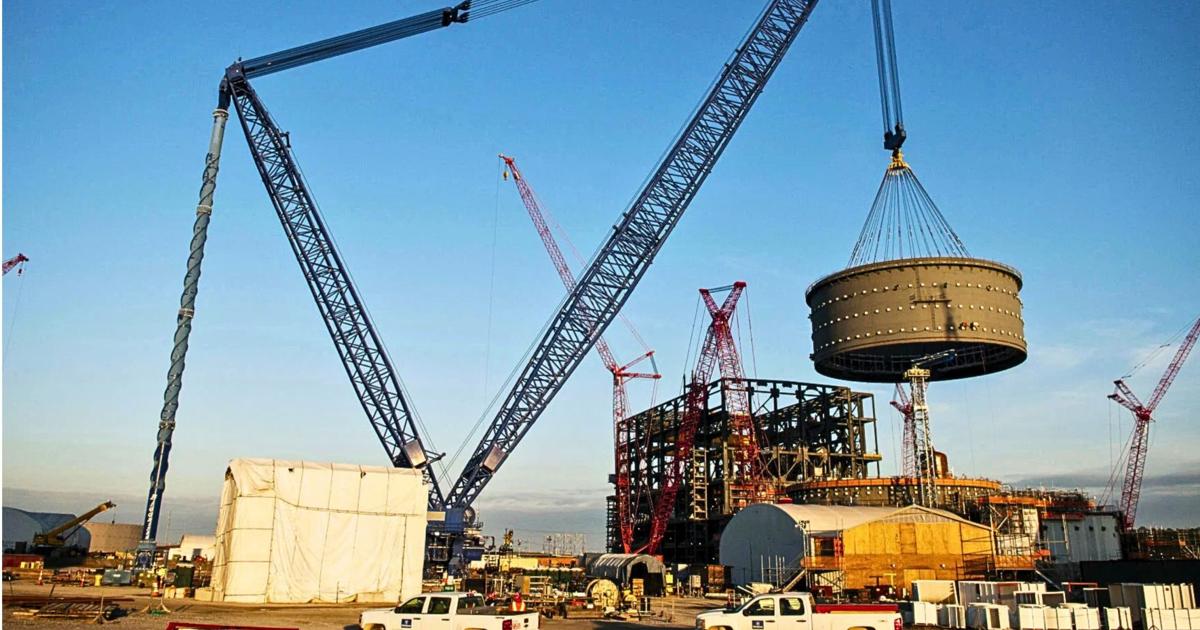
A lot of parts have been moving in the past month in the proposed resurrection of South Carolina’s biggest business failure, so as an early Christmas present, I thought I’d round up what’s going on with the left-for-dead nuclear construction project, and what could happen next.
The state’s nuclear summit earlier this month painted a rosy picture of South Carolina’s nuclear future, and while there are a lot of uncertainties and important unanswered questions, it’s important to say that this is all upside for South Carolina. Assuming nothing changes.
Of course we know that things are always liable to change in South Carolina when utilities get involved, and often not to the good of the public. But to clarify the most common misconception, the deal as currently envisioned does not require Santee Cooper or its ratepayers or S.C. taxpayers to pay anything. Indeed, as the S.C. Daily Gazette reports, the memo of understanding approved Dec. 8 by the Santee Cooper board requires Brookfield Asset Management to reimburse the utility for any past and future costs from the deal-making process, which could include hiring the consultants that helped it solicit and review proposals and even the cost of readying the site for Brookfield’s inspection.

Scoppe
Again, things can change. The deal, as The Post and Courier’s John McDermott reports, won’t be finalized for at least two years. Brookfield could end up demanding that Santee Cooper put in money or assume risk, either of which has the potential of making this a bad deal. But for that to happen, the board would have to approve it in a public meeting. And although I’m not sure the Legislature would have to approve anything like that, it certainly could stop it, so deeper Santee Cooper involvement would need legislative buy-in. Which probably is unlikely.
Our biggest risks, I think, are that Brookfield walks away or that it demands and the Legislature grants changes to state law that could negatively affect all S.C. consumers.
What gives me confidence that Brookfield will stick with this is a separate agreement it reached with the Trump administration in October promising federal support and expedited permits to build 10 Westinghouse AP1000 reactors across the nation. So it’s committed not only to building nuclear but to building the particular model that sits unfinished in Fairfield County. I’m not crazy about getting back into bed with Westinghouse, which was a big driver of the collapse of the first effort to build these two reactors. But it has a new owner now, so it’s probably not fair to consider it the same company.
Far more likely is that our lawmakers’ answer to the question about what has to change to allow Brookfield to sell electricity will be one that hurts us.
Santee Cooper has explained this deal as one that will allow Brookfield to supply electricity for data centers and other large new manufacturers in South Carolina, whose voracious appetite for electricity would otherwise force S.C. utilities to build new electricity generating plants, which would increase everybody else’s monthly power bills. This, in other words, would be the sort of bring-your-own-electricity plan that my colleagues and I had called on new data centers to develop in order to protect the rest of us from subsidizing them even more than we already do through state and local tax incentives.
But as I explained last month, only regulated utilities can legally sell electricity in South Carolina, so either Brookfield would have to become a utility, which won’t happen, or it would have to sell its electricity to Santee Cooper or another utility, which could dilute the bring-your-own-electricity aspect of the deal, or else it would need to persuade the Legislature to change state law.
Several large energy users tried this year to convince the Legislature to allow limited retail choice, which would let them purchase electricity from anyone, and that effort will be back in January. It’s possible that it could benefit South Carolina, but only with a major change: It would have to apply only to new facilities. Without that change, it could leave Dominion, Duke and the electric cooperatives with what’s called stranded assets: electricity generation and transmission capacity that they built to serve those major users and suddenly have no market for. That would mean higher rates for everybody left behind, just as surely as building extra capacity to serve the new energy hogs will.
I’m not sure the Legislature is ready to say no to Dominion, Duke, the cooperatives and the municipal power companies; witness the House’s “give the utilities everything they could ever dream of” efforts over the past two years.
But it likely would be much more amenable to a request from the company that promises to make Santee Cooper’s remaining $3 billion V.C. Summer debt disappear and turn a statewide embarrassment into the vanguard of our national nuclear renaissance — particularly if that company says it’ll walk away without a carveout to sell to anyone it wants. Some deregulation advocates even suggest this could be the nose under the tent to pass their larger deregulatory efforts.
There is one other option for Brookfield. As former Federal Energy Regulatory Commission spokesman and regulatory advocate Bryan Lee tells me, if the company gets these reactors up and running, it could apply for a federal bulk wholesale permit from FERC. That still wouldn’t allow it to sell electricity to anyone in South Carolina other than a utility, but it could sell it to anyone in a deregulated state, and Duke, Dominion and any other utility would have to transport the electricity.
Of course that would undermine a major talking point for Santee Cooper, which is that this deal will bring an additional 2,200 megawatts of power to our state. That’s something the Legislature clearly wants, so that would make the idea of changing our law to accommodate the deal more likely.
Click here for more opinion content from The Post and Courier.