Jeremy Paner, a partner at Washington DC law firm Hughes Hubbard and a former Office of Foreign Assets Control investigator, said the vessel had not been sanctioned by the US.
“The seizure of a vessel that is not sanctioned by the US marks a further increase in Trump’s pressure on Venezuela,� Paner said. “It also runs counter to Trump’s statement that the US would impose a blockade of all sanctioned oil tankers.�
The action was a “consented boarding�, with the tanker stopping voluntarily and allowing US forces to board it, according to a US official who spoke on the condition of anonymity.
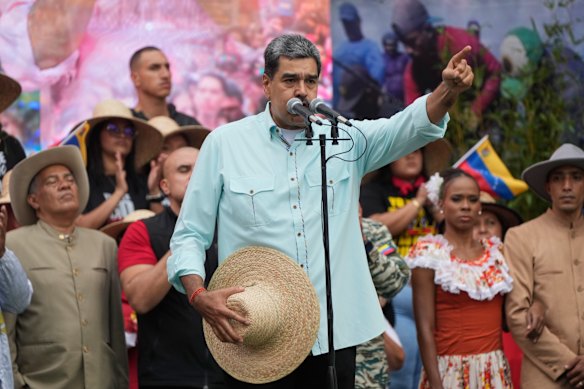
Venezuelan President Nicolas Maduro speaks to supporters at an event commemorating the Battle of Santa Isabel earlier in December.Credit: AP
Trump last week said he was ordering “A TOTAL AND COMPLETE BLOCKADE OF ALL SANCTIONED OIL TANKERS going into, and out of, Venezuela�.
In the days since US forces seized a sanctioned oil tanker off the coast of Venezuela last week, there has been an effective embargo in place, with loaded vessels carrying millions of barrels of oil staying in Venezuelan waters, rather than risk seizure.
Since the first seizure, Venezuelan crude exports have fallen sharply.
While many vessels picking up oil in Venezuela are under sanctions, others transporting the country’s oil and crude from Iran and Russia have not been sanctioned, and some companies,
particularly US-based Chevron, transport Venezuelan oil in their own authorised ships.
Loading
Since the US imposed energy sanctions on Venezuela in 2019, traders and refiners buying Venezuelan oil have resorted to a “shadow fleet� of tankers that disguise their location, and to vessels sanctioned for transporting Iranian or Russian oil.
Centuries, which loaded in Venezuela under the false name “Crag� and is part of the dark fleet, was carrying some 1.8 million barrels of Venezuelan Merey crude oil bound for China, according to internal documents from state oil company PDVSA, the oil’s seller.
China is the biggest buyer of Venezuelan crude, which accounts for roughly 4 per cent of its imports, with shipments in December on track to average more than 600,000 barrels per day, analysts
have said.
For now, the oil market is well supplied and there are millions of barrels of oil on tankers off the coast of China waiting to offload. If the embargo stays in place for some time then oil prices might rise.
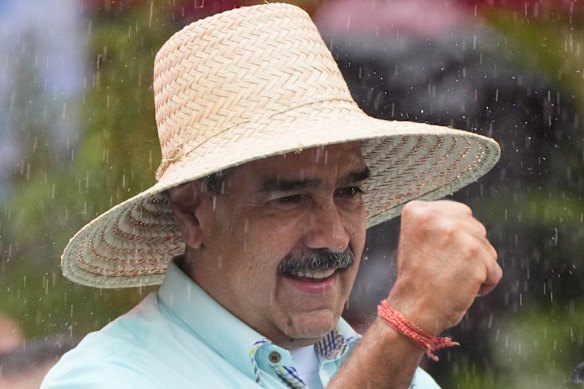
Venezuelan President Nicolas Maduro at a rally in Caracas earlier in December.Credit: AP
As of this week, of more than 70 oil tankers in Venezuelan waters that are part of the shadow fleet, about 38 are under sanctions by the US Treasury, according to data from TankerTrackers.com.
In recent months the US has sent a fleet of warships to the region, the largest build-up of forces in generations, and Trump has stated repeatedly that land attacks are coming soon.
Venezuelan President Nicolas Maduro has alleged that the US military build-up is aimed at overthrowing him and gaining control of the OPEC nation’s oil resources, the world’s largest crude reserves.
Loading
White House Chief of Staff Susie Wiles said in an interview with Vanity Fair published last week that Trump “wants to keep on blowing boats up until Maduro cries uncle�.
Amid accusations from Venezuela of piracy, US lawmakers have moved to bring back privateers, authorised by government-issued letters of marque, to ply the trade of piracy in service of their country by targeting enemy ships, The Washington Post reported.