Because it looks funny. For us it is the same as seeing clowns in circus.
It’s just 4 cases throghout 80 years and “it’s popular”?
It’s an old Polish form of comedy called “Halyna, ja nie moge, chłop sie za babe przebrał!”
“Chłop przebrany za babę, ale jaja XD”
Because it’s absurd. Also an easy way to show a female character is an ugly cunt without calling an actual woman ugly.
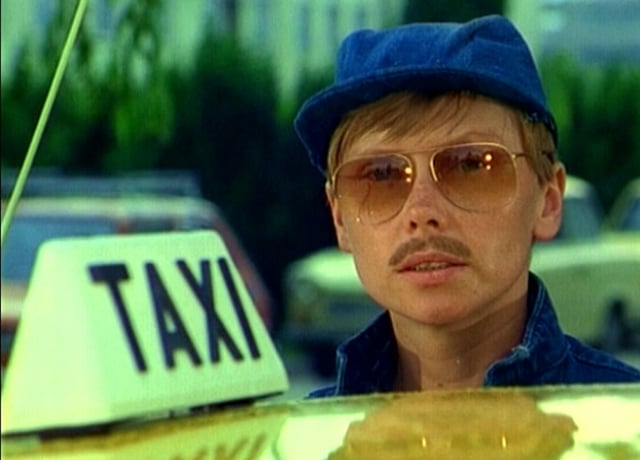
In the last it’s a woman that just wants to make it as a taxi driver so a field almost exclusively of men. It’s a story.
It was used as others said “haha ‘le funny man dressed as a woman”. I never thought it was that funny, it was annoying at best because the man was usually a stereotypical woman.
Maybe it’s just a thing people want to do, if they’re adults they should be able to do want they want without judgment.
Haha funny man in dress
It’s not a Polish-specific type of humour, in Czechia we have a lot of examples of that, too, as do other cultures.
Because chłop co się za babę przebrał is the peak of Polish humor
my Polish father saw a pantomime for the first time in the UK during WWII and was totally bemused that the principal boy was a girl and the ugly sisters were two men
Because funny
Old Polish tradition. Later incorporated into greek drama.
Bodo ate.
I will boldly assume that it’s because historically Poland was a very homophobic country that followed very strict social gender rules (Men are supposed to be like this, women like this. And for whatever stupid reason, people perceived men wearing women clothes as homosexuals).
Somehow crossdressing became a thing in the comedy content, as others have pointed out, “hehe pacz chłop się za babe przebroł”. There could be many reasons for that, but I’m not educated well enough to even attempt to figure it out.
Unless you mean crossdressing outside massmedia, like in real life then…oh well. That’s completely different story but I’d say it’s because this toxic old school way of thinking is **slowly** being erased and people of all ages can finally feel themselves. After all, clothes has no gender. The only thing that tells us “this is made for women” is the social rules I mentioned before. Especially among youth you can see a rise in liberal views because people are tired of being limited by some stupid, imaginary rules.
Can anyone tell me what movie is the 4th picture? It is so familiar to me. I think I’ve seen it when I was a child (early 90s).
First actor was killed in Soviet camp in 1943 after 2 years of imprisonment because Russian orcs claimed he was a spy. Until 1990 it was widely unknown.

szczyt komedii chłop się za babę przebrał
It’s not
is or was?
Beacuse of plot
Ukraine has the same traditions, particularly in the wedding celebrations, probably it’s a common eastern European thing.
It’s not about westerners gender dysphoria things or something but just for gags.
I don’t know, being a teen in 00’, it was just funny to see the “what if” when your friends put on a wig or dress, like “omg you look like your sister/mom”. I knew one legit anime style crossdresser (he was a gentle soul) and one “metro” hetero guy (he legit painted his nails). Oh and a few furries out of suit, they were quite fem presenting
It is not
O kurła paczej na to. Chłop za babe przebrany! xD
It’s not, you just cherry picked moments when people mocked crossdressing.
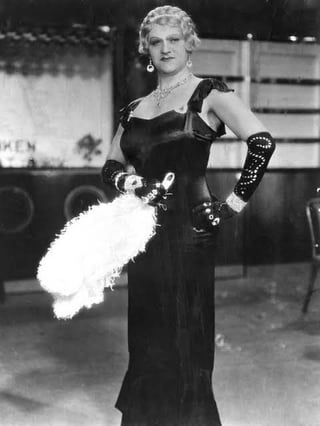
I would guess it’s because of the first guy you showed – Eugeniusz Bodo. His “Sex appeal” song was a smash hit before war and it’s still performed to this day – though these days more often by women. His usual brand as an actor was that of a handsome, manly man, so the whole style of it being painfully obvious that it’s a man, yet all the characters playing it straight, is also his influence.
(and on a more practical note, comedy troupes in Poland were and still often are all male – so dressing one up is easier than finding a woman)
It is considered a pinnacle of humor, just along pretending to be drunk.
because it funy
The stronger the gender roles the more productive it is for artists to break them.
Different countries, different taboos.
UK? Do not mention Monty Python.
Dude dressed like chick = funny
What is what where???
‘The idea of cross-dressing as a theatrical staple has been around since medieval England. By 1598, when William Shakespeare presented As You Like It, which featured a cross-dressing heroine who disguises herself as a young boy and followed up with The Merchant of Venice (1600) as well as Twelfth Night (1602), on-stage cross-dressing had become the norm.
Silent-era films featured Charlie Chaplin (A Woman, 1915), Stan Laurel (Chasing the Chaser, 1925) occasionally dressing as women, and American actor, Wallace Beery, who appeared in a number of silent films as a Swedish woman. It wasn’t unusual to see the Three Stooges in drag, although at the time the idea of cross-dressing was largely executed for laughs. However, Alfred Hitchcock’s Murder! (1930) was no laughing matter. Soon after, movie star Greta Garbo starred in Queen Christina (1933), and Lionel Barrymore featured in The Devil Doll (1936): in both of those films, the actors appeared playing the opposite gender.
In 1953, Glen or Glenda was considered groundbreaking for its time. In 1959, Billy Wilder’s Some Like It Hot featured Jack Lemmon and Tony Curtis dressed as women. It caused an uproar from the Catholic League of Decency which deemed it “seriously offensive to Christian and traditional standards of morality and decency.” Nearly ten years later, in 1968, the film was considered groundbreaking in terms of helping to create a more inclusive and queer-friendly culture.
The 70s brought a different attitude to androgyny and cross-dressing when the likes of David Bowie and Iggy Pop became influential, not only in music but in fashion. It was the same era that produced Female Trouble, starring cross-dresser Divine, in 1974. The following year, The Rocky Horror Picture Show became a phenomenon worldwide. And in 1978, La Cage aux Folles earned a Golden Globe for Best Foreign Language Film.
The 80s films include Dressed to Kill (1980), the Oscar- and Golden Globe-winning movie Tootsie (1982), and Victor Victoria, in 1982, a remake of a German film from 1933 which saw Julie Andrews in the complicated role of a female impersonator, or as Andrews herself succinctly described her role, “a woman pretending to be a man, pretending to be a woman.” The role earned her a Best Actress Golden Globe in 1983. Barbra Streisand starred in Yentl (1983) and took home Oscar and Golden Globe trophies, and Harvey Fierstein rounded the decade with Torch Song Trilogy (1988)…. ‘
It’s popular in any culture as long as you MAKE AUDIENCE SURE you’re not gay or trans or anything close.
In Polish popular culture, the image of a man dressed as a woman (in cabaret and older films) often served as a parody: by exaggerating gender roles and stereotypes, it created humor based on the “reversal” of the norm. In practice, however, this reinforced the association that a male-coded person expressing femininity is, by definition, a comical element. *Chłop przebrany za babę* is a really *funny* thing to laugh about, especially among boomers
This association does not disappear with a change of context and is sometimes transferred to contemporary social situations.
That’s why, as a result, gender-nonconforming people, including transgender people, may encounter reactions such as mockery, condescending laughter, or being reduced to a “disguise” instead of being recognized as subjects. This is especially true in the early stages of transition, when some people may still display characteristics stereotypically considered masculine (e.g., voice, facial features, physique), which triggers the old “comedic code” in the eyes of those around them and reinforces stigmatization.
47 comments
“Pa Halina, chłop za babę się przebroł, he he”
Because it looks funny. For us it is the same as seeing clowns in circus.
It’s just 4 cases throghout 80 years and “it’s popular”?
It’s an old Polish form of comedy called “Halyna, ja nie moge, chłop sie za babe przebrał!”
“Chłop przebrany za babę, ale jaja XD”
Because it’s absurd. Also an easy way to show a female character is an ugly cunt without calling an actual woman ugly.
In the last it’s a woman that just wants to make it as a taxi driver so a field almost exclusively of men. It’s a story.
It was used as others said “haha ‘le funny man dressed as a woman”. I never thought it was that funny, it was annoying at best because the man was usually a stereotypical woman.
Maybe it’s just a thing people want to do, if they’re adults they should be able to do want they want without judgment.
Haha funny man in dress
It’s not a Polish-specific type of humour, in Czechia we have a lot of examples of that, too, as do other cultures.
Because chłop co się za babę przebrał is the peak of Polish humor
We’re all femboys at heart
You forgot “Czy Lucyna To Dziewczyna?”.
https://preview.redd.it/7a51lg743k8g1.jpeg?width=1500&format=pjpg&auto=webp&s=444c5362697a2ffec43e11024fefdbd039581bf3
“No nie wyczymie chłop się za babe przebrał XDDD”
my Polish father saw a pantomime for the first time in the UK during WWII and was totally bemused that the principal boy was a girl and the ugly sisters were two men
Because funny
Old Polish tradition. Later incorporated into greek drama.
Bodo ate.
I will boldly assume that it’s because historically Poland was a very homophobic country that followed very strict social gender rules (Men are supposed to be like this, women like this. And for whatever stupid reason, people perceived men wearing women clothes as homosexuals).
Somehow crossdressing became a thing in the comedy content, as others have pointed out, “hehe pacz chłop się za babe przebroł”. There could be many reasons for that, but I’m not educated well enough to even attempt to figure it out.
Unless you mean crossdressing outside massmedia, like in real life then…oh well. That’s completely different story but I’d say it’s because this toxic old school way of thinking is **slowly** being erased and people of all ages can finally feel themselves. After all, clothes has no gender. The only thing that tells us “this is made for women” is the social rules I mentioned before. Especially among youth you can see a rise in liberal views because people are tired of being limited by some stupid, imaginary rules.
Can anyone tell me what movie is the 4th picture? It is so familiar to me. I think I’ve seen it when I was a child (early 90s).
First actor was killed in Soviet camp in 1943 after 2 years of imprisonment because Russian orcs claimed he was a spy. Until 1990 it was widely unknown.

szczyt komedii chłop się za babę przebrał
It’s not
is or was?
Beacuse of plot
Ukraine has the same traditions, particularly in the wedding celebrations, probably it’s a common eastern European thing.
It’s not about westerners gender dysphoria things or something but just for gags.
https://preview.redd.it/v2sdcqzw6k8g1.png?width=883&format=png&auto=webp&s=33399626efba19c41a67bbdfe08eaf3dafe43fbf
I don’t know, being a teen in 00’, it was just funny to see the “what if” when your friends put on a wig or dress, like “omg you look like your sister/mom”. I knew one legit anime style crossdresser (he was a gentle soul) and one “metro” hetero guy (he legit painted his nails). Oh and a few furries out of suit, they were quite fem presenting
It is not
O kurła paczej na to. Chłop za babe przebrany! xD
It’s not, you just cherry picked moments when people mocked crossdressing.
I would guess it’s because of the first guy you showed – Eugeniusz Bodo. His “Sex appeal” song was a smash hit before war and it’s still performed to this day – though these days more often by women. His usual brand as an actor was that of a handsome, manly man, so the whole style of it being painfully obvious that it’s a man, yet all the characters playing it straight, is also his influence.
(and on a more practical note, comedy troupes in Poland were and still often are all male – so dressing one up is easier than finding a woman)
https://preview.redd.it/8s1mnkvg8k8g1.jpeg?width=640&format=pjpg&auto=webp&s=d21423cc10a4ff3f94c6e679bb1cd01e8b06f913
It is considered a pinnacle of humor, just along pretending to be drunk.
because it funy
The stronger the gender roles the more productive it is for artists to break them.
Different countries, different taboos.
UK? Do not mention Monty Python.
Dude dressed like chick = funny
What is what where???
‘The idea of cross-dressing as a theatrical staple has been around since medieval England. By 1598, when William Shakespeare presented As You Like It, which featured a cross-dressing heroine who disguises herself as a young boy and followed up with The Merchant of Venice (1600) as well as Twelfth Night (1602), on-stage cross-dressing had become the norm.
Silent-era films featured Charlie Chaplin (A Woman, 1915), Stan Laurel (Chasing the Chaser, 1925) occasionally dressing as women, and American actor, Wallace Beery, who appeared in a number of silent films as a Swedish woman. It wasn’t unusual to see the Three Stooges in drag, although at the time the idea of cross-dressing was largely executed for laughs. However, Alfred Hitchcock’s Murder! (1930) was no laughing matter. Soon after, movie star Greta Garbo starred in Queen Christina (1933), and Lionel Barrymore featured in The Devil Doll (1936): in both of those films, the actors appeared playing the opposite gender.
In 1953, Glen or Glenda was considered groundbreaking for its time. In 1959, Billy Wilder’s Some Like It Hot featured Jack Lemmon and Tony Curtis dressed as women. It caused an uproar from the Catholic League of Decency which deemed it “seriously offensive to Christian and traditional standards of morality and decency.” Nearly ten years later, in 1968, the film was considered groundbreaking in terms of helping to create a more inclusive and queer-friendly culture.
The 70s brought a different attitude to androgyny and cross-dressing when the likes of David Bowie and Iggy Pop became influential, not only in music but in fashion. It was the same era that produced Female Trouble, starring cross-dresser Divine, in 1974. The following year, The Rocky Horror Picture Show became a phenomenon worldwide. And in 1978, La Cage aux Folles earned a Golden Globe for Best Foreign Language Film.
The 80s films include Dressed to Kill (1980), the Oscar- and Golden Globe-winning movie Tootsie (1982), and Victor Victoria, in 1982, a remake of a German film from 1933 which saw Julie Andrews in the complicated role of a female impersonator, or as Andrews herself succinctly described her role, “a woman pretending to be a man, pretending to be a woman.” The role earned her a Best Actress Golden Globe in 1983. Barbra Streisand starred in Yentl (1983) and took home Oscar and Golden Globe trophies, and Harvey Fierstein rounded the decade with Torch Song Trilogy (1988)…. ‘
https://goldenglobes.com/articles/cross-dressing-through-cinema/
It’s popular in any culture as long as you MAKE AUDIENCE SURE you’re not gay or trans or anything close.
In Polish popular culture, the image of a man dressed as a woman (in cabaret and older films) often served as a parody: by exaggerating gender roles and stereotypes, it created humor based on the “reversal” of the norm. In practice, however, this reinforced the association that a male-coded person expressing femininity is, by definition, a comical element. *Chłop przebrany za babę* is a really *funny* thing to laugh about, especially among boomers
This association does not disappear with a change of context and is sometimes transferred to contemporary social situations.
That’s why, as a result, gender-nonconforming people, including transgender people, may encounter reactions such as mockery, condescending laughter, or being reduced to a “disguise” instead of being recognized as subjects. This is especially true in the early stages of transition, when some people may still display characteristics stereotypically considered masculine (e.g., voice, facial features, physique), which triggers the old “comedic code” in the eyes of those around them and reinforces stigmatization.
We are truly the Femboy country
Poland is the land of the femboys
https://preview.redd.it/t3aj7f4kbk8g1.png?width=960&format=png&auto=webp&s=ebd61e5de81055b3c84a7e0559e19dc57c2c8791
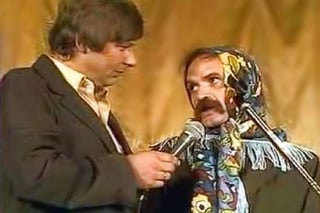
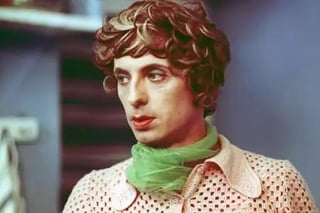
Second and third is i believe from stand up like perfomances called Kabarety
I mean there’s a reason why Poland has the highest concentration of femboys in europe
Because why not.
Comments are closed.