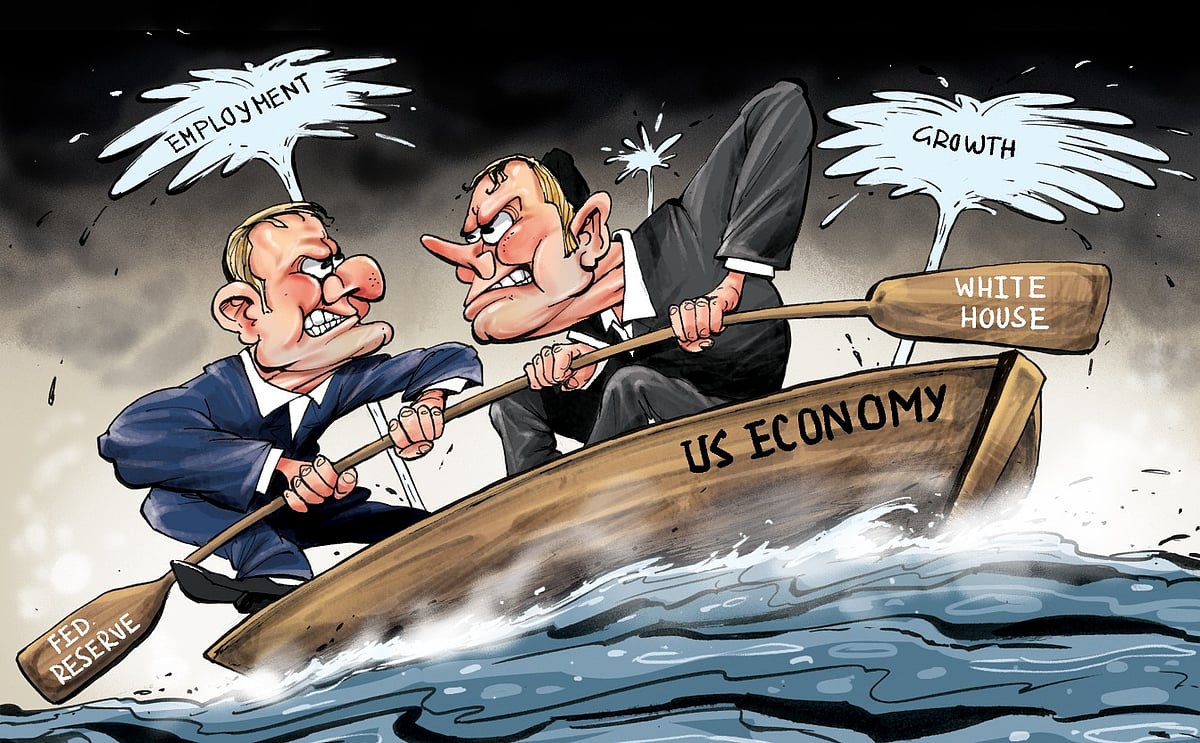
Central banks have limited tools—interest rates, regulating the money supply through open-market operations, quantitative easing (buying government debt) and forward guidance (open-mouth operations or jawboning). Budgets, the currency, international capital flows, and geopolitics (sanctions, trade restrictions) are outside its control.
The underlying economic models focus on NAIRU (non-accelerating inflation rate of unemployment) or the Phillips Curve, a simplistic trade-off between unemployment and inflation. In practice, these relationships are unreliable. Cause and effect are difficult to differentiate. There is no agreement on a neutral (not contractionary or expansionary) interest rate. Central bankers constantly validate Laurence J Peter’s judgment: “An economist is an expert who will know tomorrow why the things he predicted yesterday didn’t happen today.�
The problems are compounded by training and backgrounds that foster groupthink. Central bankers are economists, usually trained at the same universities, who spend their working lives within institutions, government, or academe, with limited commercial experience.
Central banks are run by economists providing employment for their tribe. Independent members rarely second-guess staff recommendations, even if they have the expertise and information.
Originally reticent, central banks, following the lead of former Fed Chairperson Alan ‘Maestro’ Greenspan, have embraced celebrity. Inscrutable invisibility has given way to volubility, X handles, and Delphic oratory. They play to financial markets with an excessive focus
on asset prices, which do not uniformly benefit all citizens. Politicians, never happy to share the limelight, increasingly resent the power and public profile of these unelected technocrats. They begrudge having to seek approbation for their policies. American presidents found themselves forced to kowtow to the all-powerful Greenspan. They are wary of the threat that central banks may pose to their position and re-election.