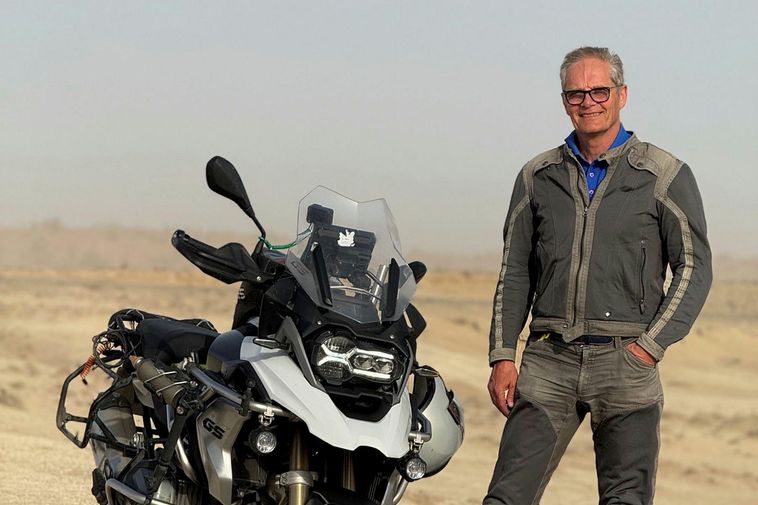
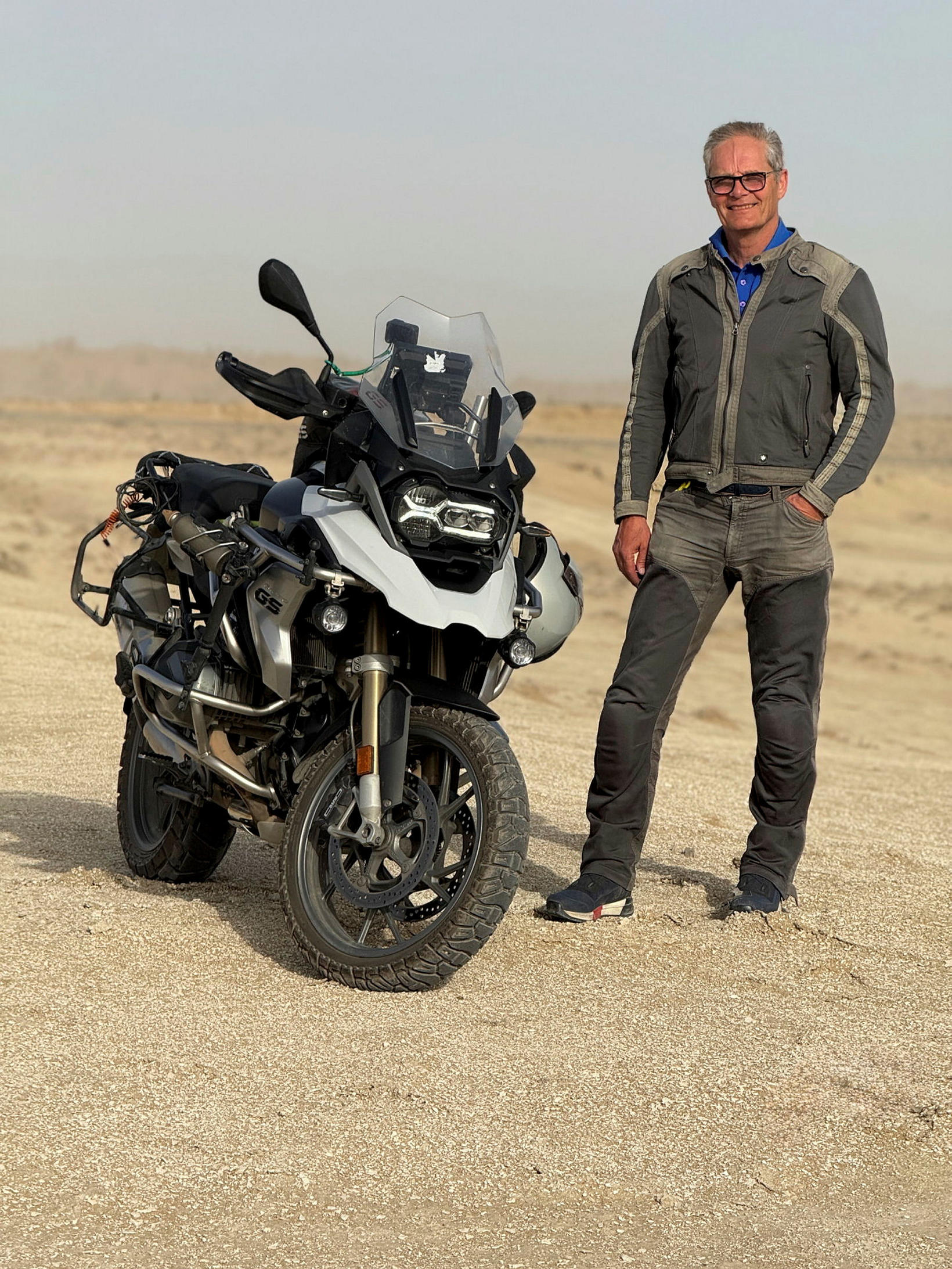
Kristján Gíslason has just completed his second motorcycle journey around the world.
Photographs/Kristján Gíslason
For more than a decade, adventurer Kristján Gíslason has been either preparing for a motorcycle journey, travelling, or working on books and travel programmes known as
Hringfarinn
, familiar to many. He has now completed his second journey around the world, and it is interesting to hear about his latest adventures in countries the average person has barely even heard of.
Being alone and self-reliant
“My life began after I quit golf. That’s when I found another passion
— and I’m driven by passion,” he
says, adding that he is perfectly content travelling alone. His wife, Ásdís Rósa, has often joined him on shorter trips and on parts of longer journeys.
“When I’m alone, I’m completely independent and can shape the journey exactly as I want,” he says. Gíslason spends a great deal of time connecting with local people and taking photographs and video footage that he later uses in his documentaries and books. On his most recent world trip, he focused especially on taking portraits of the people he encountered along the way.
“As soon as you’re alone and a bit stranded, struggling with something, people come to you. That’s how I’ve connected with people, and today I have friends all over the world,” Gíslason says, before explaining how his latest circumnavigation came about.
“It was never the plan to go around the globe a second time. I wanted to travel the Silk Road, the ancient route between Europe and China, through the ‘-stan’ countries of Central Asia. It’s one of the most famous trade routes in history
— breathtaking and steeped in mystery. Many of the countries it passes through were once part of the Soviet Union, which gives the journey a special character and depth. I then thought to myself: what would I do when I reached China — just turn around? I sent an inquiry to the Chinese embassy, and before long my wife and I were drinking tea with the ambassador, who was eager to do everything he could to help,” he says.
“In September 2024, when everything was ready, I set off. The journey began in Munich, Germany.”
Marble palaces — but something was missing
The next leg of the journey took him into Turkmenistan, which G
íslason travelled through with a guide, as anything else is not permitted.
“This is a dictatorship, and I had to have both a driver and a guide with me at all times. All tourists are accompanied by guides. I then arrived in Ashgabat, which is the most beautiful capital city I’ve ever seen
— absolutely magnificent. There are white marble palaces lined up in rows, and even the streetlights are works of art. Then there are all the monuments standing along the broad avenues. There’s a marble mosque there that can hold ten thousand people,” he says. It is worth noting that Ashgabat is listed in the Guinness World Records as the city containing the greatest amount of white marble in the world.
“All the cars there are white or light grey, and people are fined if their cars are dirty. All the apartment blocks are also white, with mosaic artworks on the gable ends,” says G
íslason, who marvelled at the city’s beauty
— until he realised that something was missing.
“There were no people there!” he says.
A more in-depth interview with Gíslason
appears in The Sunday edition of Morgunblaðið, where he recounts the entire journey in detail.