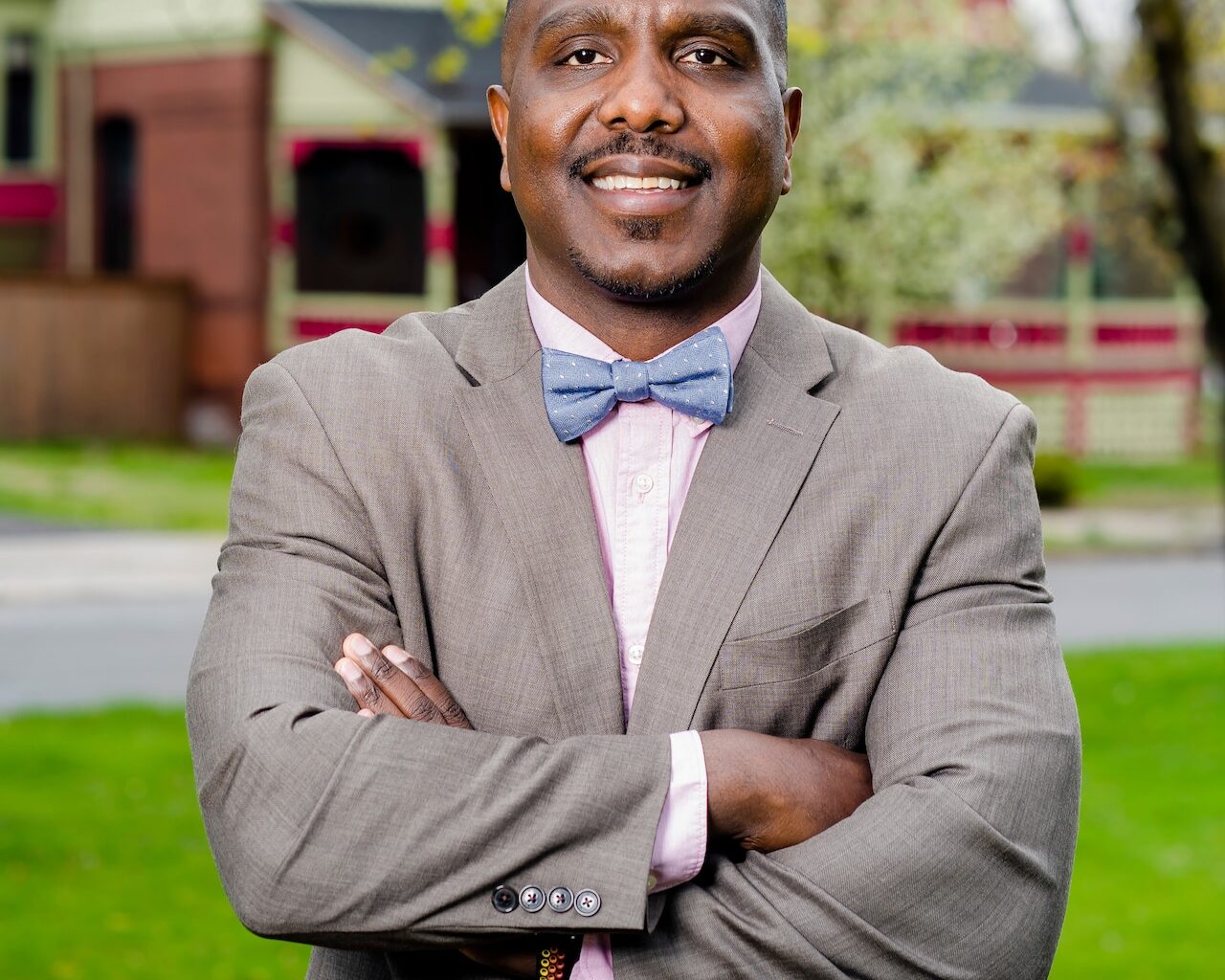
This year, I’m teaching at a neighborhood school in Forest Park, the same Springfield community where I live. Most of my students walk to class. Their families are from everywhere: Central America, the Caribbean, Africa, the Middle East.
All of them arrive at school each morning carrying a story, a culture, and a resilience that makes our classroom richer than any curriculum ever could.
And among them was one small, shy Mexican girl who changed the way I think about our immigration system.
She tried to disappear into her seat every day, hoping not to be called on. She rarely spoke. But her brilliance revealed itself the moment I began grading her work. Her insight, her reasoning, her mastery of the material, she wasn’t just good. She was gifted.
She carried a book with her everywhere she went. Sometimes two. She read the way some kids breathe, naturally, constantly and hungrily. In her, I saw the same spark I’ve seen in the successful women in my life.
One afternoon, after watching her quietly excel for weeks, I asked if she had ever heard of Mount Holyoke or Smith College.
She hadn’t. So I planted a seed.
“I could see you going there one day,” I told her. “What do you think? Look the schools up tonight and let me know.”
The next morning, she rushed into class with her eyes shining. She loved both colleges. She told me about the research she’d done. Then she hesitated.
“Do you really think I could go there?”
This was the moment, the one teachers know. The moment when a child stands at the edge of belief and waits for someone to push them gently forward.
“Yes,” I said. “Absolutely.”
And then I told her why.
I told her that both of my parents dropped out of middle school. I told her my grandmother had nine children and I became the first in my family to go to college. I told her I grew up poor. I told her there were times I was homeless.
And I told her that if I could make it, if a kid like me could walk across a college graduation stage, then there was no doubt in my mind she could, too. “If I could go,” I said, “you definitely can.”
From that day on, she gave even more than before, not because she hadn’t tried, but because someone finally saw in her what she had been too humble, too quiet, too unsure to see in herself.
She became one of my go-to helpers, the kind of student other kids listened to when they were tired of hearing my voice. She stood up straighter. She participated. She believed.
And then, after Thanksgiving break, she was gone. Not transferred. Not moved across town.
Gone, back to Mexico.
Her classmates told me her mother feared that ICE would separate them. Rather than wait for a knock on the door that could dismantle their family, they fled. Just like that, one of the brightest students I have ever taught, the kind of child who could have been a college scholar, a researcher, a leader, was forced out of the only place that had finally begun to feel like home.
This is the part of immigration debates no politician talks about. We are not sending back criminals. We are not sending back threats.
We are sending back our most brilliant children, the very students Massachusetts claims it wants to cultivate to build the workforce of the future.
We talk about wanting more first-generation college graduates. We spend millions on STEM pipelines and programs to diversify higher education. Yet we quietly drain that pipeline every time a child like her disappears without warning.
This isn’t just a political problem. It’s a moral one. And it’s an educational one. How can we preach about “closing achievement gaps” while allowing immigration policies to rip away students who are already closing them on their own?
The American Dream used to belong to children like her, the same dream once offered to Irish immigrants, to Italians, to Polish, to every group that walked through our gates with nothing but hope.
But today, families like hers live in constant fear. Their children learn with one eye on the door. They excel in silence because visibility feels dangerous. And when we lose them, we lose far more than a student.
We lose a future scientist.
A future teacher.
A future community leader.
A future college graduate who could have rewritten her family’s entire story.
America once prided itself on welcoming dreamers. If we want our classrooms, and our country, to thrive, we must return to that pride. Because we are not protecting America by sending families like hers away.
We are weakening it. We are shrinking it.
And we are sending our brightest children back across a border they never chose to cross.
It is time to ask ourselves a simple question: What kind of country pulls opportunity out of the hands of children who have already proven they can rise?
Because I know one little girl who was ready to rise. And we let her fall.
Johnnie R. McKnight of Springfield is an educator and regular contributor to The Republican.