The average European car has always been a bit different than the average American car. Smaller, more fuel-efficient, cheaper—attributes deemed necessary for buyers who live in a place where space comes at a premium, and where gasoline is far more expensive.
If the sales of EVs in Europe and the US last month are anything to go by, the average European car will soon be even more different than the average American car. While EVs represent a smaller share of the market in the US, the market share for EVs across Europe is higher than ever. The landscapes are changing rapidly, folks.


Sticking with the topic of slowing EV sales in America, Dodge finally managed to legalize its Durango SRT Hellcat—a vehicle everyone expected to die three years ago—for all 50 States after it ran into some emissions issues back in September. On the opposite end of the spectrum, Renault just broke an efficiency record with its Filante open-wheeler EV.
In other news, Toyota is getting back into stage rally in America. The best part? It’s doing so with the GR Corolla. For the first time in what feels like forever, Subaru will finally have some competition. Let’s get into it.
Europe’s Car Market Is Starting To Diverge Even More
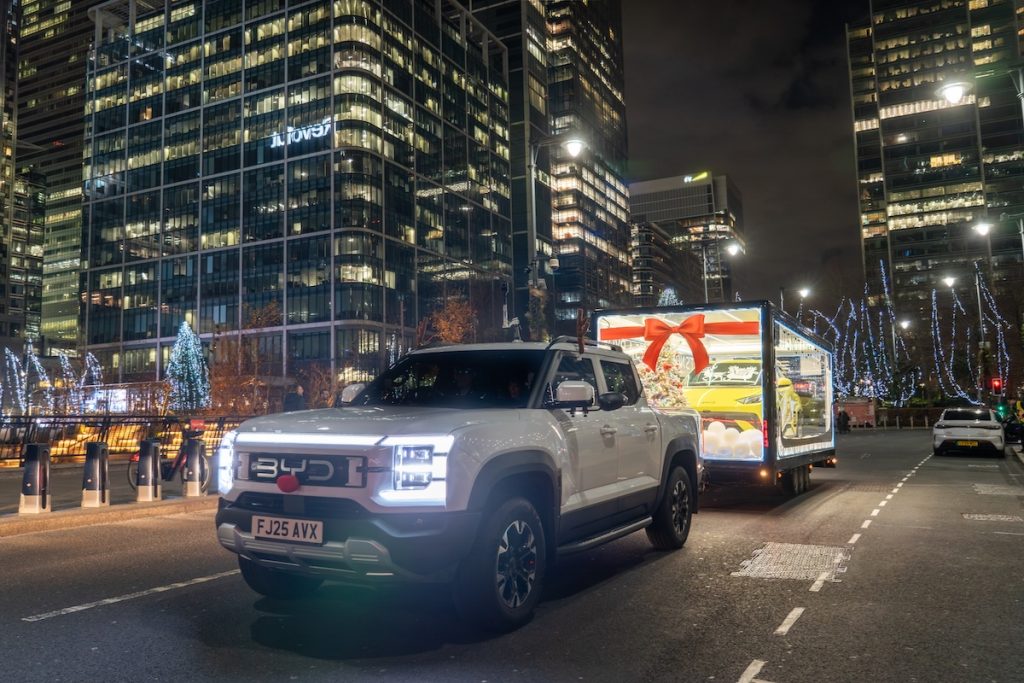 A BYD Shark 6 DMO towing a Dolphin Surf through London. Source: BYD
The disappearance of the federal tax credit and a shift away from nationwide emissions regulations mean the U.S. market is, in a way, turning its back on EV growth. In its place will likely be an onslaught of new plug-in hybrids and extended-range electric vehicles. Ford, knowing its buyer base for the all-electric F-150 Lightning was incredibly small and not likely to get any bigger, recently revealed an EREV version in its place.
The market is already seeing demand for EVs in America fall. While sales are about 2% higher than last year, the market share for electric cars is down to just 5.8% according to Cox, the lowest it’s been in over three years. Compare that to the European Union, which has EVs nearing a quarter of the market. From Reuters:
New car sales in Europe rose year-on-year in November for a fifth consecutive month, helped by an increase in EV registrations in markets including Germany, Italy and Spain, data from the European auto lobby ACEA showed on Tuesday.
Battery electric registrations, a proxy for sales, reached a market share of 21% in the European Union, 26% in the United Kingdom and 98% in Norway.
Unlike America, where the future of EV market share is a bit murky right now, analysts predict that electric cars will continue to take over more of the overall market in Europe, according to Reuters. This is despite the EU caving on its 2035 internal combustion ban last week. Even without that ban, the upcoming rules will be pretty strict.
As for which automakers won and lost in Europe last month, there weren’t many surprises. From Reuters:
Registrations at Volkswagen and Renault rose 4.1% and 3% year-on-year, respectively, while they fell 2.7% at Stellantis, a drop after three months of growth.
Tesla registrations fell by 11.8%, as record sales in Norway mitigated losses in other markets. They were up 221.8% at its Chinese competitor BYD. Tesla’s market share in the month was 2.1%, while BYD’s 2%.
Soon, the average European street will have mostly EVs. Compare that to America, which might have one in 10 cars be battery-electric in the next decade, if you’re lucky.
You Can Now Buy A Durango Hellcat No Matter Where You Live
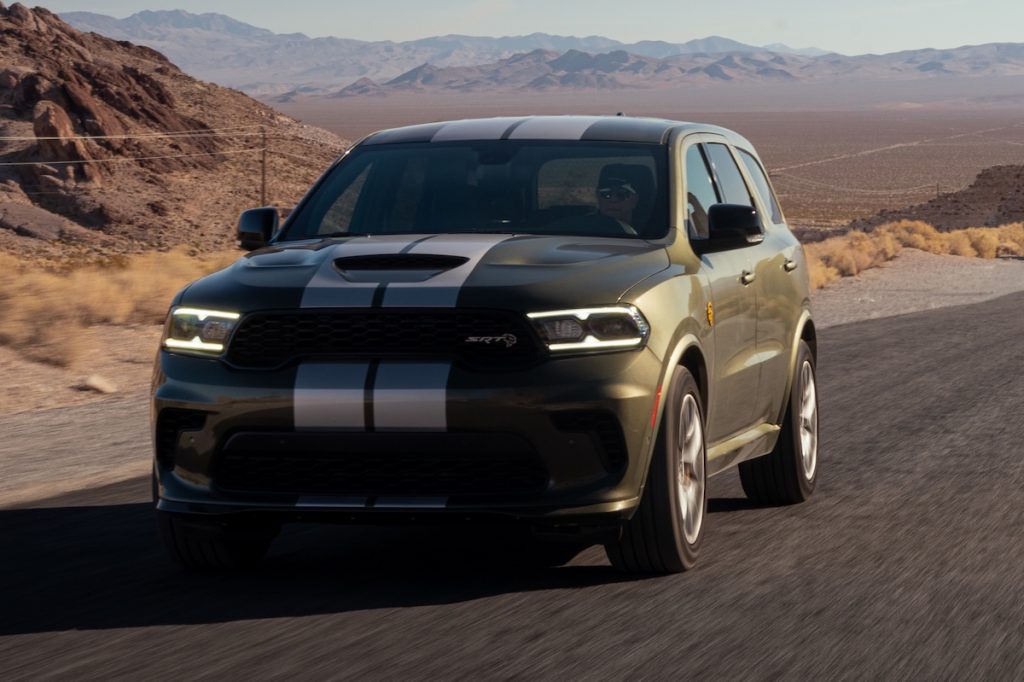 Source: Dodge
Earlier this year, Dodge announced it would be bringing back the 710-horsepower Durango SRT Hellcat for the 2026 model year. The Durango Hellcat was supposed to be a one-model-year-only affair back in 2021, but it’s managed to stay in production this whole time, presumably because a supercharged V8-powered three-row SUV is about the coolest-sounding thing on the planet for a lot of Americans.
Dodge hit a snag back in September when it revealed the Durango Hellcat wouldn’t be available in all 50 States because it wasn’t certified with the latest regulations from the California Air Resources Board (CARB). As of last week, though, that’s no longer the case. The SRT Hellcat is now available to order in the United States, no matter where you live.
In addition to the new certification, Dodge has revived a color called Triple Nickel for the 2026 lineup, and added new stripe options, including carbon-fiber stripes. You know, in case the normal stripes weren’t ridiculous enough for your full-size SUVs.
Renault’s Cool Concept Sets An Efficiency Record
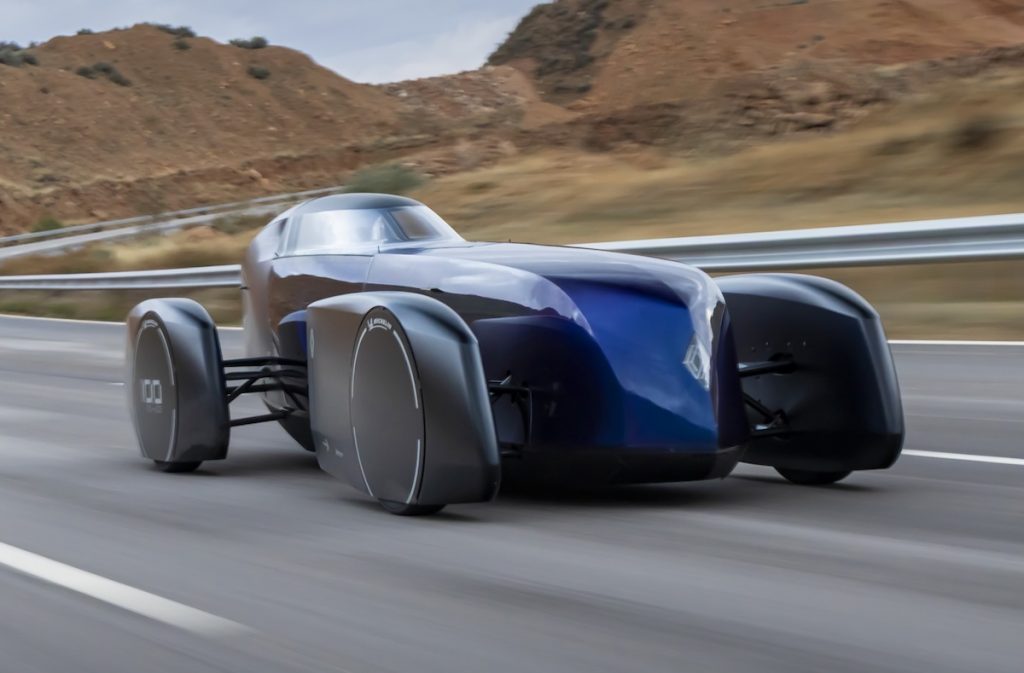 Source: Renault
At the beginning of the year, Renault showed off a concept car called the Filante, with the goal of using it to break some sort of EV record in 2025. The company really waited until the last second, but it did, in fact, achieve an efficiency record. From the brand:
One challenge that Renault set itself at the beginning of 2025 was to drive an electric vehicle more than 1,000 km, with a battery the same size as Scenic’s, at realistic motorway speeds, without stopping to charge. The first attempt was scheduled in October but was called off at the last minute due to bad weather. The team finally pulled it off on 18 December at the UTAC test track in Morocco.
If their only goal had been to drive the longest possible distance between charges, the designers and experts could have fitted the car with a huge battery or driven it in eco mode at 30 km/h on average. But Renault was aiming much higher with its efficiency record: it powered Filante Record 2025 Record with a regular battery (87 kWh, like the one in Scenic E-Tech electric) and tasked the drivers with keeping its average speed of over 110 km/h. The objective: to cover more than 1,000 km in less than 10 hours, including technical stops and driver changes.
Going 626 miles in 10 hours is one thing, but to do it at highway speeds is another. It’s proof that with enough aero and drivetrain work, these huge distances are possible for an EV without having to creep along at 25 mph.
Toyota’s Going Rallying Stateside
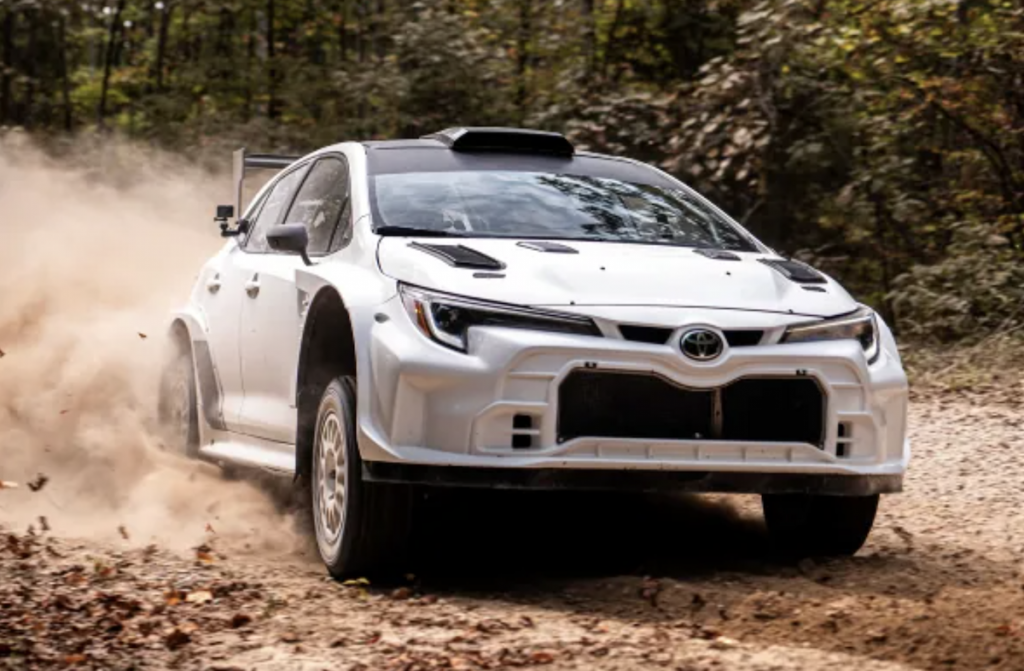 Source: Toyota
Since 2017, Toyota’s been competing in the World Rally Championship with its Yaris hatchback. The WRC sadly doesn’t have any presence in America, but there is the American Rally Association (ARA), which puts on a national championship of its own.
Toyota, wanting to sell more sports cars here, has decided to enter a modified version of its U.S.-market-specific GR Corolla into the series, with an American driver at the helm. From Toyota:
TGR will newly enter the ARA National Championship from Round 2 in 2026, with the aim of developing cars on North American roads and making ever-better motorsports-bred cars.
The rally car based on GR Corolla will compete in the RC2 class (roughly equivalent to Rally2 level).
The driver will be young American Seth Quintero, who will compete in ARA in parallel with W2RC.
TGR’s employees will also participate as engineers and mechanics to conduct hands-on development of pit human resources.
Toyota’s entry into the sport marks the first real factory effort from a brand other than Subaru in many, many years.
What I’m Listening To While Writing TMD
I’m writing TMD today from the basement of my girlfriend’s parents’ house in the suburbs north of Chicago. This is the second week in the past month I’m visiting, so naturally, I’m listening to Djo’s song, ‘End of Beginning,’ from his 2022 album Decide.
Somehow, I hadn’t realized until today that Djo is Joe Keery, the actor from Stranger Things.
The Big Question
What do you think the car landscape will look like in America compared to Europe in 10 years?
Top graphic image: