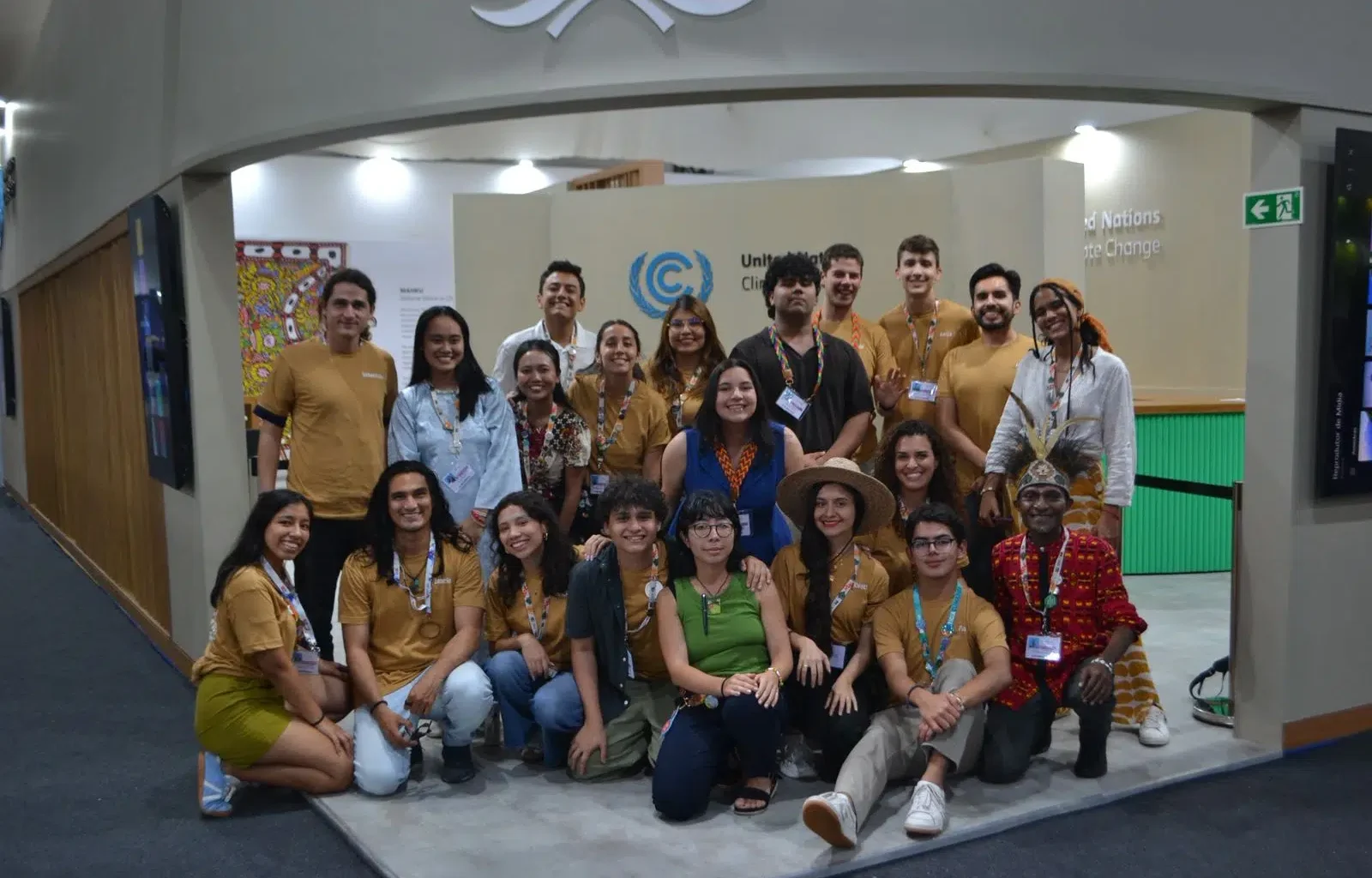
The youth of the Global South presented at the COP30 in Brazil a declaration seeking real participation in climate decisions.
Additionally, they aim to end their merely symbolic inclusion in international forums.
The initiative brought together 16 young leaders from Latin America, Africa, and Asia, representing more than 10,700 people from the Global South.
These delegates were part of the program Path to the Democratization of the South, led by the organization Life of Pachamama.
For six months, the participants were trained in leadership, climate diplomacy, strategic communication, and territorial action.
As a result, they developed the Global South Declaration, a document that gathers the voices of girls, boys, adolescents, and young people from territories historically excluded from the international environmental agenda.
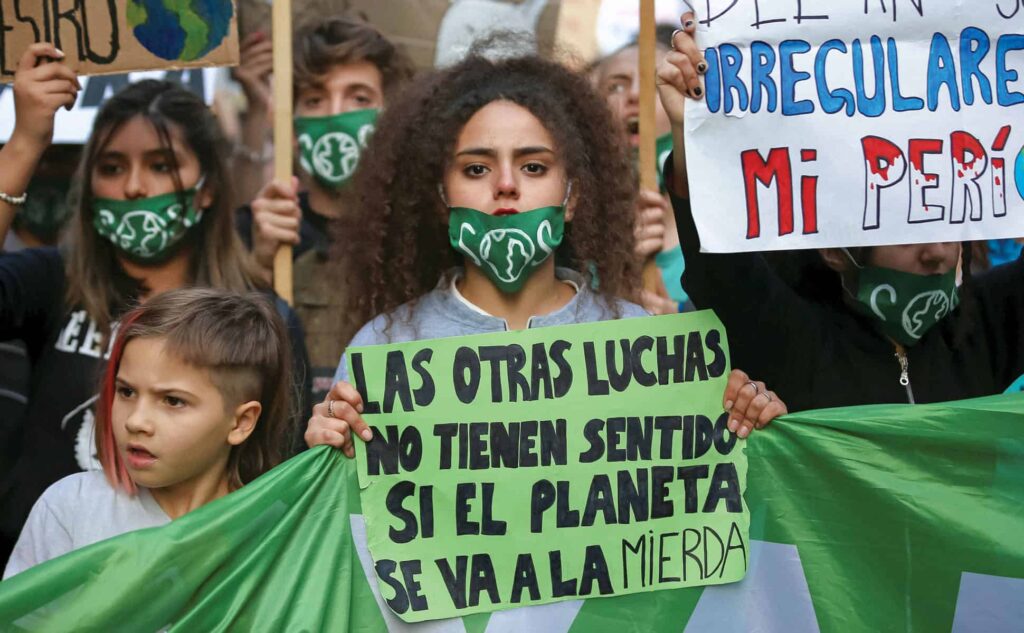
The 4 pillars of the youth from the Global South to transform climate governance
The presented declaration focused on four priority areas aimed at changing the way environmental decisions are made:
Decentralization and territorialization of climate governance
Corporate responsibility and regulation of the business sector
Protection and safety of environmental defenders
Transparency and democratic access to information
These proposals aim to ensure that the most affected communities by the climate crisis have direct influence on the policies that impact them.
Exclusion as a pattern in climate conferences
Juan David Amaya, activist for climate justice and executive director of Life of Pachamama, denounced that the COP remains a “quite exclusive scenario, mainly for children and adolescents.”
“We open the spaces ourselves because the COP, as such, is a quite exclusive scenario, mainly for children and adolescents,” Amaya stated.
The activist pointed out that the so-called “tokenistic patterns” became evident again at the conference.
These patterns provide a superficial participation to appear inclusive without generating real changes.
“Despite the increasing number of attendees under 30 years old each year, the existing mechanisms are not efficient or inclusive in a direct way,” he noted.
And he added: “This reproduces historical barriers and perpetuates inequalities that have marked these spaces.”
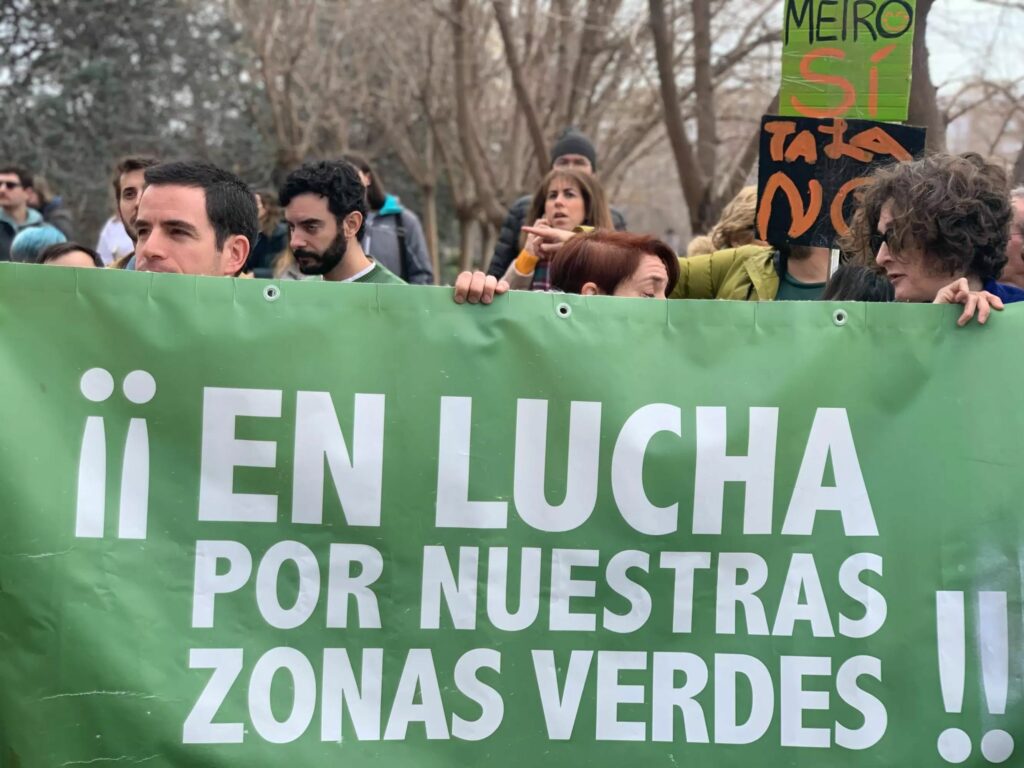
The solutions proposed by the youth of the Global South
However, Amaya highlighted that the youth presence allowed for insistence that those directly suffering the impacts of the climate crisis must influence decisions both at the global and local levels.
The director of Life of Pachamama argued that fair participation is essential because in childhood, adolescence, and youth “lie the change, transformation, and innovation.”
“We are the generation that did not cause the problem we face today, but we are the ones creating nature-based solutions to counteract the climate and social crisis we live daily. Time is running out: more ambition and action are needed to face this challenge,” he concluded.
The declaration seeks that climate decision-making spaces effectively incorporate the proposals of the youth of the Global South, recognizing their role as fundamental actors in building environmental solutions.