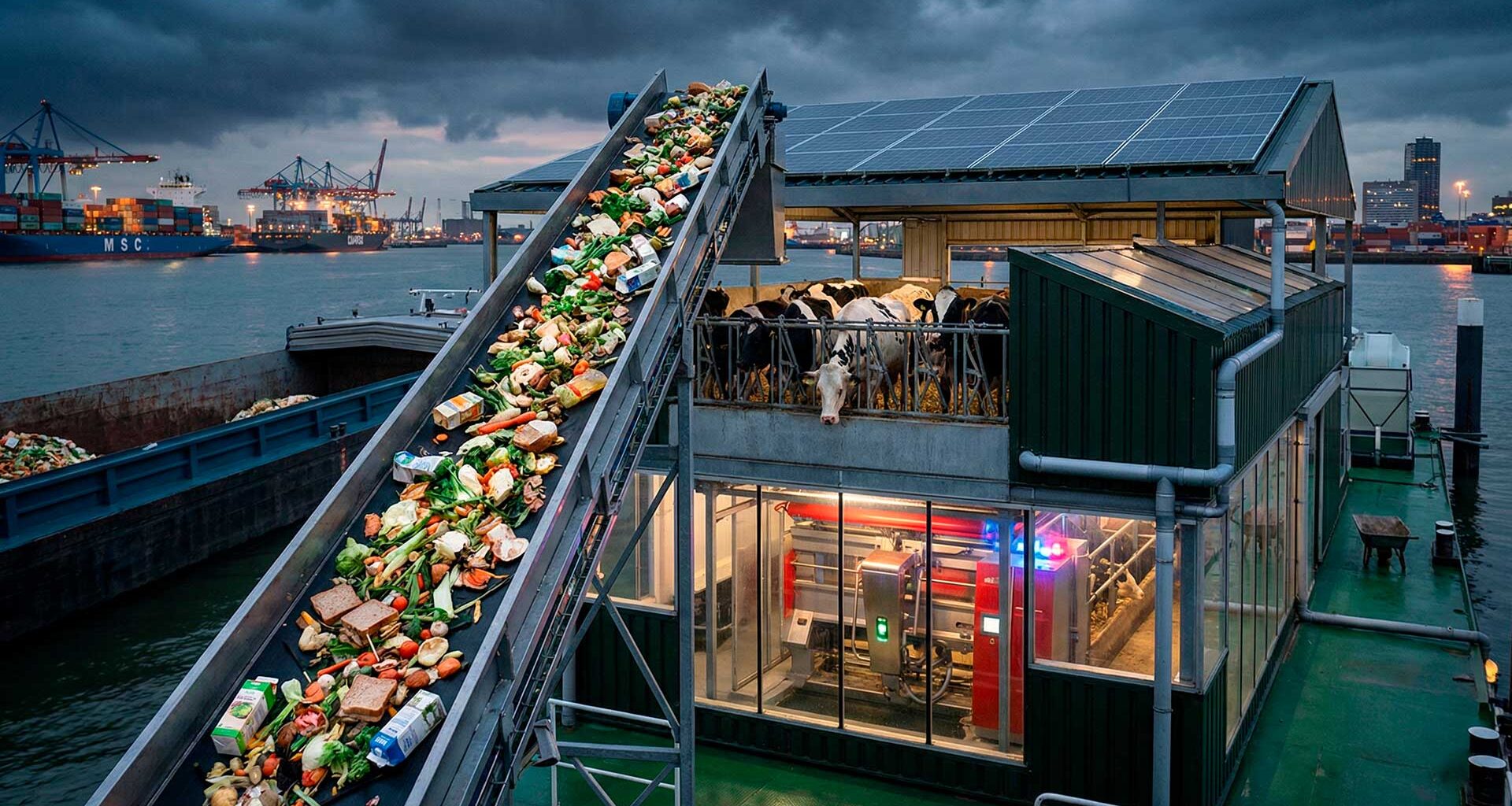
A platform in the port of Rotterdam houses dairy cows and transforms urban waste into feed, using solar energy and rainwater to maintain local production. The aim is to reduce waste, shorten logistics, and demonstrate how livestock farming can adapt to floods and climate change.
In Rotterdam, in the Netherlands, a floating farm docked in the port, it became one of the most talked-about experiments of urban agriculture in Europe. The central idea is simple to explain and difficult to ignore, to produce milk and dairy products on top of water, just a few meters from where people live and consume.
The project functions as a “mini milk supply chain” within the city, combining breeding, milking, and processing. Instead of relying solely on distant pastures and long-distance transport, the proposal aims to shorten the food’s journey, reducing losses and some of the emissions along the way.
The farm was also designed to address a real problem in delta cities, such as Rotterdam. When heavy rains and floods strain infrastructure, keeping food production running can become a matter of food security.
See also other features
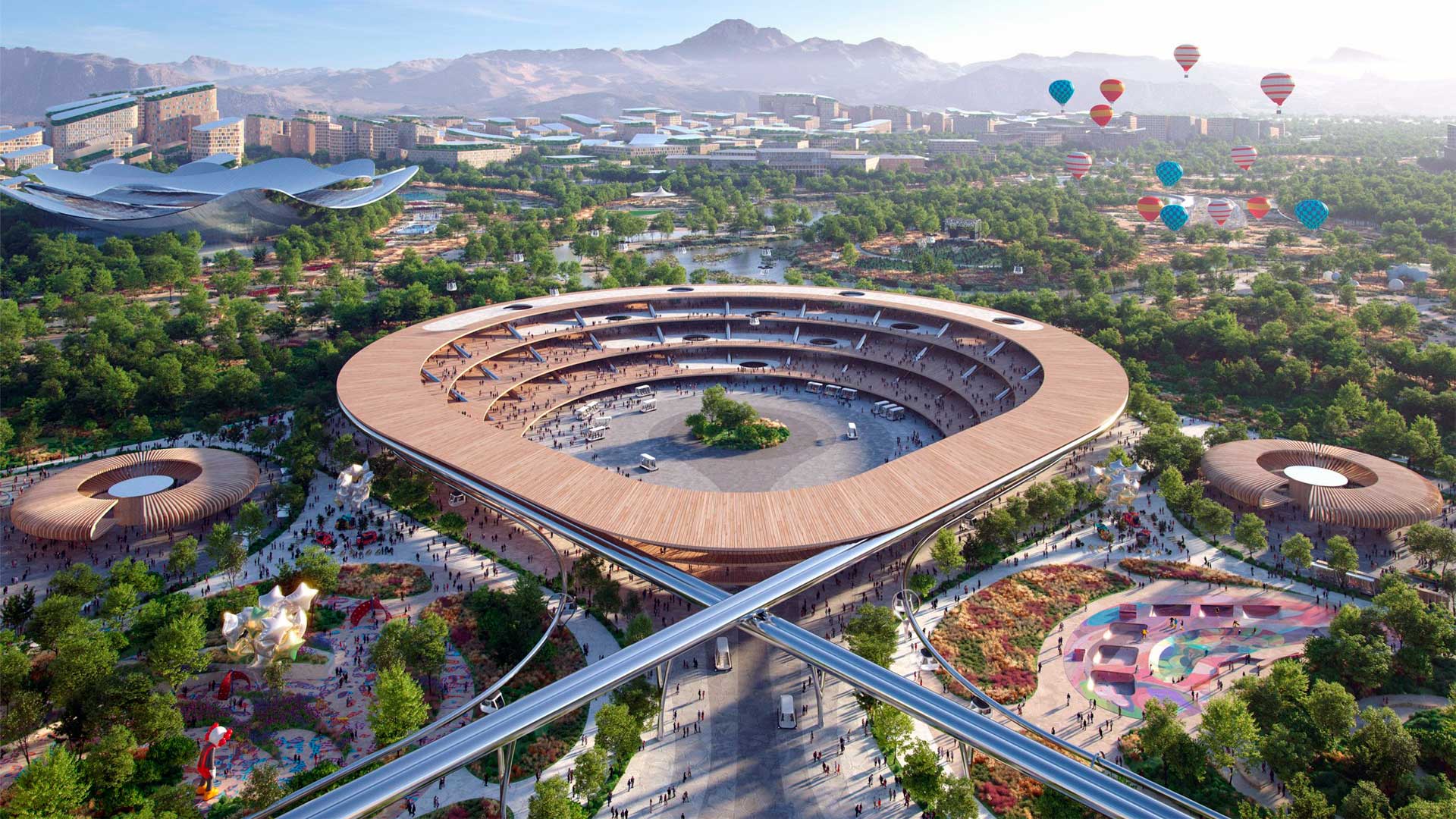
Billionaire wants to build a megacity in the desert for 5 million inhabitants at a cost of US$400 billion and promises to ban fossil fuel cars.
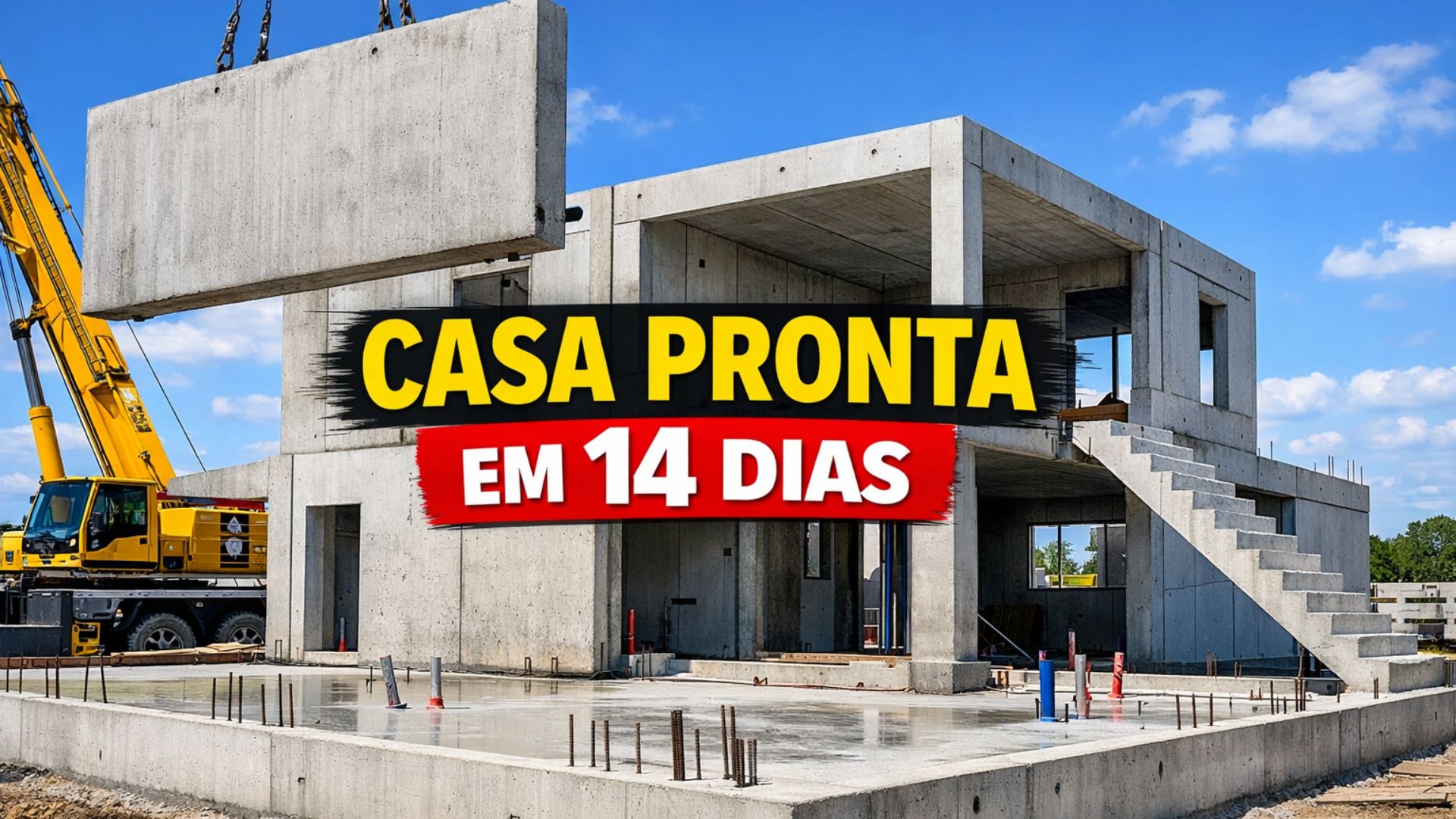
Concrete house completed in just 2 weeks impresses with its Lego-like assembly, high-strength concrete, millimeter-precise fittings, and monolithic foundation without traditional formwork.
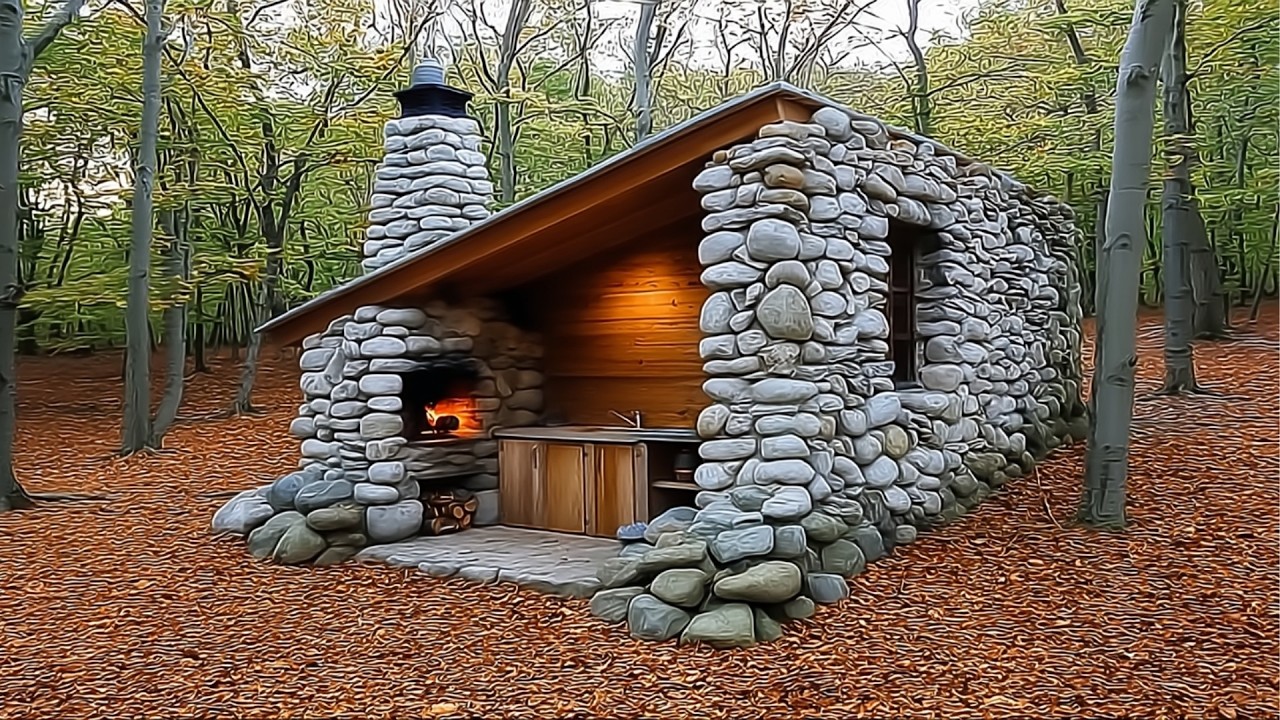
Without using machines, electricity, or modern tools, man builds houses, ovens, and entire structures from scratch using only clay, stone, wood, and ancestral knowledge.
The BR-470 highway duplication project is 85% complete after decades of delays; 11 km still need to be duplicated and seven viaducts need to be finished. The government promises full delivery in 2026, while traffic remains chaotic.
At the same time, the model is noteworthy for another reason: part of what feeds the cows comes from the city itself, in a logic of circular economyInstead of being considered “waste,” leftovers and byproducts become raw materials.
How does the floating milk farm in Rotterdam work?
The structure is a platform with multiple levelswhere creation and operations are organized as a compact system. The farm houses a small herd by rural standards, generally described as something around 30 to 32 cows, with a design to accommodate more over time.
One of the most frequently mentioned aspects by those who visit or cover the project is the presence of automation typical of modern livestock farming, such as automated milking and cleaning equipment. The goal is to maintain routine and hygiene in a limited space, without depending on large support areas.
Beyond the production itself, there’s a component of transparency and education. The farm was designed so that the public can see the stages of the process and understand where the milk comes from, an attempt to reconnect urban consumption and food production.
Urban waste becomes animal feed, and the city becomes part of the circular economy.
The most intriguing aspect of the project lies in the cows’ diet. Instead of relying solely on feed sourced from afar, the system seeks to utilize… local by-products, such as leftovers and surpluses from the urban food chain.
In practice, this can include items such as grains and byproducts from the food and beverage industry, as well as vegetable trimmings and waste. The logic is to use what already exists in the city, which would often become waste, as part of the nutrient supply.
There are estimates released by organizations and by the project itself indicating that a large part of the diet It can originate from the city, reinforcing the concept of circularity. For a metropolis, this has strong appeal because it transforms a liability into a resource and reduces dependence on long routes.
This choice also changes the debate about waste. Instead of only talking about household recycling, the farm puts the issue at the center of the discussion, showing that “leftovers” can have value when logistics and sorting are done well.
Floating solar power and rainwater help keep operations close to the consumer.
Another key aspect of the model is energy and water. The farm uses painéis solares Located near the infrastructure to supply part of the consumption, reducing dependence on external sources and reinforcing the discourse of cleaner production.
Water also plays a strategic role. The system provides for rainwater harvesting, with treatment for internal use, which helps reduce pressure on traditional water supplies and provides greater resilience in situations of water stress.
In more recent reports, the farm appears to be testing additional solutions related to the port’s own water, including desalination processes with less chemical use, utilizing heat recovered from the system. This shows that the project is not static; it incorporates new layers of technology as the operation matures.
Why the farm was born in the port and what does that say about climate and cities?
The choice of port is not merely aesthetic. Rotterdam is a city that has historically lived with water and the risk of flooding, and the discussion about climate adaptation there is practical, not theoretical.
According to reports from interviews and international coverage, the project’s inspiration gained momentum from observing how extreme events can disrupt supply chains. When logistics centers shut down, shelves empty quickly, exposing the fragility of “too far away.”
The floating farm attempts to address precisely that with the idea of proximityProducing within the city reduces steps, decreases dependence on long-distance transport, and creates a kind of small-scale food “insurance.”
At the same time, the project operates in a sensitive area where urban, port, and environmental interests coexist. Therefore, it becomes both a showcase and a target of questioning.
What still divides opinions about milk on top of water?
The first controversy is cost and scale. A floating farm could be a solution for niche markets and environmental education, but there is still debate about how much it can grow and compete with traditional systems without becoming just a showcase.
The second discussion revolves around what constitutes “green.” Some see real progress in circularity and short logistics, while others criticize the presence of automation and the system’s complexity, which may require expensive maintenance and supplemental energy.
Finally, there is the issue of animal welfare. Even with reports of stability and access to areas on dry land, some of the public question whether it makes sense to keep cows in a floating structure, and the answer usually depends on data and operational transparency.
Whether this type of farm is the future of cities or just an expensive experiment, the narrative battle is open. Do you think this innovation is a real solution or just a pretty symbol for photos? Leave your comment and tell us which side you’re on.