Debates about the European Union’s (EU) role in global politics and its status as an international actor are as frequent as ever before. This is partially a consequence of the EU’s self-proclaimed goal of becoming its own centre of power in international relations. For much of the current century, the EU has attempted to formulate a foreign policy strategy based on specific values, labelling its end goal as becoming a strategic and global actor which advocates for multilateralism, the strengthening of international law and the upholding of the rule of law. The means for this, traditionally, were soft power tools, focusing on economic cooperation and trade, the “offer” of EU membership in case of prolonged compliance with its ‘democratic norms’, and also international assistance to conflict-hit regions or countries.
Over the years, as the international system transitioned away from the dominance of multilateral institutions toward more fragmented, regional cooperation, the EU has tried to adapt, both in rhetoric and practice. The war in Ukraine served as a key catalyst, with the EU’s diversification away from Russian energy sources resulting in the pursuit of renewed cooperation with neighbouring regions under new terms. Moreover, the EU has recognized, on an institutional level, the importance of taking a leading role in regional connectivity processes. This portrays the EU as a highly principled actor in its external relations, one which follows clear guidelines, and makes operational decisions purely based on the normative logic outlined.
However, the verification of this rhetoric in practice reveals major inconsistencies. On numerous occasions, the EU has proven unable to treat regional landscapes and scenarios in a consistent fashion. Traditionally recognized for its economic might, the EU currently ranks as the world’s second largest economy, representing 14.7% of the global GDP share. However, the opportunities presented by these economic capabilities have not always been sufficiently realized. First, the EU’s agenda in specific regions has been limited by a lack of member state consensus, resulting in strategic paralysis and the loss of influence to other global centres of power. Second, the impact of overall EU policy has on several occasions been limited by a dominant position of either one or several member states.
The most vivid example of this is the South Caucasus, where the EU’s contribution was not always consistent with the values and principles it advocates for in other cases. This has prevented the bloc from avoiding engagement in geopolitical competition, leading to its appearance as a politically motivated actor seeking to influence regions not for the purpose of the common good but in accordance with individual, geopolitical calculations. As an actor striving for global relevance, however, the EU requires an urgent solution to such an issue. Therefore, this presents the EU with a defining challenge. Could it sideline a whole series of its ‘foreign policy’ limitations, mentioned above, and influence regional agendas as a neutral actor seeking to contribute to peace and drive economic growth?
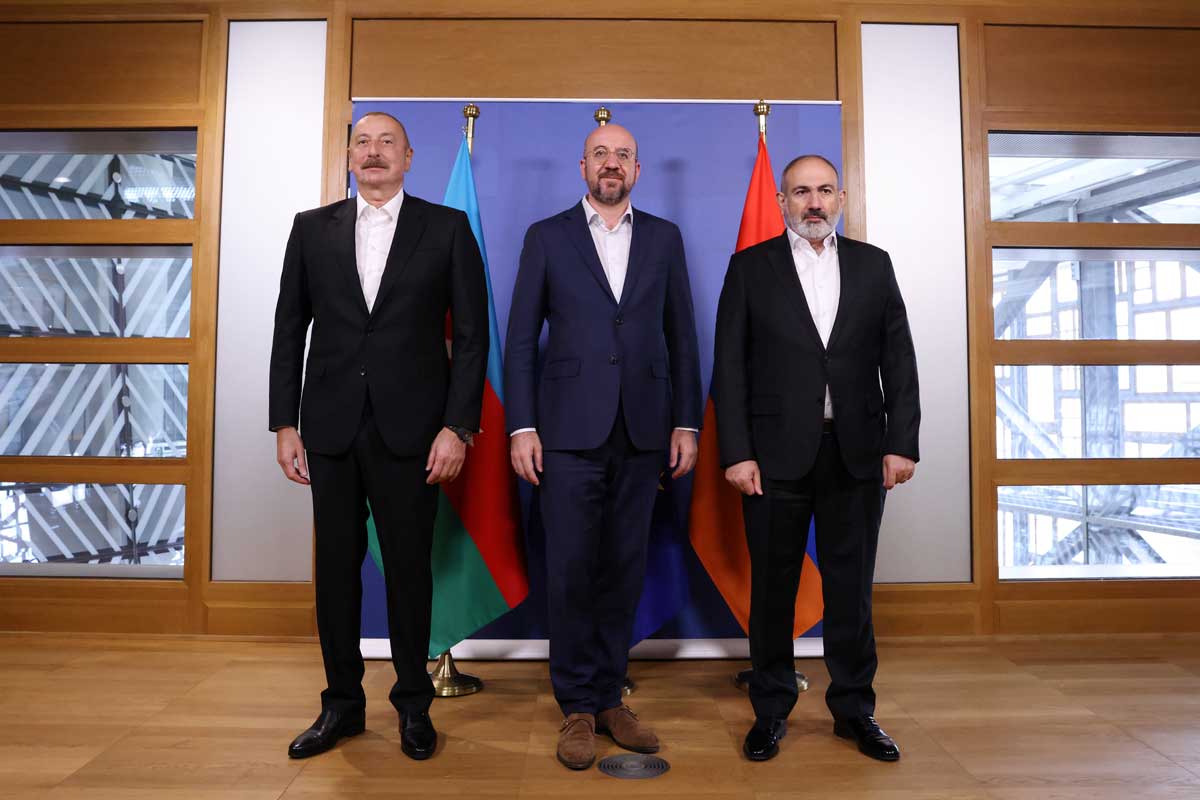
The EU’s policy towards the South Caucasus is highly useful when answering this question, not least because it is the closest reflection of the bloc’s nature as a global actor. For many years, the EU struggled to consolidate itself as a reliable and impartial actor in the region. Overshadowed by the one-sided policies of some member states, the Brussels ‘apparatus’ was unable to earn the trust of regional actors and make lasting contributions to peace and stability. Although on specific occasions such as during the presidency of Charles Michel, the EU did make positive contributions to fostering dialogue between Armenia and Azerbaijan, such steps were almost always delegitimized by subsequent actions. In 2025, history appears to be repeating itself.
In April, an important development in the bilateral relationship between Azerbaijan and the EU took place. Kaja Kallas, replacing Josep Borrell in the role of High Representative of Foreign Affairs and Security Policy, visited Azerbaijan and met with President Ilham Aliyev to discuss the bilateral agenda, its key issues and pending matters. Among the topics of discussion was the Southern Gas Corridor, where Azerbaijan’s key role in developing the Trans-Caspian renewable energy corridor was emphasized. The visit, which was the initiative of the EU side, was welcomed in Azerbaijan. There was, at last, some initiative demonstrated by Brussels to overcome existing challenges, openly recognize Azerbaijan’s reliability as a partner, and make productive contributions to regional stability. Exchanges and bilateral engagements between President Aliyev and senior EU officials continued into the summer and autumn, with the Azerbaijani leader meeting with both Kaja Kallas and European Council President Antonio Costa on the sidelines of this year’s October European Political Community summit in Copenhagen. Simultaneously, Baku’s bilateral relations with some European countries which have traditionally proven hostile towards it experienced some relief, albeit still lacking tangible steps.
This momentum, however, recently suffered a major blow. On 2 December 2025, the European Union and Armenia adopted a new Strategic Agenda for the EU-Armenia Partnership, replacing the partnership priorities established in 2017. In addition to widening the spectrum of cooperation to include areas like artificial intelligence, the document directly touches upon issues with major implications for the peace process between Azerbaijan and Armenia. This includes the reference to individuals arrested by Azerbaijan for crimes committed on its sovereign territory as “prisoners”, a categorization which directly contradicts international law and revives a fundamental aspect of the now former conflict between the two countries. Moreover, within the context of the normalization of relations, the Strategic Agenda, rather inexplicably, excludes any reference to a whole series of agreements announced by the sides during the Washington Summit in August 2025. This includes the agreement on the Trump Route for International Peace and Prosperity (or the Zangezur Corridor), as well as any kind of mention on the progress made on the establishment of inter-state relations.
Elsewhere, the document actually directly contradicts the initialed draft peace agreement, Article 7 of which explicitly states that no ‘third party’ forces should be present on the mutual border. The agenda calls for the “full operationalization” of the European Mission in Armenia (EUMA), turning a blind eye to Azerbaijan’s repeatedly expressed concern over the Mission’s role. These steps deprive the EU of any sort of political neutrality that it may claim to have in the region. The rhetoric pursued in the ‘foreign and security policy’ section of the document is deliberately pro-Armenian, with even ‘confidence-building measures’ between the sides mentioned within the context of the release of ‘prisoners and detainees’. Baku, in turn, has repeatedly underlined that any reference to elements of the now former conflict would be unacceptable and simply an attempt to backtrack on the historic steps taken this year.
This latest development serves as a sobering but extremely timely reminder – even if the European Union may portray itself as a strategic actor which is pursuing regional agency and trying to contribute to lasting peace, it remains distant from this status. The document itself, as well as the EU’s general approach to this situation directly contradicts the type of actor envisioned in its official rhetoric. In theory, the EU should be treating the current situation with both caution, given its uniqueness and sensitivity, but also with practical steps which support the sides in their mutual pursuit of trust. This could come in several ways. Politically, it would involve ensuring that its rhetoric is not divisive, does not commit the mistakes of previous periods and eliminates rather than exacerbates barriers to peace.
Economically, the EU could mobilize adequate support for both countries, particularly by investing in local infrastructure and creating an environment of opportunity and growth. This, to a certain extent, is taking place, with Brussels’ support to Azerbaijan’s demining operations being one such example. However, as with November’s published Strategic Agenda, such positive steps tend to be overshadowed by one-sided rhetoric which disproportionately leans in Armenia’s direction.
In addition to threatening the progress made between Azerbaijan and Armenia, the EU’s latest actions directly undermine its own broader agenda, directed at becoming a leading actor in an evolving world order where connectivity and economic resilience are poised to play a crucial role. In the EU’s case, this directly concerns the Global Gateway, a program introduced in 2021 to direct considerable financial resources toward several spheres which, according to its official definition, currently suffer from an investment gap. This represents the difference between the volume of investments currently being made and the volume considered necessary to correct existing issues across the relevant spheres. Launched in December 2021, Global Gateway was aimed at boosting the bloc’s investment into digital, clean energy, transport, health and education sectors around the world.
The logic for the program is two-fold: supporting local and regional economies and societies through modernization but also creating investment opportunities for the private sectors of its member states. This way, the EU aspires to both increase its own competitiveness as an actor but also take a leading role in raising global connectivity and contributing to economic growth. For example, the EU currently has 14 critical raw material partnerships around the world. This includes the Sebzor hydropower plant and Rogun hydropower plant projects in Tajikistan, as well as other sites in Uzbekistan and Kyrgyzstan. In general, under Global Gateway, the EU has committed 2.5 billion euros just to supporting critical mineral projects in Central Asia.
According to the EU’s official explanation, such projects are underpinned by a commitment to working ‘with’ the respective regions and countries, as opposed to working ‘for’ them. Only recently, on 26 November 2025, the 3rd EU-Central Asia Economic Forum was held in Tashkent, Uzbekistan. The forum, which resulted in six new agreements being signed on areas like the restoration of ecosystems, border security and drug trafficking, was a continuation of the progress achieved at the first EU-Central Asia summit in April 2025. This forum paid particular attention to the development of the Middle Corridor (Trans-Caspian Transport Corridor), described in official documentation as the “flagship initiative” of the Global Gateway.
On the day after the 3rd Economic forum, 27 November, the Trans-Caspian Transport Corridor and Connectivity Investors Forum took place. The forum brought together senior representatives from Central Asia, the South Caucasus and Black Sea regions, as well as from international financial institutions and the private sector. Essentially, it established a common platform through which the EU can engage with the countries of these regions and take practical steps towards advancing and modernizing the route. The forum, described as having concluded with a strong signal of “joint ambition”, initiated a whole series of road rehabilitation programs in Central Asian countries, the modernization of the port of Aktau and the announcement of several ‘technical assistance’ projects with EBRD and the private sector directed at ensuring the work carried out is synchronized and carefully planned. These initiatives form part of the EU’s broader “Connectivity Agenda”, which includes the South Caucasus and Central Asia.
Moreover, prior to the subsequent forums in Central Asia, the EU had already intensified its engagement with Armenia and Azerbaijan vis-à-vis regional connectivity. Shortly after the Washington summit in August 2025, both the EU’s Commissioner for Enlargement Marta Kos and the EU’s Special Representative in the South Caucasus Magdalena Grono visited both countries, including the Nakhchivan region of Azerbaijan. This, a priori, demonstrates the importance being attached to the current moment, with the EU stepping up its bilateral engagement with Armenia and Azerbaijan in addition to recognizing the broader importance of the South Caucasus, proceeding to integrate it into the Central Asian portfolio of Global Gateway.
These developments, along with the momentum which was being noted in EU-Azerbaijan relations, further magnify the inadmissibility of the published EU-Armenia Strategic Agenda. Furthermore, it directly exposes the contradictions at the heart of the EU’s ‘external action’. On the one hand, the EU is embracing the current moment, allocating considerable financial resources and even taking a leading role in institutionalizing and bridging its work in several regions. Its body of work on the Middle Corridor resembles this, with tangible steps already being taken at the forums and summits, signalling, in the words of its officials, a transition from “potential to implementation”. On the other hand, however, the EU is pursuing politically motivated steps which ignore regional reality and history, sideline international law and further exacerbate appetite for geopolitical competition in the South Caucasus. This confirms an important truth about the EU. To this day, its real nature as a geopolitical actor is still ambiguous. Diplomats in Brussels in charge of the bloc’s external relations strategy have failed in consolidating a single, clear foreign policy identity. As long as this gap continues to exist, the EU’s image and reputation as a legitimate centre of power in international relations will remain under close scrutiny.