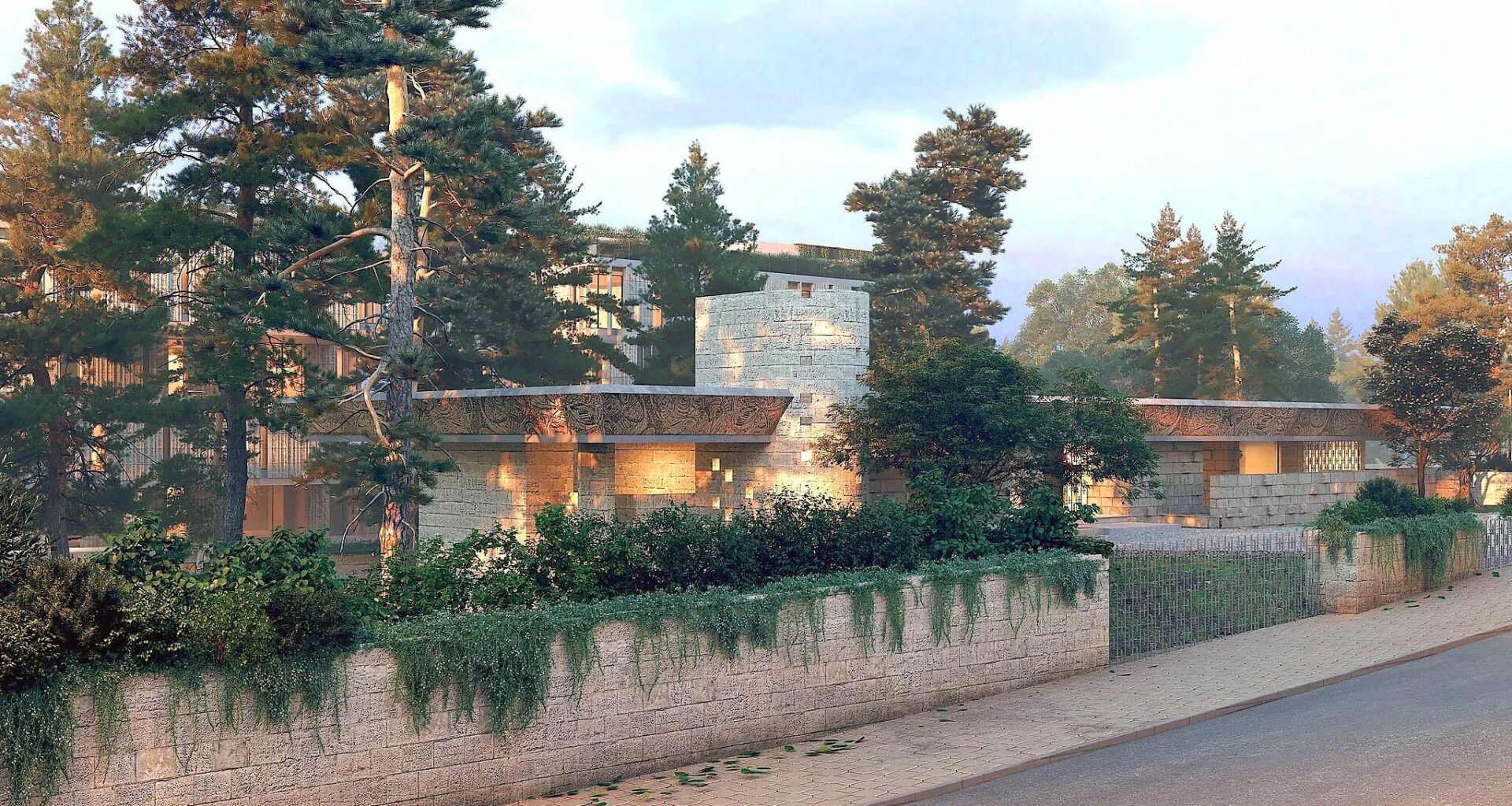
Standing on the sun-drenched rooftop of what might be the largest private residence in Jerusalem, Tomer Dowek described how a mansion in the capital’s central Rehavia neighborhood became part of Israel’s cultural history.
“When industrialist Miles Sherover opened this home in 1956, it was the largest private residence in Israel, and became a center for hosting heads of state, international dignitaries, and the elites of Israeli society,” explained Dowek, vice president of business development at Prosperity Real Estate, the agency managing the estate’s sale. “There are no private estates of this scale available today.”
The property, popularly known as Villa Sherover, features a massive home of 1,200 square meters (12916 square feet). It’s designed for an owner who likes to host large events.
In addition to large areas designated for bedrooms, entertainment halls, wine cellars, and an indoor swimming pool, its three stories of built space include historic works of art, along with delivery docks and side entrances for caterers to prepare for large feasts without interrupting the residents.
The original 5.5 dunam (1.4-acre) plot was recently split up, and the lower half now accommodates the new One Dubnov luxury apartment complex overlooking southern Jerusalem. But with 2.4 dunams (0.6 acres) of land remaining, the property remains a unique asset in Jerusalem — and it’s available to the right buyer. (The seller has requested not to publish the asking price.)
“We have several people from overseas who are currently showing interest,” said Ronit Dowek, the owner of Prosperity and Tomer’s mother, during a private tour of luxury homes with The Times of Israel. “Properties of this caliber don’t become available very often in Jerusalem.”
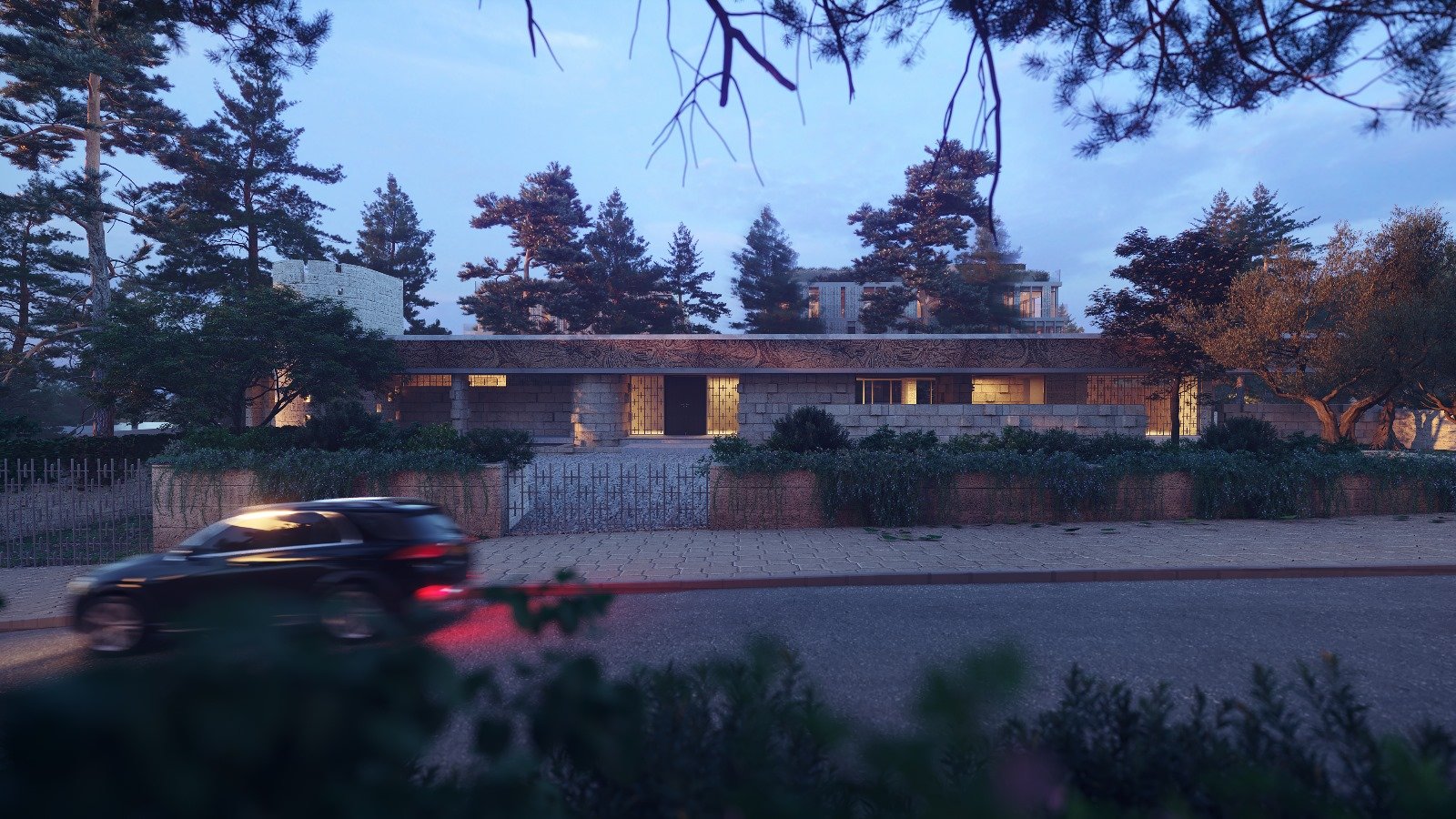
The Villa Sherover property in the Talbieh neighborhood of Jerusalem (Aiko Studio)
A growing luxury market
Properties of the level of Villa Sherover are seeing increased demand in Jerusalem as wealthy Jews from around the Diaspora seek to relocate their lives to the Holy City.
A growing number of overseas investors are purchasing homes in the range of NIS 10-25 million ($3.1-7.8 million) in Jerusalem, local real estate agents say. A smaller segment of ultra-wealthy buyers is interested in larger, more unique homes that can cost NIS 100 million ($31 million) or more.
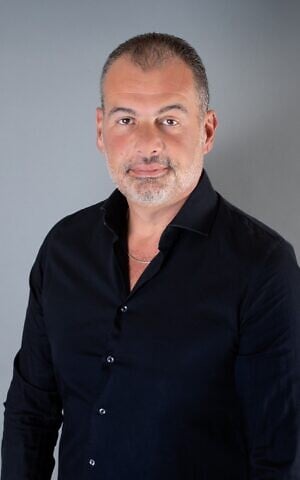
Oren Cohen (Courtesy)
“We are talking about people that 10 years ago would have typically bought small apartments for vacation rentals,” explained Oren Cohen, who founded the Oren Cohen Group, which specializes in luxury real estate in the capital, more than 30 years ago. “But now, we’re seeing these people buy big homes of 250 square meters (2,690 square feet) or more, and spending a lot of money on interior design, because they want to live here with the same lifestyle they have abroad.”
Rising antisemitism is the main factor driving Diaspora Jews to purchase homes here, agents say. In the UK, for example, more than 60 percent of the Jewish community say they have considered leaving the country since Hamas launched its war with Israel on October 7, 2023, and more than half feel that they do not have a long-term future in the UK, according to a recent survey by Campaign Against Antisemitism.
However, shifting social dynamics also play a significant role, as many see their children moving to Israel and want to stay close to their families. That means they are planning for the rest of their lives, not just short visits.
“About 60% of my clients say they want to move to Israel within the next two years and live here full time,” Dowek noted.
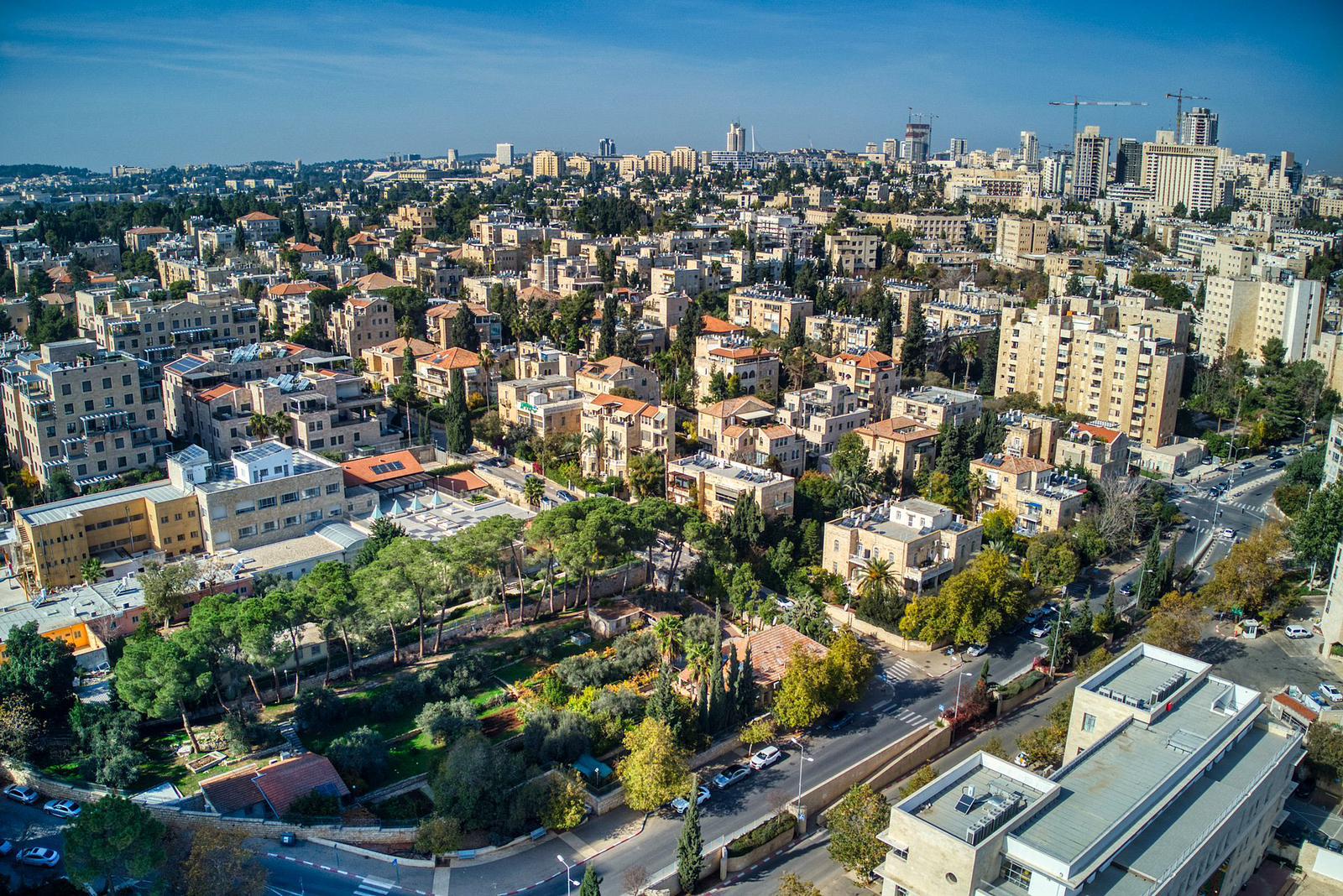
The Talbieh neighborhood of Jerusalem (Noam Chen)
Needs and privileges
In Jerusalem, most luxury buyers are religious Jews, primarily from the United States, Australia, Canada, and Europe, Dowek said. The growth of strong English-speaking communities in neighborhoods such as Shaarei Hesed, Rehavia, the German Colony and Baka has made it easier for these buyers to quickly integrate socially into new communities.
“In general, buyers in Jerusalem are seeking specific locations associated with certain communities that fit them,” he said. “The fact that people speak English and your children can make friends easily makes for a much softer landing here.”
In Tel Aviv, in contrast, the market is much more Israeli, and buyers are primarily looking to live close to the beach, Dowek noted. Cities like Herzliya, Ra’anana, and Netanya offer excellent English-speaking communities for those who prefer to live in the center, he added.
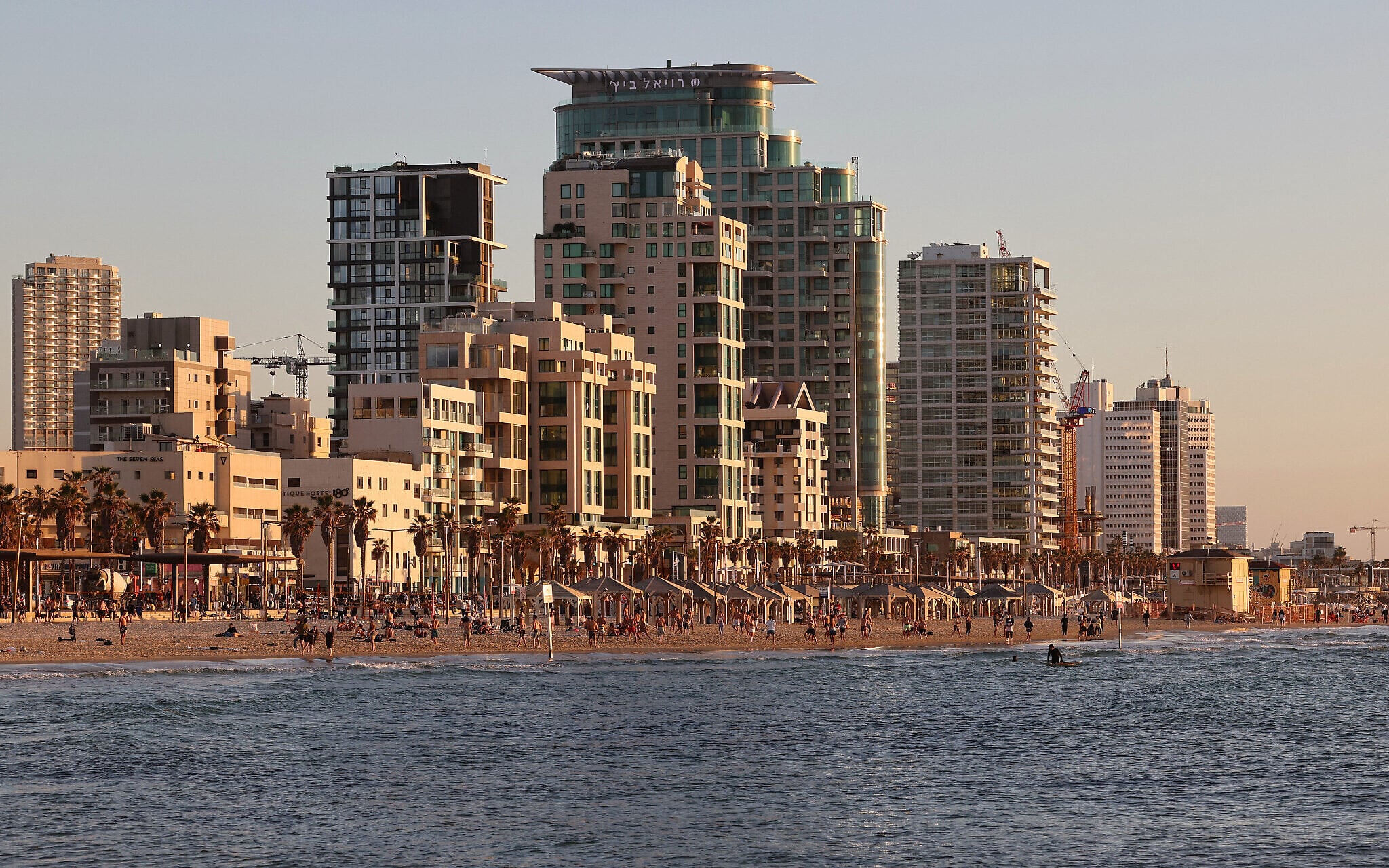
A view of the skyline of Israel’s coastal city of Tel Aviv during sunset, March 5, 2024. (Jack Guez / AFP)
Wealthy buyers tend to be wary of Israeli agents who try to pass off new homes as “luxury,” assuming they don’t properly understand the Israeli market, Cohen added.
“The clients I work with are very discreet and sophisticated people who know quality and expect value for their money,” he said. “They understand luxury, and aren’t interested in wasting time. Many don’t easily put their faith in others, especially Israelis, but seek out people with good reputations that they can trust.”
Many end up remodeling their homes to make bedrooms larger or add amenities like a private pool or theater room, noted Levi Feld, a relative newcomer to the luxury market who recently opened a private office in Jerusalem.
“There’s a lot of interest in unfinished projects in the shell stage that clients can finish and customize to their own taste,” he said.
Catering to the ultra-wealthy
Meanwhile, ultra-wealthy buyers in Jerusalem often seek more than just a fancy place to call home, Dowek explained. Many of these clients, often with assets of a billion dollars or more, are looking for something with greater significance.
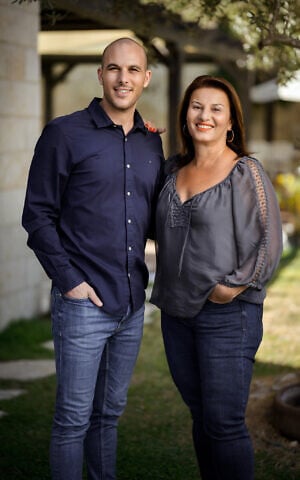
Tomer Dowek (L), vice president of business development at Prosperity Real Estate, with his mother Ronit, the agency’s founder (Courtesy)
The person who eventually buys Villa Sherover, for example, will appreciate the home’s rich history and design as an icon of Jerusalem, Dowek said.
“For a home like this, prices can’t be calculated on a basis of square meters or other standard measures,” Dowek said. “It’s like buying a rare jewel or unique work of art, where value is measured differently.”
One example of this is the hundred-year-old 650-square-meter (6,996 square feet) home in Talbieh once owned by philosopher Martin Buber. That home was recently sold by billionaire philanthropist Michael Steinhardt for $21 million in a landmark deal brokered by Dowek.
For a property like Villa Sherover, there are probably just a few hundred people in the world who could be potential buyers, Dowek said, “although we are discovering more all the time.”
The story of Villa Sherover
Villa Sherover sits on Jerusalem’s Pinsker Street, home to some of Jerusalem’s most expensive residences, overlooking the Jerusalem Theater and the new Theatron Hotel. From the sidewalk, passersby can glimpse the home’s distinctive roofline, crowned by a colorful mosaic by Dutch sculptor Cornelis Zitman.
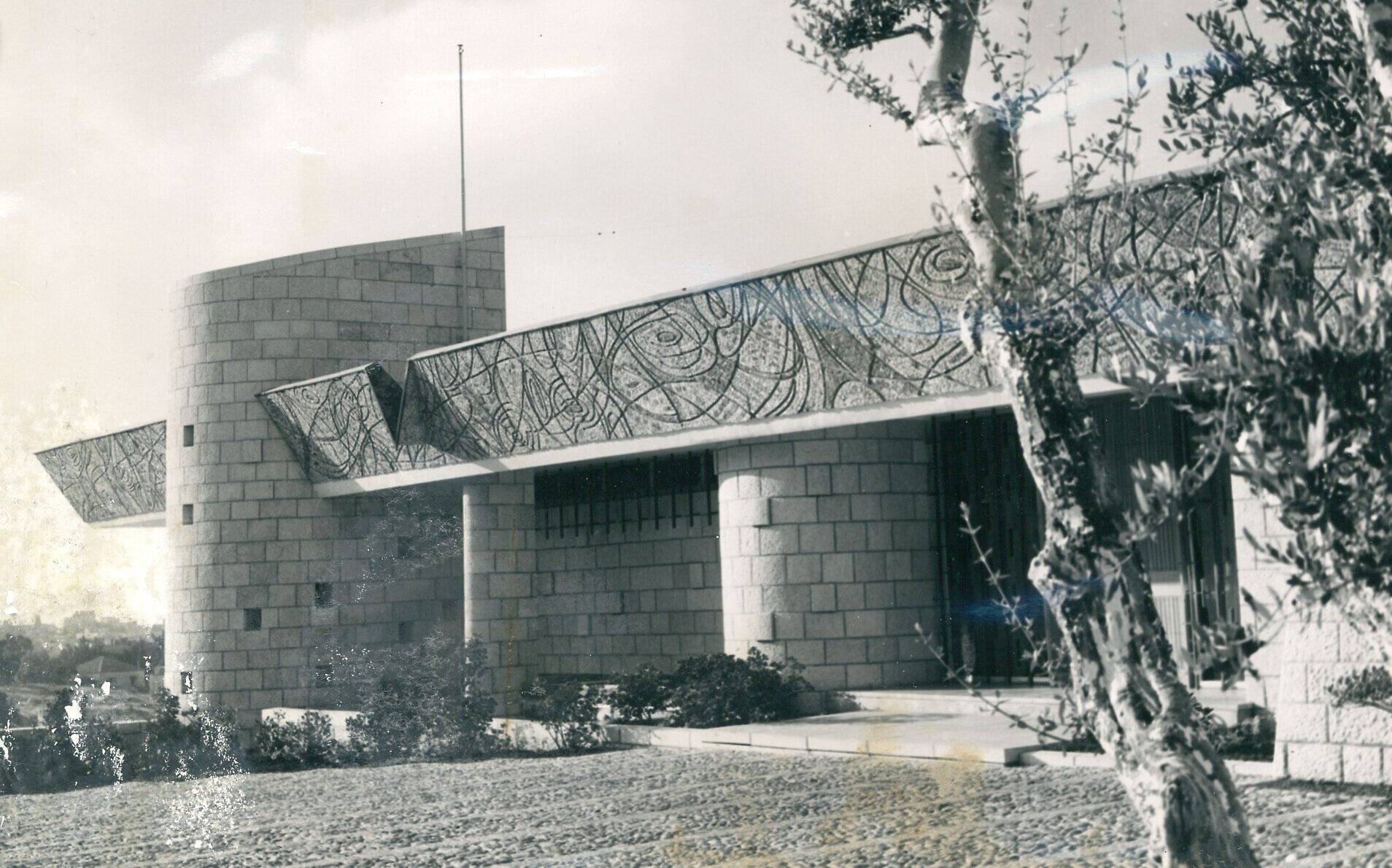
A 1957 photo of Villa Sherover (Dora Gad/National Library of Israel Archives)
The villa was commissioned by Miles Sherover, a Jewish businessman who made his fortune in steel, and designed in the 1950s by Venezuelan architects Carlos Guinand Sandoz, Moses Ben-Asheraf and Emilio Vestuti. Their goal was to introduce a bold South American modernist style into Jerusalem’s otherwise conservative postwar architectural landscape.
For the interior, the Sherovers commissioned renowned Israeli designer Dora Gad and her husband, Yehezkel, to create a cohesive look that incorporated permanent artworks, including a monumental wall mosaic by Zvi Gali depicting scenes of Jerusalem’s early years, a tapestry by Yaakov Wexler, and custom-made furnishings, textiles and lighting designed by Gad herself.
Several of the mosaics remain today and are officially designated for conservation, although the rest of the interior has been stripped down to its foundations following its sale to a private buyer in 2014.
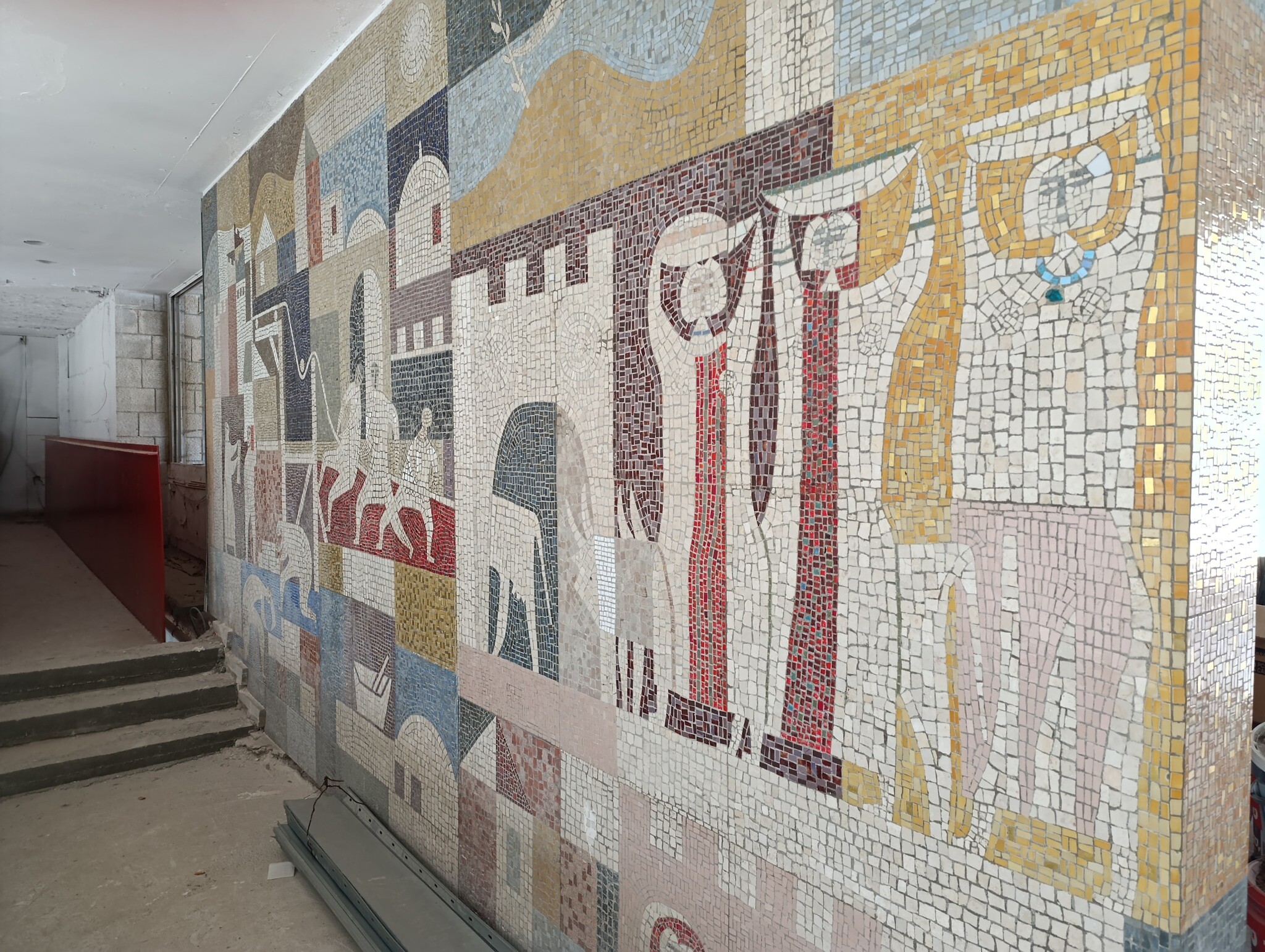
A wall mosaic created by artist Zvi Gali in the Villa Sherover home in Jerusalem, December 1, 2025 (Zev Stub/Times of Israel)
After its inauguration in 1956, the villa became a hub of Jerusalem’s civic and cultural life. Miles and Gitta Sherover hosted lavish gatherings often compared to European palace events. The two were also notable philanthropists, funding the Jerusalem Theater’s main hall, the Sherover Promenade in Armon Hanatziv, and the Beit Gabriel cultural center near the Sea of Galilee.
Following Miles’ death in 1976, Gitta offered the villa to the state as a residence for foreign dignitaries, but the proposal was declined due to maintenance costs. She later sold the property, retaining a portion of the land for a smaller home designed by architect David Resnick.
The interior of the once-grand home is today stripped to the bare walls, awaiting a new owner to refinish it. The 700-square-meter (7,535 square foot) roof terrace still offers magnificent views of southern Jerusalem, but the 690-square-meter (7,427 square foot) driveway, with parking for at least 10 cars, requires refurbishment.
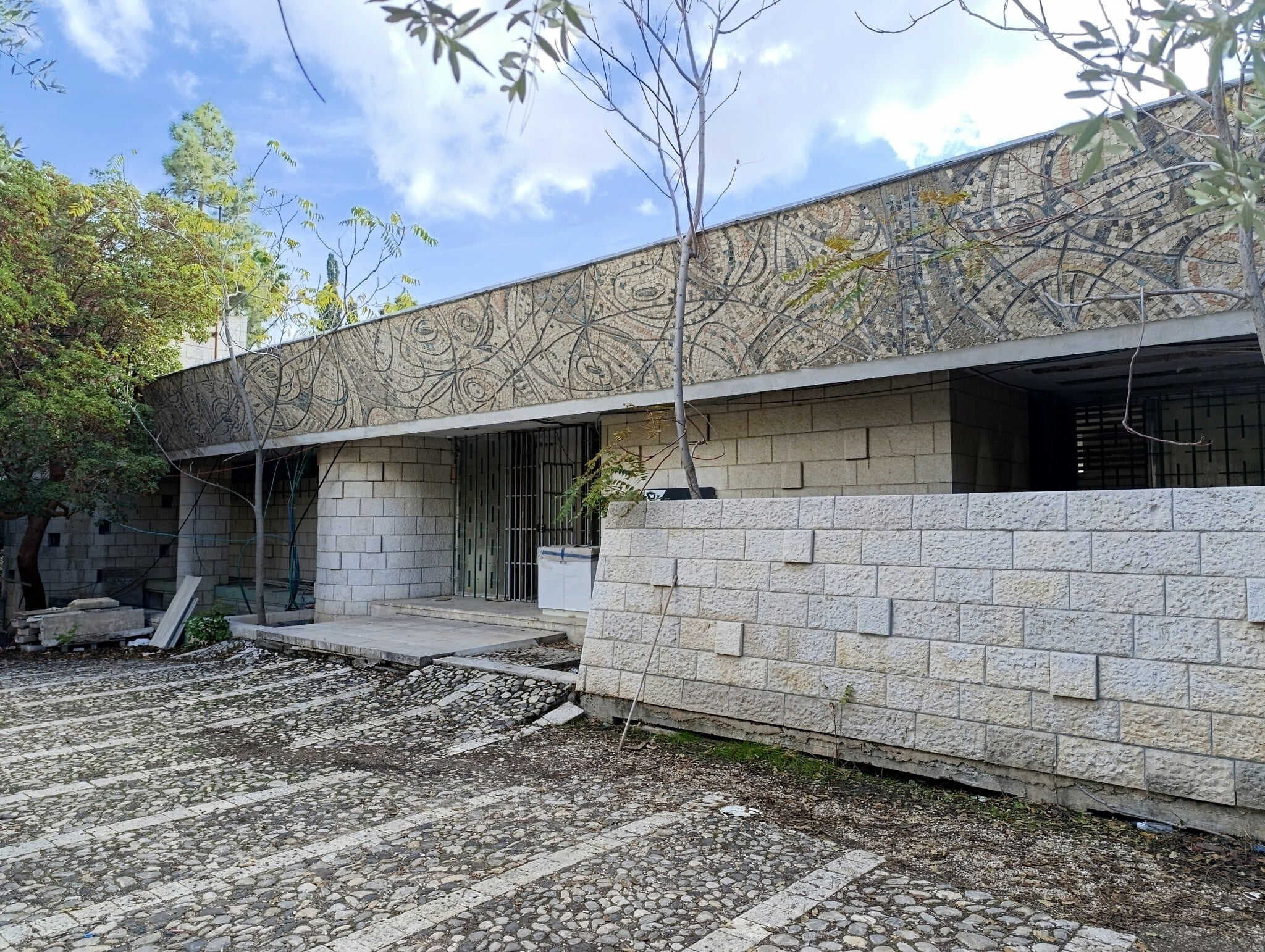
The driveway of Villa Sherover, December 1, 2025 (Zev Stub/Times of Israel)
Gali’s original wall mosaic remains, as do the central fireplace and eight-meter (26-foot) high ceilings. The spacious layout makes it clear that the structure was designed for entertaining.
“It’s a unique type of property for someone with the vision to take it on and redesign it in their own style,” Dowek said.
A historic family apartment building
That’s a different type of personality than would be interested in the next building Dowek presents, a 900-square-meter (9,688-square-foot) apartment building built in the 1930s on Abarbanel Street in the heart of Rehavia that shows the city’s architectural evolution in the early 20th century.
The structure was designed by Yehoshua Salant, one of Jerusalem’s most influential architects of the British Mandate period, and includes many of his signature architectural details, including clean lines, curved staircases, and elegant geometric detailing. Surrounded by open space and greenery inspired by the “garden city” concept, the building has been home to several prominent public figures and intellectuals. Original art deco carpentry, metalwork, stonework, and proportions have been well-preserved, making it one of the best examples of Mandate-era modernism in the neighborhood, Dowek said.

An apartment building for sale on Abarbanel Street in Jerusalem (Prosperity Real Estate)
The building is currently divided into nine apartments, but potential buyers would likely convert the whole thing into a private home, or divide it into five larger apartments where their children and their families could live, Dowek said.
“We are currently in talks with a few different people about this property, but they all have similar ideas for it, and they all happen to be religious Orthodox Jews,” due in part to its proximity to the Haredi Shaarei Chesed neighborhood, Dowek said. The asking price for the entire building: NIS 75 million ($23.5 million).
The Bishop’s House
Dowek’s agency recently began representing The Bishop’s House, constructed in the late 1800s at 25 Hanevi’im Street. It’s a two-story stone building distinguished by rich detailing, spacious interiors and courtyards, and distinctive stone elements.
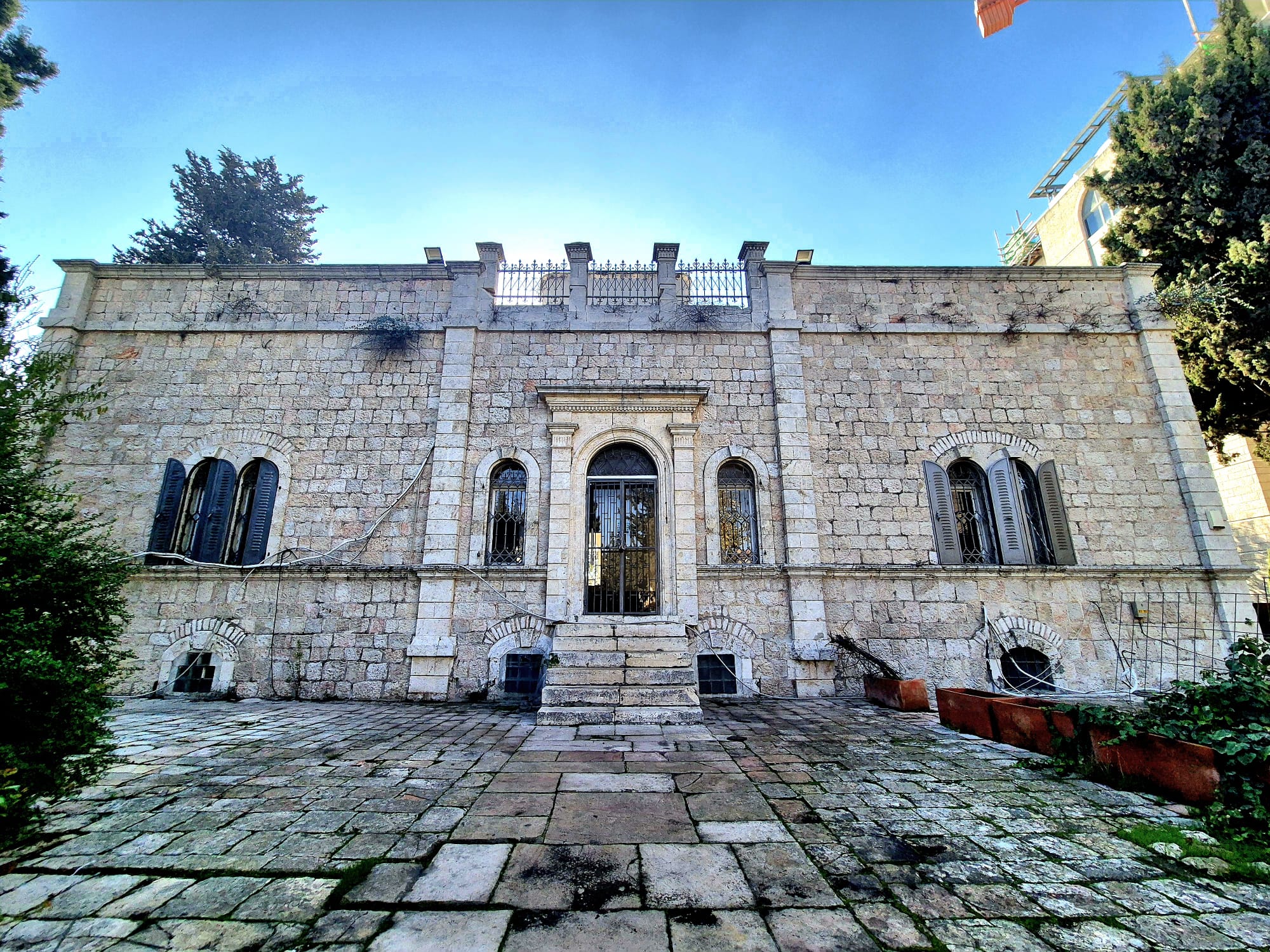
The Bishop’s House on Hanevi’im Street in Jerusalem (Prosperity Real Estate)
Originally a guesthouse and home to the head of the London Society for Promoting Christianity Among the Jews, the 1,145-square-meter (12,324-square-foot) compound once included a large walled courtyard, horse stables and a guardhouse. Today, it includes a massive 782-square-meter (8,417-square-foot) courtyard and a home with 630 square meters (6,781 square feet) of built space. On the roof, a rooftop chamber once known as the “Prophet’s Chamber” offers sweeping views of the Old City walls, the Temple Mount, and the Judean Desert.
Recent archaeological excavations have uncovered remains from the Byzantine period underneath the site, Dowek noted.
“This is a rare historic estate, defined by a quiet presence and profound significance, built during the period in which Jerusalem began to take shape as an international city,” Dowek said. The property’s asking price is NIS 54 million ($16.9 million).
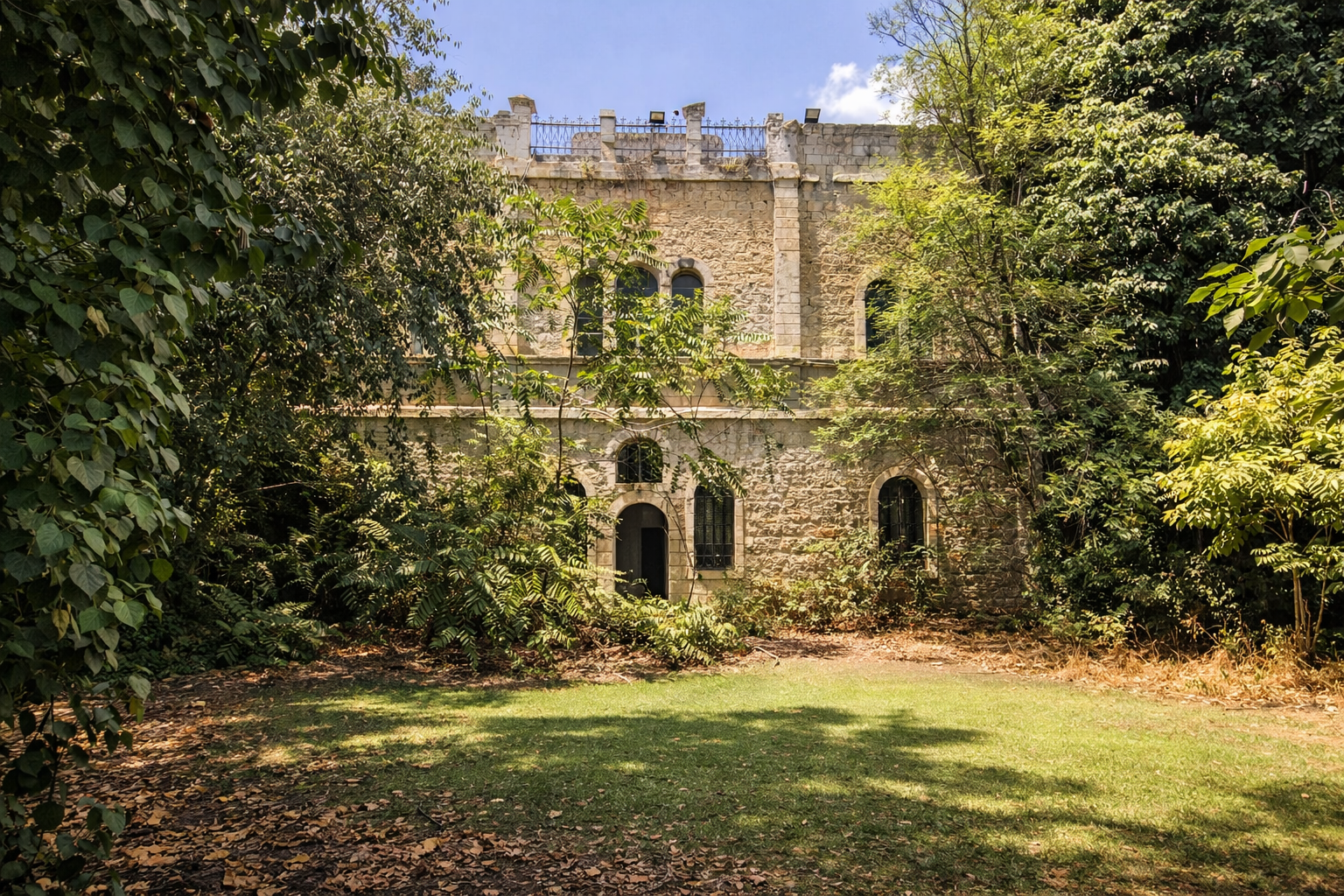
The Bishop’s House on Hanevi’im Street in Jerusalem (Prosperity Real Estate)
Modern luxury
Meanwhile, newer luxury properties on the market are designed for a different type of clientele.
In the German Colony, Cohen is marketing the Hashlosha project, a group of three five-story buildings arranged around a private, pastoral courtyard for residents. Located a few minutes’ walk from Emek Refaim Street, the complex has just 45 apartments, most of which have already been sold.
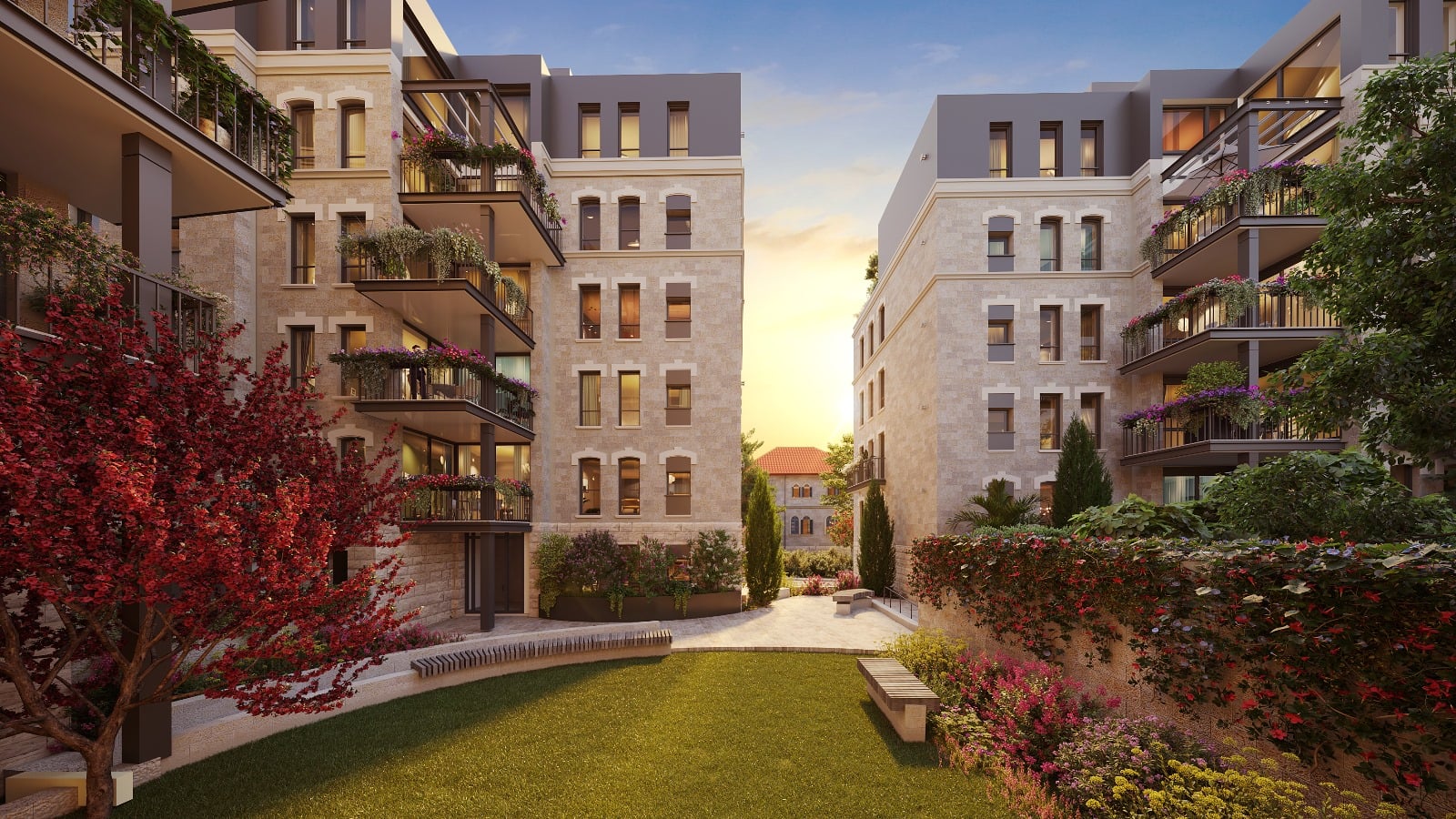
An artist’s rendition of the Hashlosha project in Jerusalem’s German Colony (Oren Cohen group)
Cohen said he recently sold the last of the project’s rooftop penthouses, a 200-square-meter (2,152-square-feet) living space with 78 square meters (840 square feet) of outdoor terraces, for NIS 21.6 million ($6.8 million).
“The project combines contemporary architecture with very high construction standards, private parking, storage units, and a strong emphasis on personalization and long-term quality of living,” he said.
Feld, meanwhile, is marketing a massive three-story property in Talbieh with more than 500 square meters (5,382 square feet) of built space and an open 125 square-meter (1,345 square foot) rooftop with the option to add a private pool. The asking price for that is NIS 50 million ($15.7 million).
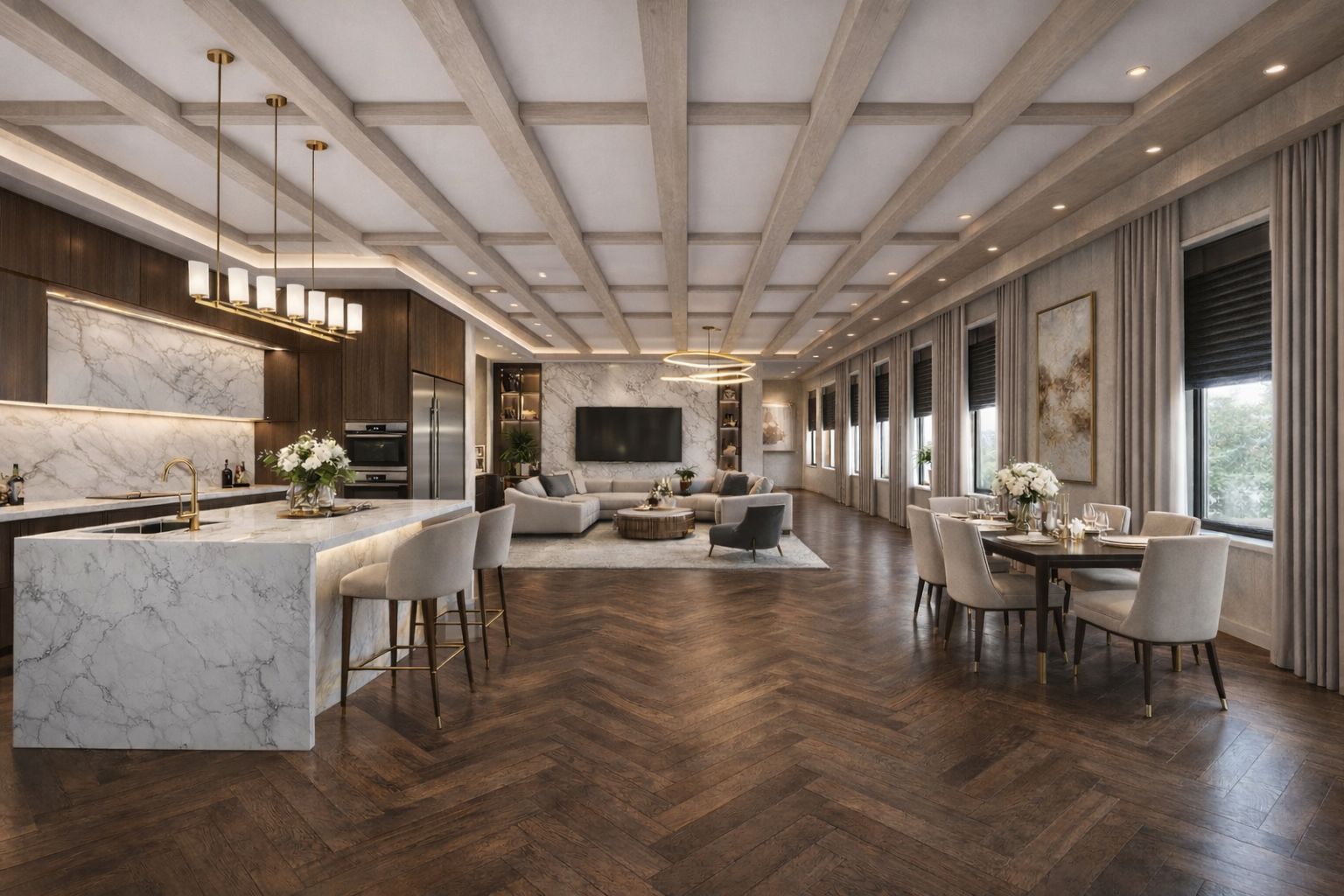
An artist’s rendition of the interior of a three-story home for sale in the Talbieh neighborhood of Jerusalem (Levi Feld Real Estate)
Limited housing supply and high demand in Jerusalem’s historic neighborhoods mean prices will continue to remain high, Cohen said, even as other markets around the country have cooled somewhat in the face of high interest rates, a record supply of unsold new housing, and uncertainty related to Israel’s ongoing security situation.
“Jews around the world are starting to believe they will come here at some point, and demand from overseas is rising,” Cohen said. “People will always want to buy here.”