“There is no doubt they want a nuclear weapon. I’ve told our people not to tell them such things,” Putin said during a restricted session with Bush on June 16, 2001, referring to Iranian inquiries directed at Russian experts, according to the declassified memorandum of conversation.
The remarks appear in notes taken during a one-on-one meeting at Brdo Castle in Slovenia, held shortly after Bush took office, and come amid broader discussions between the two leaders on missile proliferation, non-proliferation and Iran’s regional role.
Putin told Bush that Iranian specialists were pressing Russian experts on what the memo described as “sensitive matters,” but said he had ordered Russian officials not to share information related to nuclear weapons or missile technology.
“I will restrict missile technology to Iran,” Putin said, according to the document, while acknowledging that some Russian actors were interested in profiting from cooperation with Tehran.
Bush, for his part, raised concerns that weapons transfers to Iran could threaten both US and Russian security.
 A sample of the document
The memo shows the US president sought Moscow’s cooperation on non-proliferation, warning that Iranian access to advanced weapons or delivery systems would be destabilizing.
The exchange also touched on US policy toward Tehran. When Putin suggested Washington might be moving toward improved relations with Iran, Bush rejected that notion.
“That’s not true. Congress makes that completely impossible now,” Bush said, pointing to legislative constraints on any normalization of US-Iran relations even at the start of his presidency.
Putin countered that European states, including Germany, were expanding financial ties with Iran, mentioning a credit line extended by Berlin and arguing that trade in conventional weapons was treated by some countries as a commercial matter.
The document shows that Iran featured repeatedly in the discussion as a proliferation concern alongside North Korea, with Putin portraying Moscow’s engagement with Tehran as constrained by history, geography and security pressures on Russia’s southern borders.
The memorandum was produced as part of a US government record of the meeting and later released through the National Security Archive following a Freedom of Information Act request.
 Khamenei gives green light to compact nuclear warheads – report
Israeli strike scenario in 2005 and Natanz as a potential target
A separate memorandum of conversation dated September 16, 2005 depicts Bush and Putin discussing how Iran’s enrichment and reprocessing capabilities could be redirected toward a weapons program, and how escalating disputes could narrow options toward military action.
In that Oval Office meeting, US officials stressed that the core concern was not civilian nuclear power but Iran’s ability to master the fuel cycle.
“Our concern is Iran’s ability to reprocess and enrich,” Secretary of State Condoleezza Rice said, adding that such capabilities “would be dangerous and could be turned to a military program.”
Putin argued that an immediate referral of Iran’s file to the UN Security Council could push Tehran to accelerate its program, warning that pressure could reduce outside visibility and control.
“Our concern is that immediate referral will lead Iran to take the North Korean route,” Putin said.
He then raised the question of military action and the uncertainties surrounding it: “If they are indeed striving for nuclear weapons, then we will have lost control over what is happening in Iran. Then we need to do something. What? Strike? Who does that? Where? What targets? Are you sure of the information you have?”
Bush told Putin he saw diplomacy as the priority but said military action could not be fully ruled out, and he framed Israel as the actor most likely to consider a strike if it judged Iran was nearing a nuclear capability.
“The military option stinks, but we can’t take it off the table,” Bush said. “If Sharon feels he needs to strike Iran, all hell will break loose,” he added referring to then prime minister Ariel Sharon.
In the same 2005 conversation, Bush explicitly mentioned Iran’s Natanz enrichment site as a possible Israeli target while emphasizing Washington was not selecting targets on Israel’s behalf. “If they think there’s enriching at Natanz, that’s one. But we aren’t doing the targeting for Israel.”
 Satellite images show activity at damaged Iranian nuclear site – think tank
The 2005 memo also reflects proliferation concerns tied to external networks. Putin pointed to evidence suggesting Pakistani-origin material had been found in Iranian centrifuges, and Bush referenced discussions with then Pakistani President Pervez Musharraf about transfers linked to Abdul Qadeer Khan’s network.
“As far as I understand, they found uranium of Pakistani origin in the centrifuges,” Putin said, to which Bush responded that it involved undeclared material and constituted a violation: “Yes, the stuff the Iranians forgot to tell the IAEA about. That’s a violation.”
 Putin urges Iran to accept ‘zero enrichment’ nuclear deal with US – Axios
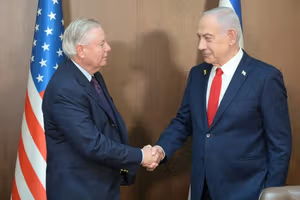 US should strike Iran if nuclear enrichment resumes, US senator says
Bush happy with Russia’s fuel-for-no-enrichment approach
A third memorandum, dated April 6, 2008, shows Iran continuing to feature in US-Russian talks in the context of nuclear cooperation safeguards, alleged illicit procurement, and the question of Iranian enrichment.
In that meeting in Sochi, Rice told Putin the United States had focused on resolving what she described as a sensitive issue involving Iran, including concerns about illicit assistance. “We needed to resolve an issue with Iran,” Rice said.
Putin said, “Everything is under control there. Sometimes there are instances of cooperation they’re trying to pursue in a clandestine manner that’s not apparent to the government. We will find them and they will be punished.”
When Bush asked where the questionable activity was occurring, Rice answered directly: “Arak.”
Putin said Russian authorities were monitoring for unauthorized cooperation driven by profit motives. “There are people willing to earn a bit of money on this, but we identify those cases,” Putin said.
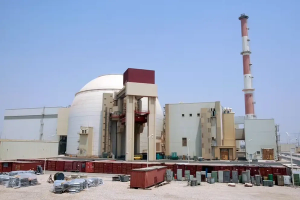 How Iran’s nuclear program became a crisis in global diplomacy
The 2008 memo also shows Bush praising Moscow’s approach of providing nuclear fuel for civilian power while pressing Tehran not to enrich domestically – an argument intended to test whether enrichment was needed for energy or indicative of weapons intent.
Bush described it as a practical non-proliferation framework: “Russia says, ‘Here’s the fuel, therefore you don’t need to enrich. If you do, it shows you don’t want civil nuclear power, you want more,’” Bush said.
Putin, recounting his own discussions with Iranian officials, questioned the timing of Iranian enrichment given long construction timelines for reactors, including Russia’s work at Bushehr. “You won’t complete a new plant for 15 years, so why are you building up enrichment now?” Putin said.