The year began with a bang, as China’s DeepSeek R1 large language model sent shock waves through Washington. Though experts still debate the extent to which it actually constituted a dreaded “Sputnik moment” for U.S. artificial intelligence (AI), DeepSeek’s debut nonetheless showcased capabilities rivaling those of U.S. leader OpenAI at a fraction of the cost and computing power.
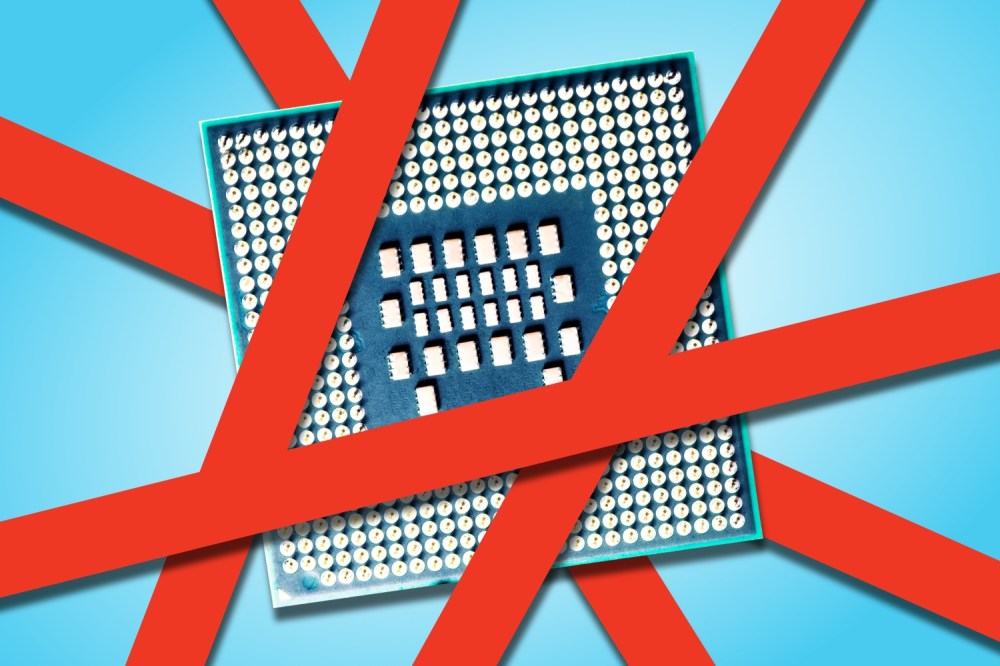
The release of the DeepSeek model also raised questions for U.S. policymakers about the effectiveness of Biden administration-era export controls on U.S. chips. Alarmed by the DeepSeek development, U.S. President Donald Trump’s administration at first tightened control on sales of Nvidia chips to China. Building on this strategic pressure, White House AI and crypto czar David Sacks helped ink massive deals for the sale of advanced chips to the Middle East in May.
The year began with a bang, as China’s DeepSeek R1 large language model sent shock waves through Washington. Though experts still debate the extent to which it actually constituted a dreaded “Sputnik moment” for U.S. artificial intelligence (AI), DeepSeek’s debut nonetheless showcased capabilities rivaling those of U.S. leader OpenAI at a fraction of the cost and computing power.
The release of the DeepSeek model also raised questions for U.S. policymakers about the effectiveness of Biden administration-era export controls on U.S. chips. Alarmed by the DeepSeek development, U.S. President Donald Trump’s administration at first tightened control on sales of Nvidia chips to China. Building on this strategic pressure, White House AI and crypto czar David Sacks helped ink massive deals for the sale of advanced chips to the Middle East in May.
By the end of the year, though, Trump had decided restricting sales to Beijing for national security reasons was less important than facilitating deals for U.S. businesses. Even as U.S.-China competition in AI continued unabated, the Trump administration this month granted Nvidia permission to begin selling its second-most-powerful chip to China.
The stunning turnaround in Washington’s position may have been spurred by growing fears of an AI bubble. At year’s end, the so-called Magnificent Seven tech companies comprised 37 percent of the S&P 500 index; by 2029, global spending on AI infrastructure is expected to hit $2.8 trillion.
Though investors’ enthusiasms didn’t dim, 2025 was also the year that international consumers and governments turned on U.S. tech platforms. Trump’s “America First” strategy led to a new wave of techno-nationalism as governments worked to insulate themselves from the vulnerabilities of relying too heavily on either Washington or Beijing.
Geopolitical analyst Bobby Ghosh wrote of the worldwide regulatory backlash, “This is how soft power dies: not in dramatic confrontation, but in the accumulated weight of betrayed trust.”
These are our five best reads on the year profit beat out geopolitics in the AI race.
1. Is It Too Late to Slow China’s AI Development?
By Rishi Iyengar and Lili Pike, May 5
In May, FP’s Rishi Iyengar and Lili Pike looked into how the past eight years of U.S. restrictions on Chinese tech panned out and whether Washington should instead pursue a more collaborative approach with Beijing on AI development and regulation.
“Washington’s lack of plan for a future of AI parity with China is a concern,” they write, citing experts’ belief that a focus on restrictions has undermined further safety talks.
2. Brave New Techno-Nationalist World
By Tobias Feakin and Adam Segal, June 4
The global technological landscape is entering a period of heighted competition, fragmentation, and uncertainty, write former Australian ambassador for cyber affairs Tobias Feakin and cybersecurity expert Adam Segal.
Feakin and Segal predict this will result in a surge in techno-nationalism as well as a more dangerous digital landscape. And while the United States may achieve short-term technological gains, they write, “it will be unable to sustain long-term leadership with a broad coalition of allies and partners.”
3. The Nvidia Chip Deal Trades Away the United States’ AI Advantage
By Sam Winter-Levy and Alasdair Phillips-Robins, July 22
Two researchers at the Carnegie Endowment for International Peace outlined the case for export controls after Trump allowed Nvidia to resume sales of one of its best-selling AI chips to China in July.
“Right as powerful AI reasoning systems are emerging, the administration has chosen to allow companies to sell China the chips suited to running them,” Sam Winter-Levy and Alasdair Phillips-Robins write. “Export controls—for all their flaws—were what helped the United States establish a significant edge in the computing power required to run and develop the world’s most powerful AI systems.”
By Bhaskar Chakravorti, Oct. 27

An illustration shows a tech-textured shape being pulled down to include the Southern hemisphere.
Sebastien Thibault illustration for Foreign Policy
“It is hard to imagine how any potential financial returns can justify this as a rational investment decision,” writes Bhaskar Chakravorti of the stock market’s love affair with AI. Arguing against the obsession with powerful large language models, Chakravorti counsels tech companies in need of use cases to turn to the developing world, where “good enough” AI could be directed toward more immediate needs.
By Bobby Ghosh, Dec. 1
Remember when Silicon Valley was the United States’ greatest export? Bobby Ghosh reminds readers that it was only a decade ago that U.S. tech companies occupied a rarefied space in the global imagination as disruptors, optimists, engineers—the people who would remake sclerotic political systems and extractive industries. Now, Big Tech occupies the space once reserved for Big Tobacco and Big Oil: It faces a global regulatory backlash and, with it, the diminishment of U.S. soft power.