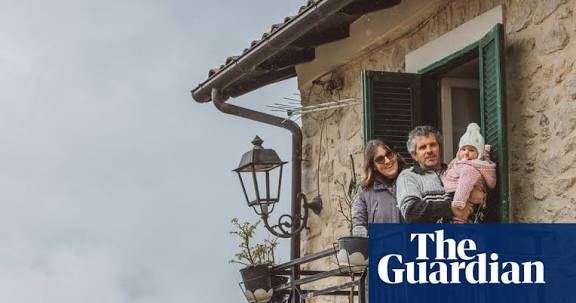
In a small Italian village long accustomed to silence, shuttered homes, and an aging population, the sound of a newborn’s cry has brought something extraordinary—hope. After three decades without a single birth, residents gathered to celebrate the arrival of a baby who has become far more than a child. For this rural community, the newborn represents renewal, survival, and the promise of a future.
A Village on the Brink of Disappearance
Like many villages across Italy, this small settlement has spent years battling depopulation. Young people left for cities in search of jobs, education, and modern lifestyles, leaving behind elderly residents and empty streets. Schools closed, local shops disappeared, and festivals that once defined village life became memories.
For 30 years, there were no births recorded. Weddings became rare, playgrounds stood abandoned, and homes slowly fell into disrepair. Many feared the village would eventually vanish from the map, becoming another symbol of Italy’s rural decline.
A Birth That Changed Everything
The birth of the baby—widely celebrated by villagers—instantly altered the mood. Church bells rang, neighbors gathered, and congratulations echoed through narrow streets. Some residents admitted they never thought they would live to see another child born in the village.
For locals, this wasn’t just a family milestone; it was a collective victory. People brought homemade gifts, flowers, and traditional foods to welcome the newborn. Elderly residents, some with tears in their eyes, described the moment as “a miracle” and “a sign that the village is still alive.”
Why Rural Italy Is Losing Its Young
Italy has one of the lowest birth rates in Europe, and rural areas are feeling the impact most strongly. Economic challenges, limited job opportunities, and lack of services have pushed generations toward urban centers like Rome, Milan, and Turin.
Small villages struggle to offer:
Stable employment
Modern healthcare facilities
Schools and childcare
Digital connectivity
As a result, many couples choose not to raise children in these areas, accelerating the cycle of decline.
A Symbol of Hope Beyond One Village
This baby’s birth has sparked national attention because it highlights a larger issue facing Italy and much of Europe: how to preserve rural communities. Demographers warn that without intervention, hundreds of villages could disappear within decades.
The celebration reflects a growing realization that every birth matters, especially in places on the edge of extinction. Local officials see the event as proof that revival is possible if the right conditions exist.
Government Efforts to Revive Villages
In recent years, Italy has launched several initiatives to combat depopulation, including:
Offering financial incentives to families who move to rural towns
Selling abandoned homes for symbolic prices
Supporting remote work to attract young professionals
Providing child benefits and housing assistance
While results have been mixed, stories like this one renew confidence that such policies can make a difference when paired with community support.
The Emotional Impact on Residents
For older villagers, the baby represents continuity. Many had resigned themselves to the idea that they would be the last generation to call the village home. Seeing a newborn stroller roll down familiar streets reignited memories of their own childhoods.
One resident reportedly said, “Now we have someone to leave this place to.” That sentiment captures the deep emotional weight of the moment—this birth restores meaning to preservation efforts, traditions, and shared history.
Can One Birth Lead to Many More?
Optimism is cautiously growing. Local leaders hope the attention will encourage:
Former residents to return
Young families to consider relocating
Investment in services like schools and healthcare
The presence of a child creates new needs—and new reasons to improve infrastructure. Even one baby can justify reopening a daycare, restoring playgrounds, or expanding internet access.
Why This Story Resonates Globally
Beyond Italy, this story speaks to communities worldwide facing aging populations and rural decline. From Europe to Asia, small towns are searching for ways to remain relevant in a rapidly urbanizing world.
The birth reminds us that demographic challenges are deeply human, not just statistical. Behind population charts are real people, real places, and real emotions.
Final Thoughts
The birth of a child in an Italian village after 30 years is more than a headline—it is a powerful symbol of resilience. It shows that even in places written off as dying, life can return unexpectedly.
For the villagers, the baby represents laughter returning to quiet streets, festivals with future participants, and a reason to believe that their home still has a tomorrow. In a world often focused on loss and decline, this small miracle offers something rare and precious: hope reborn.