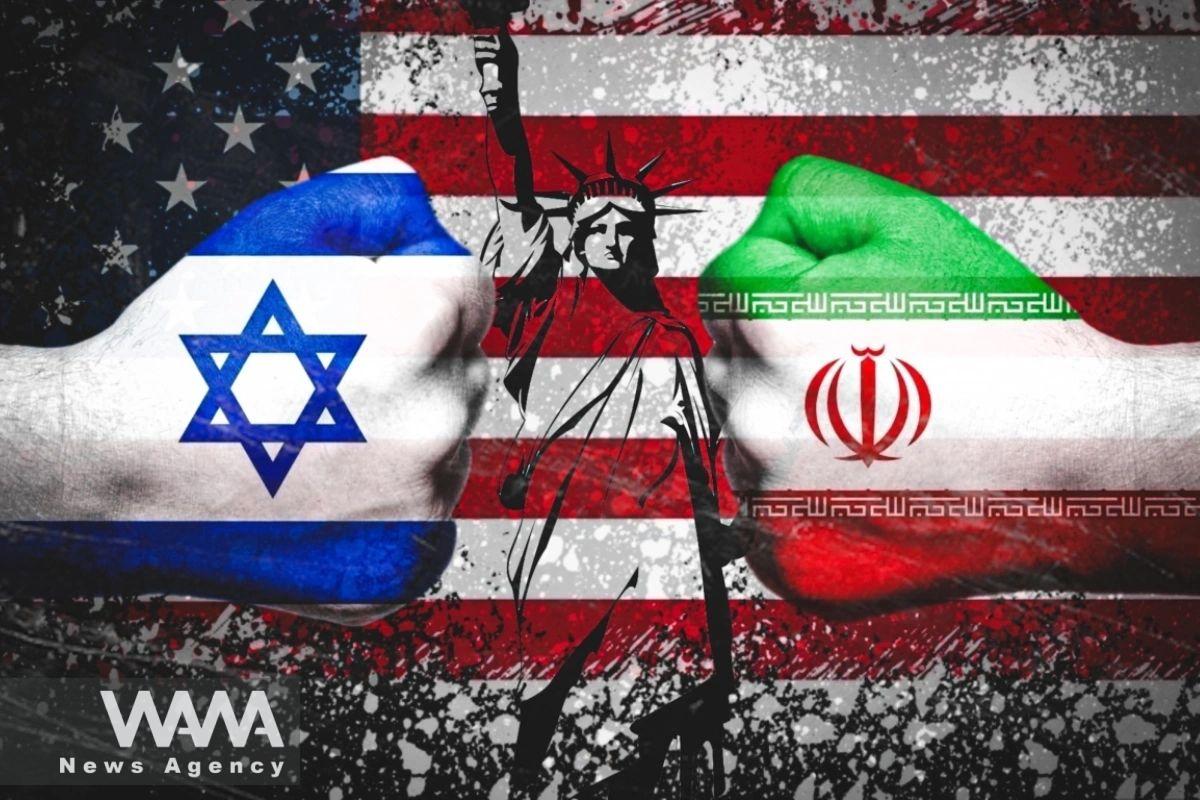
WANA (Dec 26) – When Hillary Clinton served as U.S. Secretary of State (2009-2013), she repeatedly stated that, unlike previous U.S. secretaries of state—who maintained weekly or monthly contact with Tel Aviv—“our communication and consultations with the Israelis are now conducted on a daily basis.”
At the end of 2025, the political, security, and military establishment of the United States proudly declares that these contacts are no longer merely “daily” but are now conducted online, around the clock, between Israel and the United States. Is this unprecedented level of interaction the product of deep concern or the result of a serious plan to implement a grand strategy?
The commitment of most American politicians and presidents to supporting the Israeli regime is not a new phenomenon. Support for Israel has long represented a blend of political, strategic, cultural, and security interests for U.S. policymakers.
But why has this model of support become so conspicuously exaggerated in recent years—so much so that Joe Biden, the former president of the United States, openly stated: “If Israel did not exist, we would have had to create an Israel to protect our interests in the region”? Or that Lindsey Graham, the Republican U.S. senator, declared during a meeting with Netanyahu: “Israel is America’s eyes and ears. No one has done more than Israel to protect the United States against ‘radical Islam.’”
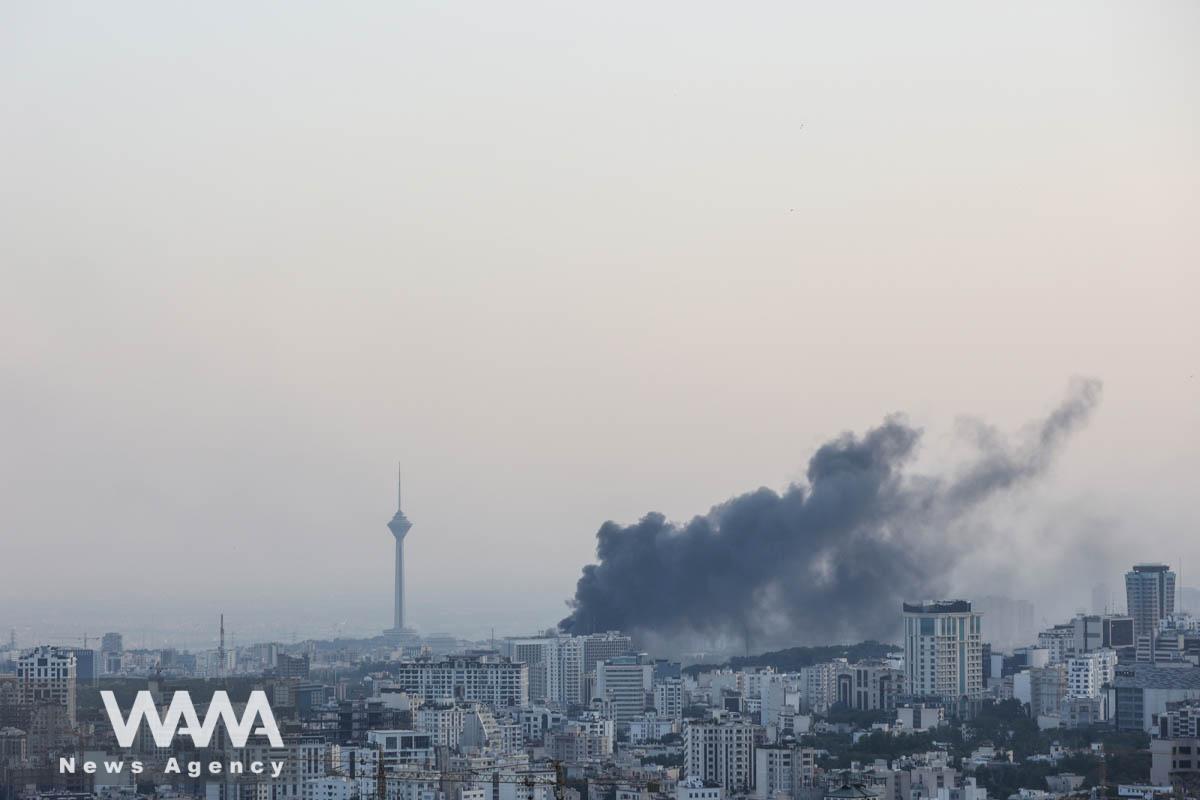 Israel’s Scenarios for a Potential War with Iran
WANA (Dec 24) – In a potential future confrontation, the primary objectives of Israel and its ally, the United States, would be to weaken three of Iran’s main sources of strength. In this context, Israel would seek to cripple Iran’s missile capabilities in the early hours of the conflict, while also focusing on public discontent […]
Few can forget Donald Trump’s theatrical appearance at the Israeli Knesset, shortly after the Iran–Israel war, when he bluntly declared: “I love Israel. I am with you to the end.”
The political history of the United States and the West is filled with such examples of support for the Israeli regime by senior officials and politicians.
But what explains this unwavering alignment with one of the most controversial regimes in the world—at a time when global polls consistently show that more than half of the world’s population expresses hostility toward Israel? Why does the West spend so much of its credibility on a regime that now bears the mark of one of the most notorious governments on the planet?
It is widely accepted that Israel is a long-standing and key U.S. ally in the Middle East, with close cooperation in security, intelligence, and military technology.
It is also well understood that, in U.S. elections, candidates’ support for Israel plays a decisive role in securing votes and financial backing.
No one can deny the power of the Israeli lobby in the United States, nor ignore how costly and dangerous opposition to Israel can be for individuals or political movements.
The long-promoted claim that “Israel is the only real democracy in the Middle East” has been loudly and repeatedly echoed in Western media for decades.
But is U.S. and Western support for Israel merely the result of a traditional consensus, or is there a deeper concern driving this support?
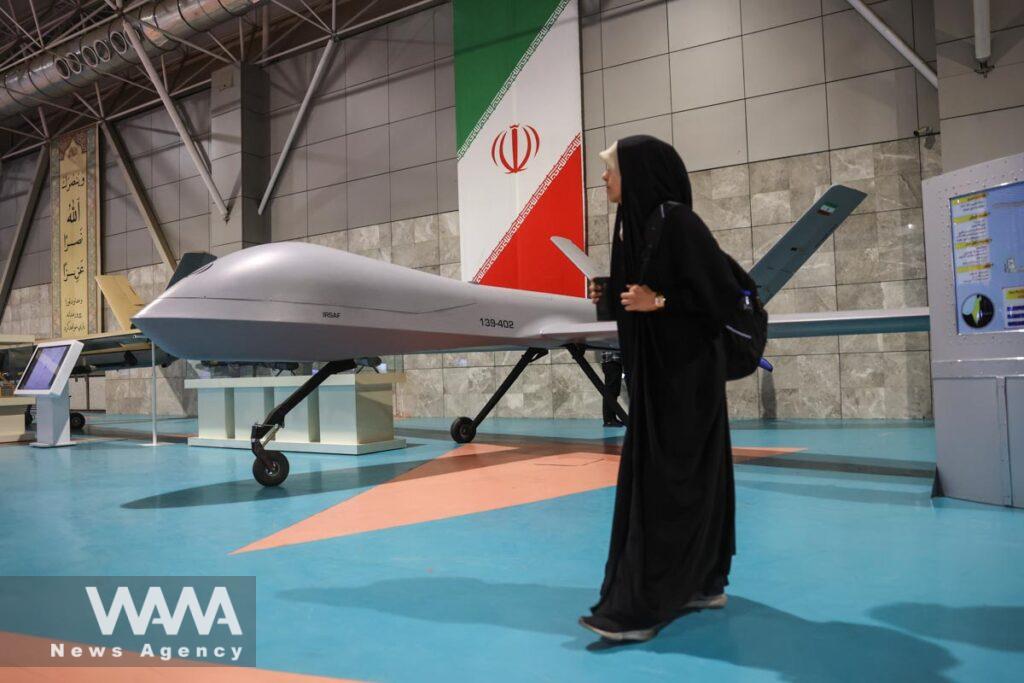
An Iranian drone is displayed at the Islamic Revolutionary Guard Corps (IRGC) Aerospace Force Museum in Tehran, Iran, November 12, 2025. Majid Asgaripour/WANA (West Asia News Agency)
Perhaps the best guide to answering this question lies in Senator Graham’s description of Israel as America’s “eyes and ears,” or Biden’s well-known assertion that Israel would have been created if it did not already exist.
As time passes from the Gaza war and the twelve-day Iran–Israel war, one reality becomes increasingly clear: the U.S. view of Israel is entirely instrumental. Within their own strategic circles, Americans and Westerners fully understand that Israel is:
A reliable base of Western influence in the Middle East.
A tool for containing regional rivals;
A source of loyal soldiers for safeguarding Western energy interests.
From the Western perspective, support for Israel is not “emotional” but calculation-driven—a form of security investment. Many analysts view the narrative that “Israel = ally” and “Israel’s enemies = threats” as a deliberate deception.
By promoting such slogans, the West seeks to motivate and reassure its Jewish proxy forces in the occupied territories to fight on its behalf. There is no genuine emotional attachment or sincere friendship at the heart of this political game.
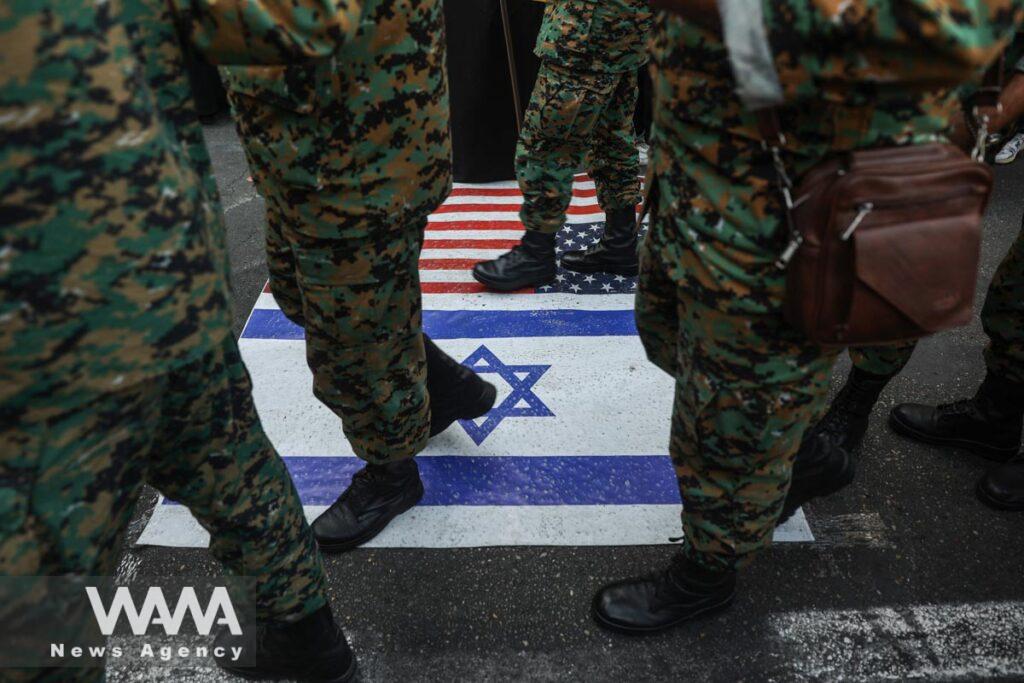
Members of the IRGC step on the U.S. and Israeli flags during the 46th anniversary of the U.S. expulsion from Iran, in Tehran, Iran, November 4, 2025. Majid Asgaripour/WANA (West Asia News Agency)
In the dangerous Western strategy surrounding Ukraine, tens of thousands have been killed or wounded. The West’s objective was to bring Russia to its knees using Ukrainian soldiers—fighters who, through a complex web of political and media deception, willingly marched toward slaughter. Jews may become the next victims of Western ambition, this time in West Asia.
The defeat—or elimination—of Israel in West Asia is an outcome the United States and the West will never easily accept.
They know full well that no Islamic country, not even the most aligned U.S. allies in the region, is willing to act with the same recklessness as Israel—killing thousands of women and children in the most horrific ways in pursuit of Western interests.
Neither Turkey, nor Saudi Arabia, nor the UAE, nor Qatar, nor Jordan—nor any other country—is willing to serve Western interests in the manner Israel does.
Zionists are a sect and a people in West Asia who share no cultural, linguistic, religious, political, ethical, or temperamental commonality with the peoples of the region. They must accept that occupying others’ land and slaughtering innocents will ultimately lead to a bitter and tragic end.
If, prior to October 7, every Israeli citizen feared retaliation from Muslims, today Zionists must fear for their safety across the world, even before leaving their homes, because global public opinion has turned sharply and overwhelmingly against them.
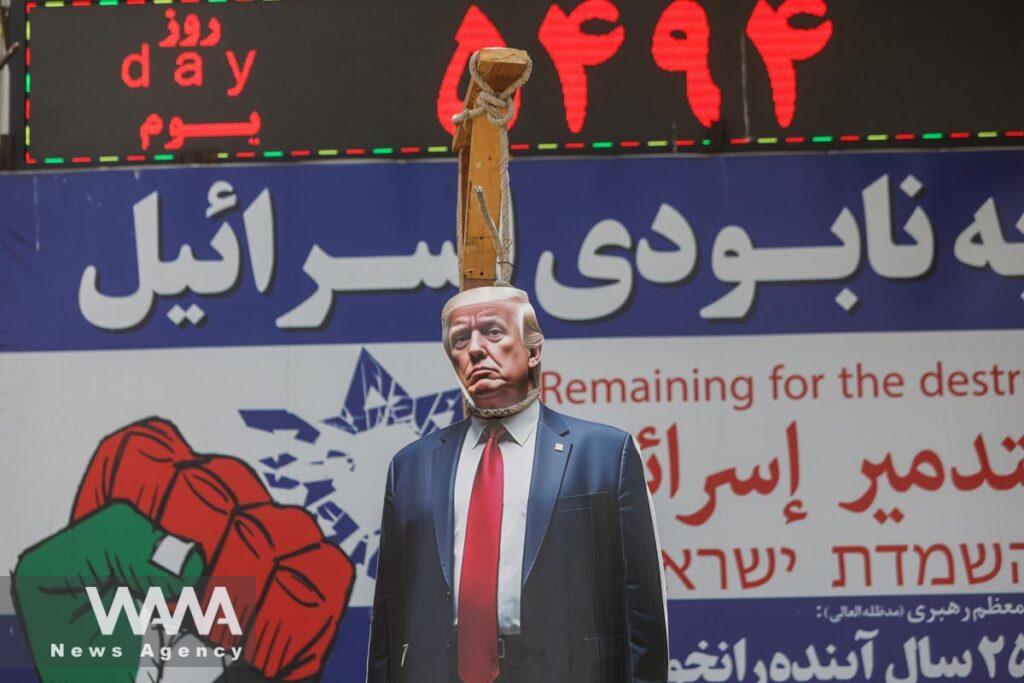
A cut-out of U.S. President Donald Trump being hanged is displayed in Palestine Square in Tehran, Iran, September 6, 2025. Majid Asgaripour/WANA (West Asia News Agency)
The nearly $35 billion in U.S. aid to Israel in recent months is not merely an effort to ensure Zionist security or Jewish survival; it is a policy aimed at protecting the security, interests, and energy needs of Western citizens.
Setting aside the daily rhetoric and threats of Netanyahu and Trump, realities on the ground are unfolding very differently from what Tel Aviv and Washington desire.
According to a Pew survey, 62 percent of respondents across 24 countries hold a completely negative view of Israel.
In six Western European countries, nearly 70 percent of the population views Israel unfavorably. It appears that the story of the Gaza war and Israel’s attack on Iran is now being told—this time more accurately and more loudly—by the world itself.
Tel Aviv and the Jewish community must come to terms with the fact that no genuine strategic, moral, or ethical alliance exists between the West, the United States, and Jews. Just as Zionists define their relationship with the West purely in terms of advancing Tel Aviv’s political interests, the West’s view of Israelis has never been humane, ethical, or non-instrumental.
At the end of this alignment between the West and Israel, neither side emerges victorious. Contrary to what is stated in the 2025 U.S. National Security Strategy, securing energy resources, containing regional rivals, and maintaining regional influence remain America’s top priorities. And for all these missions, the United States and the West believe they have no better partner in our region than Israel.
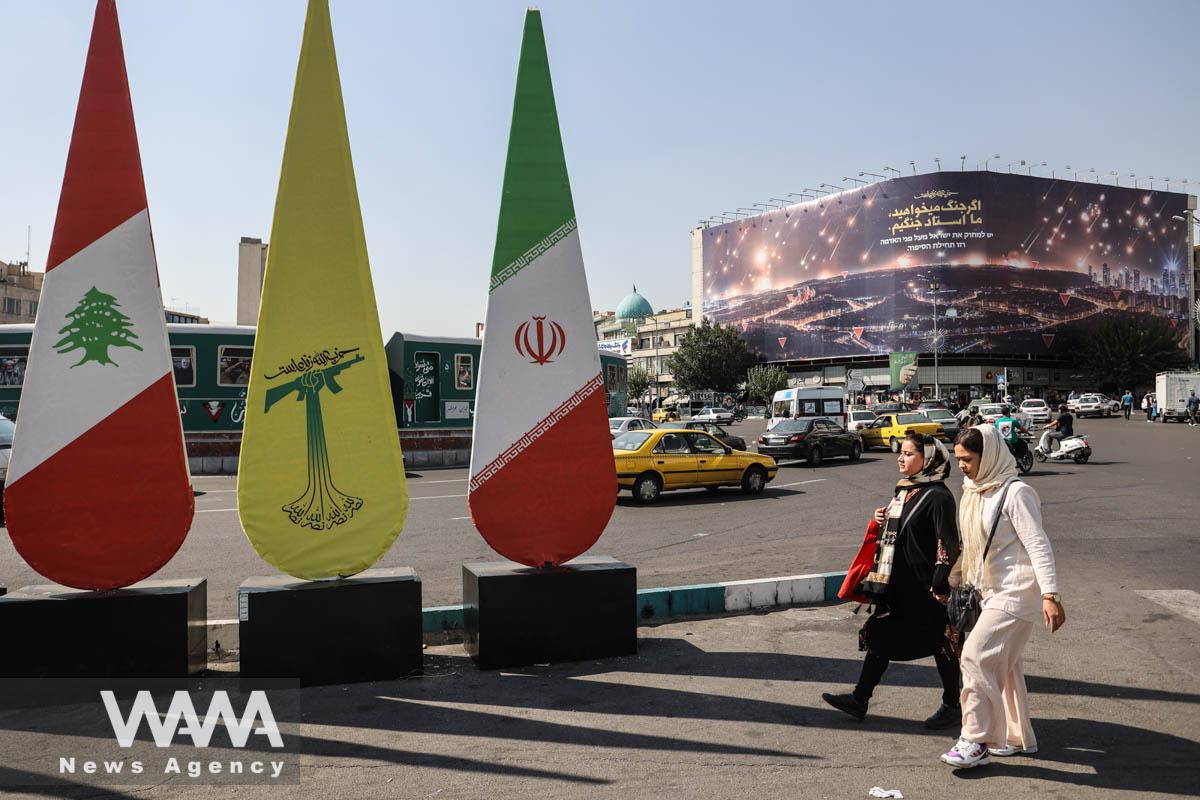 Does Lebanon View Iran as an Enemy State?
WANA (Dec 23) – In recent weeks, a series of contradictory positions emerging from Beirut and Tehran has pushed a serious question into the media spotlight: Is Lebanon redefining Iran as a “problematic state,” or even a “potential adversary”? The question arises from clear inconsistencies in official rhetoric—from the harsh remarks of Lebanon’s foreign […]