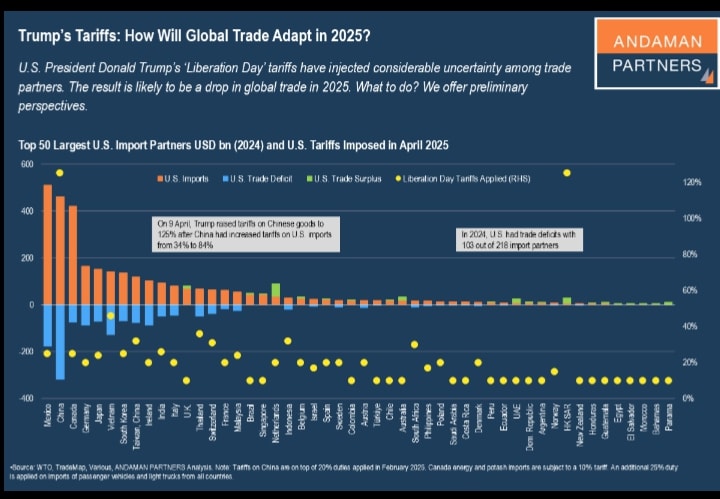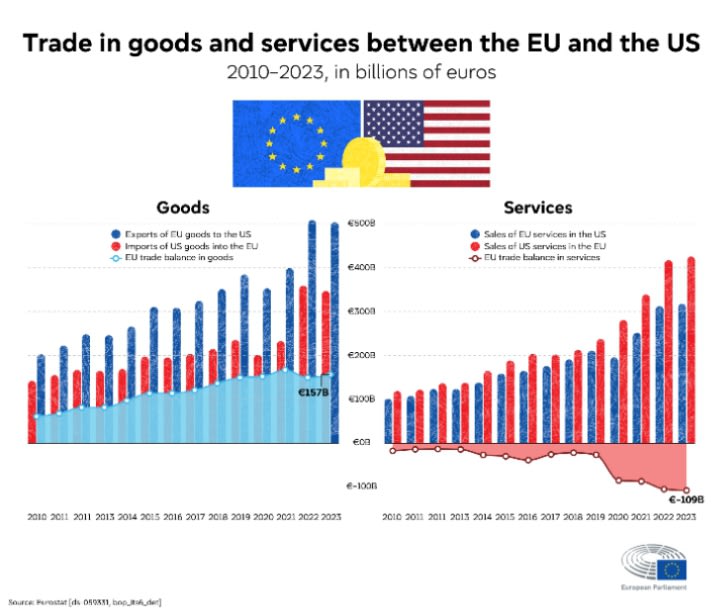
Donald Trump’s return to the White House in 2025 didn’t just change American politics; it sent a shockwave across Europe. Almost as soon as he was sworn in, the new administration rolled out a fresh round of tariffs on European steel, cars, and luxury goods, framing them as long-overdue “corrections” to an unfair system.
Suddenly, a relationship that once looked like a stable partnership turned into a tense economic staring contest, with ordinary people caught quietly in the middle.[conversation_history]For years, U.S.–EU trade disputes simmered in the background, mostly handled by diplomats, lawyers, and negotiators. This time feels different. The tone is louder, the moves are faster, and the fallout is more visible.
Factories are slowing production, protests are filling European streets, and investors are nervously watching every press conference, wondering which product or sector might be targeted next.[conversation_history]A Simple Message, Complicated ConsequencesOn the surface, Trump’s message is straightforward: Europe has taken advantage of America on trade and defense, and the United States will no longer tolerate it.
Tariffs, in this narrative, are a tool to force “fairness” — to protect American workers, punish what he calls “unbalanced deals,” and push NATO allies to spend more on their own security.[conversation_history]But the reality on the ground in Europe is far messier.
German and French automakers, deeply dependent on the U.S. market, now face higher costs and shrinking export volumes. Smaller exporters in Italy and Spain — from specialty food producers to industrial parts suppliers — have discovered that their biggest, most reliable customer suddenly comes with a new price tag they cannot control.
Economic forecasts that were already cautious are being revised downward, and the word “recession” is no longer taboo in policy circles.[conversation_history]In many European cities, this tension isn’t abstract. It is visible on the streets.
Farmers blocking highways with tractors, workers marching with “Jobs, Not Tariffs” banners, and unions calling for boycotts of American brands all tell the same story: people feel they’re paying the price for a political struggle happening far above their heads.[conversation_history]The American Side of the StoryAcross the Atlantic, the picture is more complicated than a simple win-or-lose scoreboard. In parts of the United States, especially in steel and manufacturing towns that have struggled for decades, there are banners celebrating new production and rehiring.
For some communities, these tariffs look like the first real sign that Washington is willing to prioritize them over distant trade relationships.[conversation_history]Yet those gains come with a cost. American consumers now face higher prices on imported cars, European wines and cheeses, and a wide range of products that quietly rely on EU-made components. Businesses that depend on European parts — from car manufacturers to tech companies — are being forced to rethink supply chains, renegotiate contracts, or pass higher costs on to customers. Investors, meanwhile, understand that Europe remains one of America’s most important economic partners, and a weaker Europe eventually means weaker demand for U.S.
goods and services.[conversation_history]Markets have made their verdict clear: they don’t like unpredictability. Sudden tariff announcements, hints of “more to come,” and tough talk in press conferences fuel volatility. Every new headline about the trade confrontation triggers a wave of analysis, speculation, and repositioning, as if the global economy were constantly bracing for impact.[conversation_history]
From Trade Dispute to Strategic RiftWhat makes this moment especially dangerous is that the conflict is no longer confined to spreadsheets and customs forms. Trade tension is bleeding into security and diplomacy. When Washington talks about reducing its military footprint in Europe, or suggests that allies who don’t spend enough may not be fully protected, it sends a chill through capitals that have relied on the transatlantic alliance for decades.
[conversation_history]European leaders have responded with louder calls for “strategic autonomy” — the idea that Europe must be able to defend and support itself without depending so heavily on the United States. That means new discussions about defense spending, alternative supply chains, and deeper internal coordination. It also means a subtle but real shift in how Europe sees America: less as a predictable anchor and more as a powerful partner who may suddenly change course.[conversation_history]
In the United States, the rhetoric has shifted as well. Where “the West” once meant a united front, increasingly the conversation frames Europe as a competitor on trade, industry, and regulations. For many Americans, the EU is no longer just a friendly ally with a funny accent; it’s a bloc that, in this narrative, undercuts U.S. workers and hides behind bureaucracy.[conversation_history]
The Human Cost Behind the HeadlinesBehind every chart and policy brief are people whose lives suddenly feel more fragile. A German engineer who built a career designing cars for the U.S. market now wonders if layoffs are coming. A Spanish small-business owner who exports olive oil to American restaurants sees orders shrinking and shipping costs rising.
An American family shopping for a new car or planning a holiday trip discovers that prices have quietly climbed beyond what they expected.[conversation_history]These are not abstract trends. They’re the everyday consequences of an economic confrontation that neither side seems ready to walk away from. That sense of being trapped in someone else’s fight is part of what makes this story so powerful — and so unsettling.
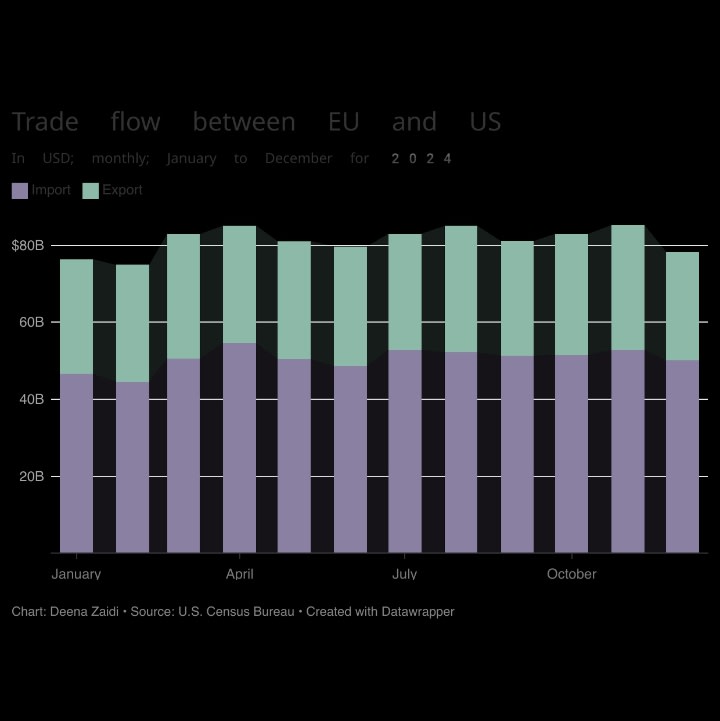
People are not just worried about their jobs; they’re worried about a future where alliances feel weaker, institutions feel shakier, and the rules of the game can change overnight.[conversation_history]Who Actually Wins This War?Supporters of the tariffs argue that short-term pain is the price of long-term fairness. They say that forcing Europe to the negotiating table, recalibrating trade flows, and demanding more defense spending will ultimately make the system more balanced and sustainable.
For them, early signs of industrial revival in parts of America are proof that tough measures can work where polite diplomacy has failed.[conversation_history]Critics counter that the damage may outlast any quick wins. Once trust is broken, they warn, it is hard to rebuild. Companies forced to rewire supply chains might not come back even if tariffs are later removed.
European voters, feeling publicly humiliated or economically cornered, may push their leaders toward policies that further distance the EU from Washington. A world with more fragmented trade and weaker alliances, they argue, is a world that is less stable — and ultimately less prosperous — for everyone.
[conversation_history]Between Two NarrativesStuck between these competing narratives are ordinary people in Europe and America, trying to make sense of rising prices, anxious headlines, and heated political arguments. They hear promises of renewed greatness on one side and warnings of impending crisis on the other, while their own experience is far more personal: a shrinking paycheck, a delayed purchase, a job that suddenly feels less secure.
[conversation_history]In the end, this trade war is about more than tariffs. It is a test of how far two long-standing partners can push each other before something fundamental breaks. If there is one clear lesson so far, it’s this: when economic battles escalate, the loudest voices may belong to politicians, but the deepest impact is felt quietly — in homes, on shop floors, and in the wallets of people who never got a say in the fight.[conversation_history]