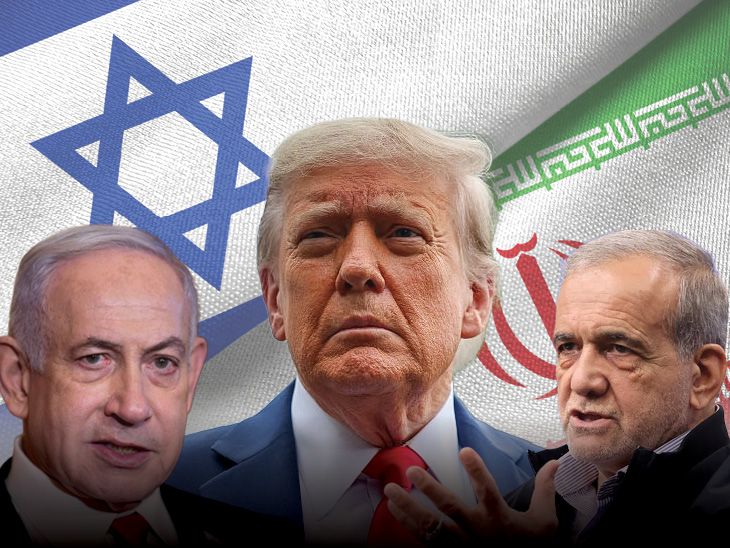
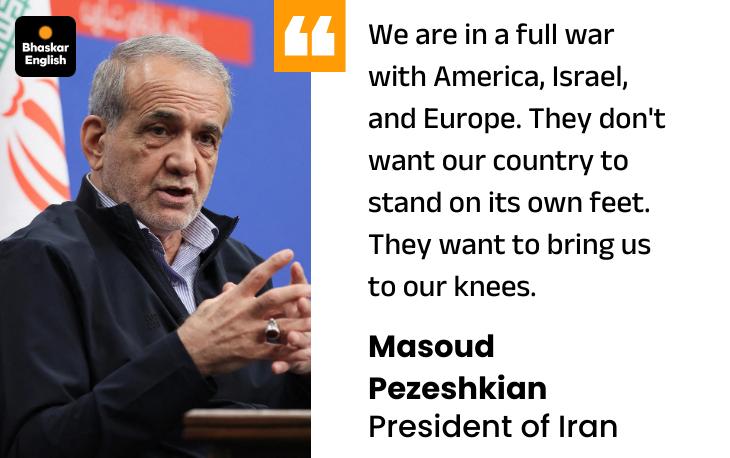
Iranian President Masoud Pezeshkian on Saturday said that Iran is facing a ‘full-scale war’ involving US, Israel and Europe. The remarks were published on the official website of Iran’s Supreme Leader, Ayatollah Ali Khamenei.
Pezeshkian said the current situation is more complex and dangerous than the 1980–88 Iran-Iraq War, which resulted in millions of casualties. He noted that unlike a conventional conflict, the present confrontation involves simultaneous economic, military and political pressure.
“The pressure is coming from all directions,” the President said, adding that such a situation is more difficult to manage than a traditional battlefield war.
The statement comes ahead of a scheduled meeting between Israeli Prime Minister Benjamin Netanyahu and former US President Donald Trump at the Mar-a-Lago resort in Florida. Iran is expected to be a key issue during the talks, with discussions likely to focus on Tehran’s missile programme and possible military action.
President warns against attempts to divide the country
The President on Monday warned that hostile forces are trying to sow discord in the country and appealed to citizens to maintain national unity. He said enemies are seeking to exploit internal divisions for their own benefit and urged people to remain united in the national interest.
Meanwhile, tensions continue to rise over Iran’s nuclear program. The United States and its allies have accused Iran of attempting to develop nuclear weapons, allegations that Tehran has consistently denied. Iran maintains that its nuclear activities are strictly for peaceful purposes.
Also Read: ‘Iran has enough uranium to make an atom bomb’: UN agency says nuclear programme can be restarted
After returning to power in January 2025, US President Donald Trump revived his “maximum pressure” policy on Iran. The measures included efforts to reduce Iran’s oil exports to zero and the imposition of additional economic sanctions.
In September, France, Germany and Britain reimposed United Nations sanctions that had earlier been lifted under the 2015 nuclear agreement. The renewed sanctions have added further strain to Iran’s already troubled economy.
Iran has accused Western countries of using sanctions as a tool of political pressure, insisting that while it seeks peace, punitive measures continue to be imposed against it.
Iran’s army stronger than before: President Pezeshkian
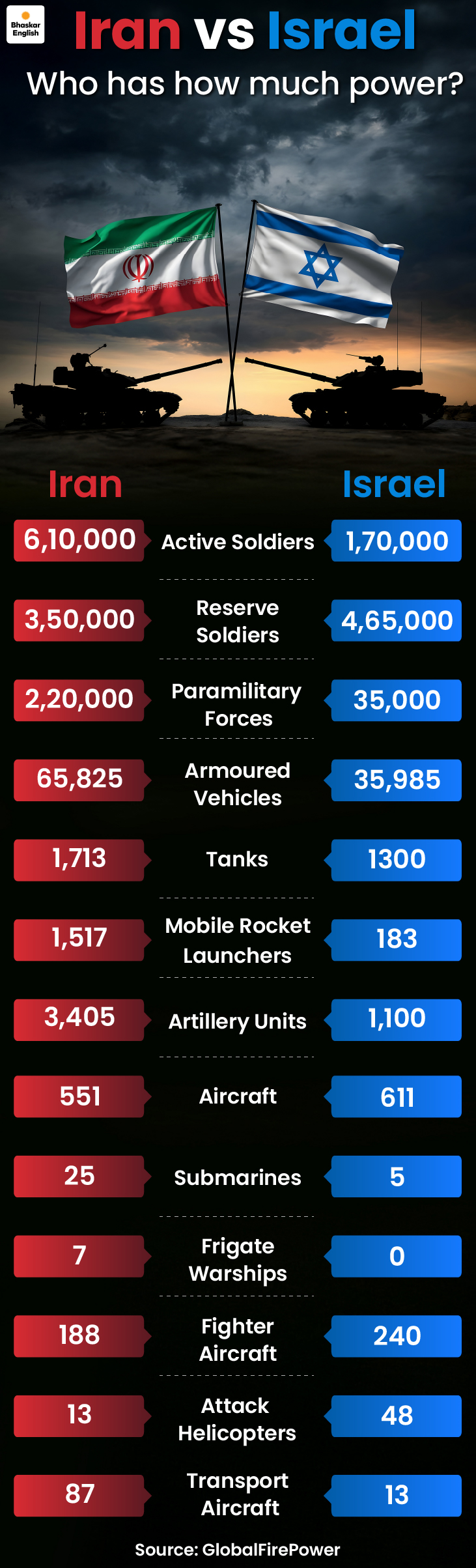
Iranian President Masoud Pezeshkian on Monday said the country’s armed forces are now stronger than before and warned of a firm response to any future attack.
Speaking about the June attacks, Pezeshkian claimed that the Iranian army has emerged more powerful despite recent challenges. He said the forces have strengthened both in terms of weaponry and manpower.
“Our army is doing its job with full strength,” the president said. He added that if Iran is attacked again, it would respond decisively.
Also Read: Why did Iran and Israel agree to a ceasefire?: How 12-day war ended
Israel–Iran conflict: 12 days of direct war in June 2025
A 12-day direct war broke out between Israel and Iran in June 2025, marking one of the most serious escalations between the two rivals. During the conflict, Israel carried out attacks on Iran’s military installations and nuclear facilities.
According to reports, more than 1,000 people were killed in Iran during the Israeli strikes. On the other side, Iranian missile attacks resulted in the deaths of 28 people in Israel.
US enters the conflict, nuclear talks halted
As the war intensified, the United States also entered the conflict. US forces bombed three major Iranian nuclear sites—Natanz, Fordow, and Isfahan. Following the US strikes, nuclear negotiations between Iran and the US, which had been ongoing since April, were halted.
Israel maintained that the primary objective of its military action was to disrupt and halt Iran’s nuclear program.
On June 22, the US carried out strikes on Iran’s key nuclear facilities. Two days later, a ceasefire was implemented through American mediation, bringing an end to the fighting between the two countries.
After the ceasefire, US President Donald Trump claimed that he had prevented American and Israeli forces from assassinating Iran’s Supreme Leader, Ayatollah Ali Khamenei.
Meanwhile, Israel’s Defense Minister Israel Katz stated that Israel had intended to kill Khamenei but was unable to do so as his location remained unknown, with reports suggesting he was hiding in underground facilities.
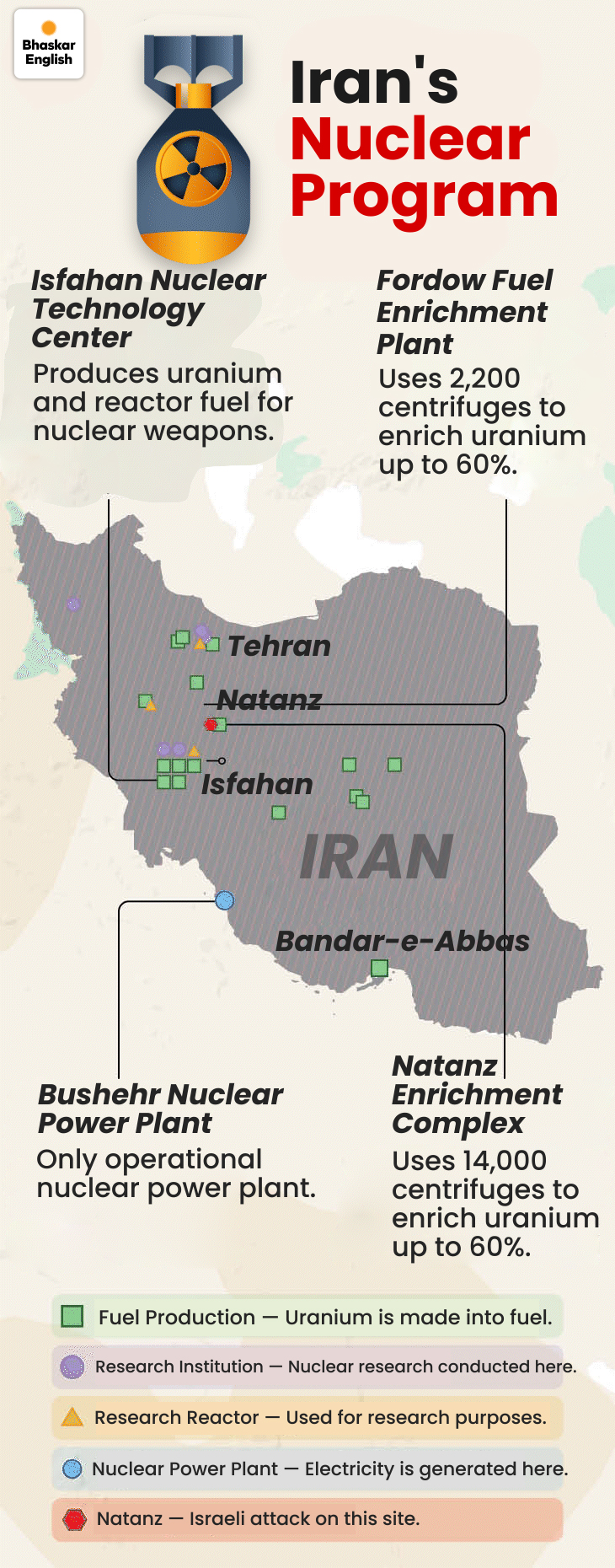
What Impact Would a War Have on Iran?
If the current tensions escalate into a full-scale war, Iran could face severe consequences, potentially more damaging than the 1980–88 Iran-Iraq War, analysts warn.
Military Losses: While Iran possesses significant missile and drone capabilities, it could struggle against the advanced military technology of the US and Israel. Precision air strikes, cyber warfare, and sophisticated air defence systems could target Iran’s nuclear facilities, military bases, and critical infrastructure. Notably, Iran’s missile capabilities were reportedly weakened during the June 2025 conflict, leaving it more vulnerable in a prolonged war.
Economic Devastation: Iran’s economy is already under immense pressure due to long-standing US and international sanctions. Inflation remains high and oil exports are limited. Any disruption or halt in oil exports during a war would sharply reduce state revenue, worsen inflation, and likely trigger shortages of essential goods, including food and medicines.
Humanitarian Crisis: A war could result in large-scale civilian displacement. Attacks on urban areas would strain Iran’s healthcare system, disrupt education, and cripple basic services. Given the country’s existing economic distress, prolonged conflict could lead to food insecurity, disease outbreaks, and a deepening humanitarian emergency.
Political Impact: Rising economic hardship and civilian suffering could fuel internal unrest, increasing pressure on the Iranian leadership and potentially threatening regime stability.
Global Impact: A conflict involving Iran would have repercussions for the global economy, particularly by driving up oil prices. However, experts note that Iran itself would bear the brunt of the damage. Despite this, Iranian authorities maintain that the country’s military capabilities have strengthened and insist they are prepared to respond forcefully to any aggression.