Write to us at startingpoint@globe.com. To subscribe, sign up here.
Valentyn Syniy woke before dawn on February 24, 2022, to the sound of explosions. Syniy, an evangelical pastor who leads the Tavriski Christian Institute in Ukraine, was living in the southern port city of Kherson when Russian troops invaded. He fled in a van with his wife Luba, their son and daughter, their dog and cat, and others. They ended up more than 500 miles away in the city of Ivano-Frankivsk, where Syniy helped evacuate, feed, and minister to fellow displaced Ukrainians as the war ground on.
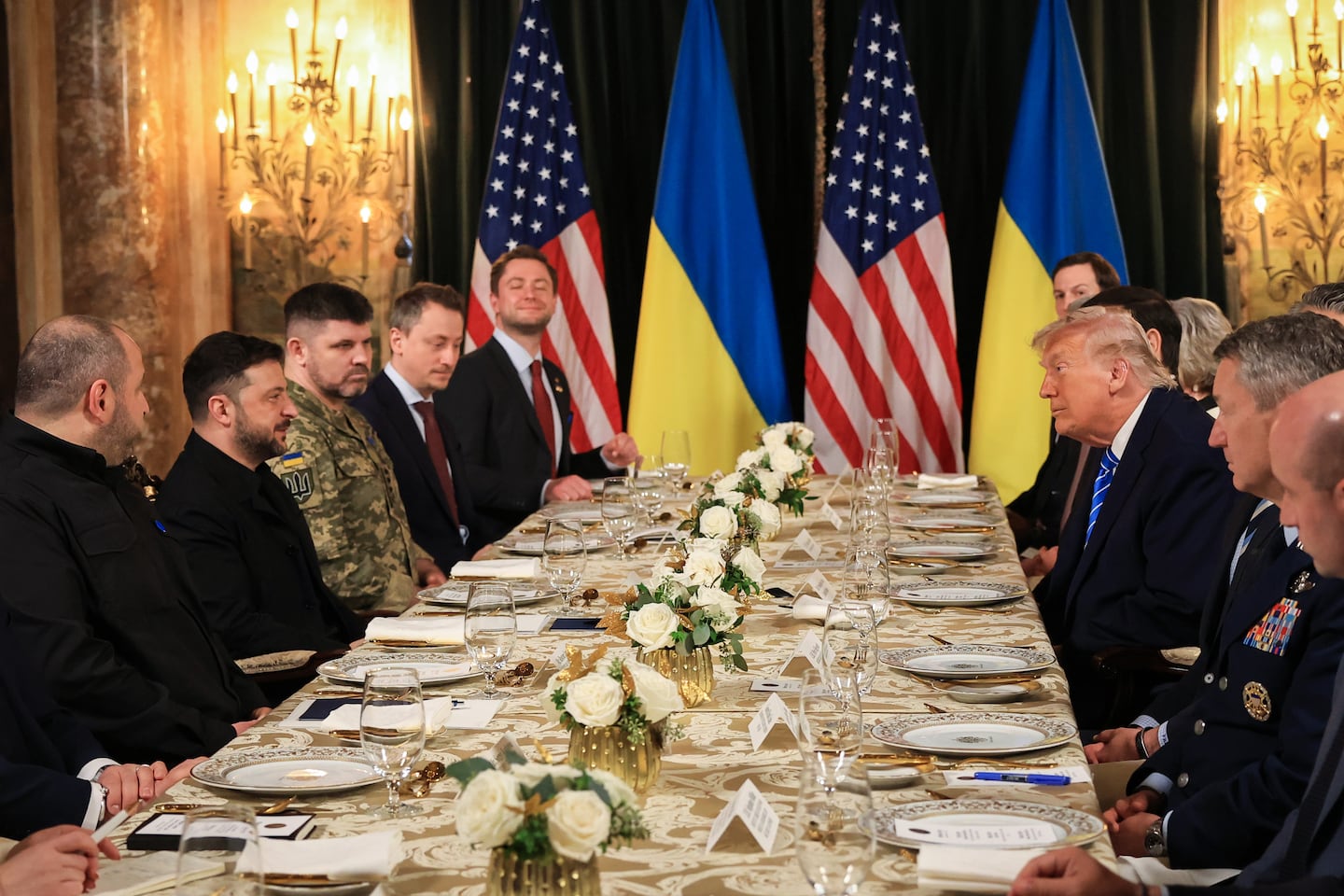
During the 2024 election, President Trump repeatedly pledged to resolve that war in 24 hours. Nearly a year after retaking office, he’s still trying. Yesterday, Trump spoke with Russian President Vladimir Putin and met with Ukrainian President Volodymyr Zelensky about a peace agreement, but a deal remains elusive. Syniy’s story helps explain why the conflict has proved so difficult to end: because it’s being waged over Ukrainian culture and national identity, including religion, as much as lines on a map.
“This war, it’s not about land,” Syniy told me during a recent visit to Boston. “It’s about worldview.”
Syniy and Luba were in town last month to attend a theological conference and to gin up financial support for TCI. Syniy, who now lives in Ukraine’s capital of Kyiv, was also in Boston to promote “Serving God Under Siege,” a book he published this year about his family’s escape.
Ostensibly, the hurdles to peace are geopolitical. Ukraine has resisted surrendering territory to Russia; Putin opposes the security guarantees that the US and Europe have discussed with Ukraine. Yet threaded through Syniy’s book is a sharp analysis of the less tangible factors underpinning Putin’s reluctance to end the fighting.
In Syniy’s view, the war is a symptom of what he calls “Russian Order”: the belief that Russia should politically and culturally dominate Ukraine and other post-Soviet countries. Religion is part of that order. The Russian Orthodox Church, which counts most of the country as believers, sees itself as part of a “spiritual historical mission” and has allied with Putin. Church leaders, Syniy writes, “pushed the Kremlin line that Ukraine was ruled by a ‘Nazi regime,’” Putin’s pretext for invading. Last year, the church formally labeled the conflict a “holy war.”
Because of that, faith has become a target alongside Ukraine’s cities and soldiers. Shortly after the war began, Syniy writes, a Russian military convoy marched into Kherson and turned his seminary into a base, looting buildings and destroying books from the institute’s theological library written in Ukrainian and English. Officers from the Russian security service interrogated Syniy’s father, a fellow pastor who stayed behind in Kherson, demanding at gunpoint that he reregister his church under Russian law. (He refused.)
Faith also became a weapon. Orthodox Ukrainians “were encouraged to collaborate with the occupants, bribed with money, given pro-Russian flyers and weapons” as they worshiped, Syniy writes. After the Ukrainian army recaptured Kherson, one custodian who worked at Syniy’s seminary told him that a Russian soldier had preached to them nightly. “Know that there will be only one true church — the Russian Orthodox Church — here,” another institute employee recalled a Russian officer shouting.
It’s possible that Trump’s latest peace talks, which he said had yielded progress yesterday even as Russia rejected some of Ukraine’s terms, will ultimately succeed. But if they fizzle, Putin’s desire to, in Syniy’s words, “deprive us, the Ukrainians, of our culture, language, and national identity” may be one reason why.
In the meantime, for some Ukrainians, faith itself has become a casualty of war. According to one survey, the share who identify as atheists, nonbelievers, or agnostics ticked up after Russia invaded. The war challenged Syniy’s beliefs, too. At one point, despite his pacifist principles, he considered joining the military reserve.
Yet it also affirmed — and transformed — his mission. After reaching Ivano-Frankivsk, Syniy concluded that “the war demanded new initiatives from us.” He and other TCI volunteers partnered with other religious organizations to raise money for displaced Ukrainians, set up a youth club for refugee children, evacuate people from embattled cities, and distribute food and medicine.
In his book, Syniy likens displaced Ukrainians like himself to the Israelites who fled Egypt. And until the fighting does finally end, he predicts, faith can help a traumatized country heal. “Some needs can’t be met by a humanitarian organization,” Syniy said, with Luba translating. “Some things are connected to the issues of your soul and not your body. And someone who understands the spiritual world can answer those needs.”
🧩 3 Down: Pseudonym | ☁️ 50° Wintry weather
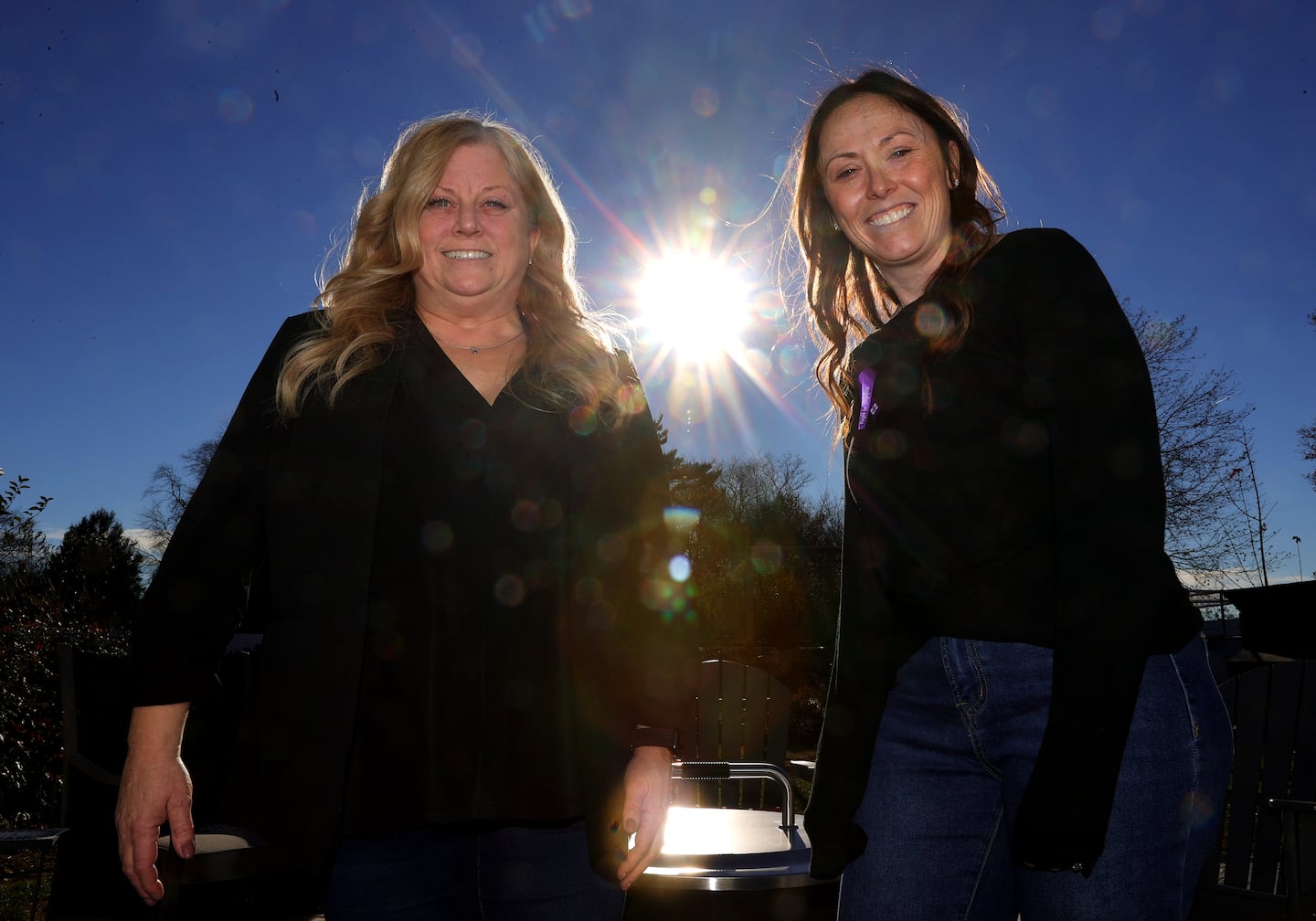 Ginger Gonsalves of Weymouth and Becky Kelliher of Oxford were living in the shadows when they met. They fear having to go back there.David L. Ryan/Globe Staff
Allergic to the sun: An experimental drug has let two Massachusetts women with erythropoietic protoporphyria, a rare disease that causes pain when they experience sunshine, go outdoors. They worry the drug’s cost will force them back inside.
Housing: A Cambridge developer is suing over the city’s inclusionary housing rule, which requires new buildings to make units available to working- and middle-class residents. If he wins, it could topple policies across Massachusetts that have yielded thousands of affordable homes in a state that’s starved for them.
Organized labor: Fenway Park concession workers ratified a new contract with Aramark that includes better wages and staffing standards. The contentious negotiations led to a work stoppage over the summer.
‘You can’t do everything’: The Massachusetts Legislature has used lawsuits and legislation to try to counter the Trump administration’s immigration policies, tariffs, and more. But they say there’s only so much they can do.
Speaking of tariffs: Small businesses are feeling the pain. They’ve struggled to plan for Trump’s on-again, off-again import duties, wrestled with how much of their costs to pass on to customers, and scrambled to find alternate suppliers.
Why’d the sheriff buy a dog tuxedo? Elected sheriffs across Massachusetts collect millions of dollars in civil process fees from serving subpoenas, seizing property, and more. Lawmakers are starting to scrutinize how they spend that money.
Big Food: Advocates, academics, and policymakers argue that the food industry has borrowed from tobacco companies’ playbook, making addictive, unhealthy products ripe for a public reckoning. But they disagree over whether Robert F. Kennedy Jr., the Trump health secretary who calls ultraprocessed food “poison,” is an ally or a hindrance in that fight.
What is ‘craftivism’? Local artisans are channeling their knitting, sewing, embroidery, and other skills into tools of activism, fighting back against what they see as threats to democracy — and raising money doing it.
Holiday tragedy: Kayla Corrigan, a 21-year-old Syracuse University senior, died in a Christmas Eve fire at her family’s Needham home. Investigators believe the blaze was an accident.
☕ Coffee break: A viral Reddit post argued that Boston needs to end its “love affair” with Dunkin’. Fans of the brand fired back, igniting a firestorm.
🕰️ Longreads: Revisit the 10 Globe Magazine stories that readers spent the most time with in 2025.
📺 Watch this: From a fiery “Game of Thrones” spinoff to two very different series set in hospitals, here are five TV shows to binge before they return in 2026.
❤️ Love Letters: Her longtime handyman left mystery panties in her dining room. Is it weird enough to fire him?
😉 RIP Brigitte Bardot: The French femme fatale and symbol of sexual revolution who later became an animal-rights activist and right-wing commentator died at 91. When a reporter asked her to name the most memorable day of her life, she corrected him: “It was a night.” (WashPost 🎁)
Thanks for reading Starting Point.
This newsletter was edited by David Beard, whose favorite Dunkin’ commercial is “PeeWee Hockey.”
❓ Have a question for the team? Email us at startingpoint@globe.com.
✍🏼 If someone sent you this newsletter, you can sign up for your own copy.
📬 Delivered Monday through Friday.
Ian Prasad Philbrick can be reached at ian.philbrick@globe.com.