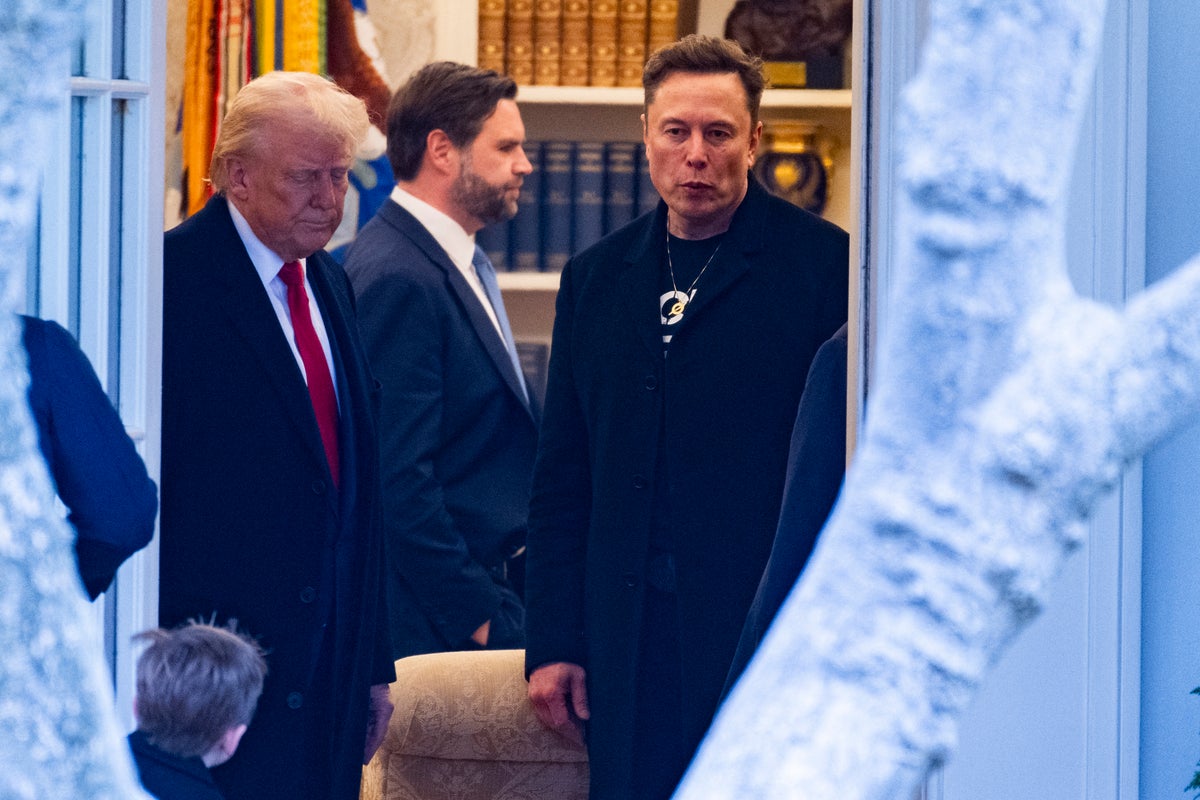
Vice President JD Vance proved instrumental in repairing the relationship between President Donald Trump and “kingmaker” Elon Musk, following their fiery public falling out this summer, according to a new report.
Vance quietly worked the phones, backchanneling with Musk’s allies and arranging several concessions for the CEO of SpaceX and Tesla in order to bring him back into the fold, more than a dozen sources familiar with the situation told The Washington Post.
Vance’s close personal friendship with Musk and their shared tech-centric worldview made him uniquely suited to mend the divide. Plus, he had skin in the game — winning back Musk’s support could supercharge his path to the Republican nomination in 2028.
Still, sources told the outlet that the peace between the president and the billionaire businessman remains delicate.
Here is an overview of how the vice president brought Musk back into the president’s orbit, according to the Post.

Vice President JD Vance proved instrumental in thawing relations between President Donald Trump and Elon Musk, according to a new report. (AFP via Getty Images)
Following Trump’s inauguration in January, Musk quickly became one of the most influential figures in the administration, spearheading the Department of Government Efficiency, which recommended vast cuts to government spending.
But, within a few months, the relationship started to sour after Musk clashed with lawmakers and several administration officials, some who saw him as overstepping his authority.
“He’s used to being the emperor,” a Musk associate told the Post. “But he wasn’t treated with much respect in Congress. And he doesn’t do politicking.”
In early June, White House aide Sergio Gor informed Trump that Jared Isaacman — Musk’s preferred choice to lead NASA — had made donations to Democrats. In response, Trump pulled his nomination. And three days later, Musk attacked the president’s “One Big Beautiful Bill” online.
At this point, Vance contacted Musk — whom he’d hosted for dinner in February and spoke regularly with since — in order to de-escalate the situation. But it didn’t work.
In the midst of a public spat in June, the SpaceX CEO accused Trump of being in the government’s files on Jeffrey Epstein and vowed to start a new political party, which he dubbed the “America Party.” For his part, Trump said Musk had “gone off the rails.”
Trump has not been accused of, and denied any wrongdoing, in relation to to Epstein.
The high-profile rift triggered alarm bells throughout MAGA world. Musk had spent hundreds of millions on Republican campaigns and, by starting a new party, he could splinter the GOP base, paving the way for Democratic victories.
When contacted by the Post, Vance declined to comment, while Musk didn’t respond.
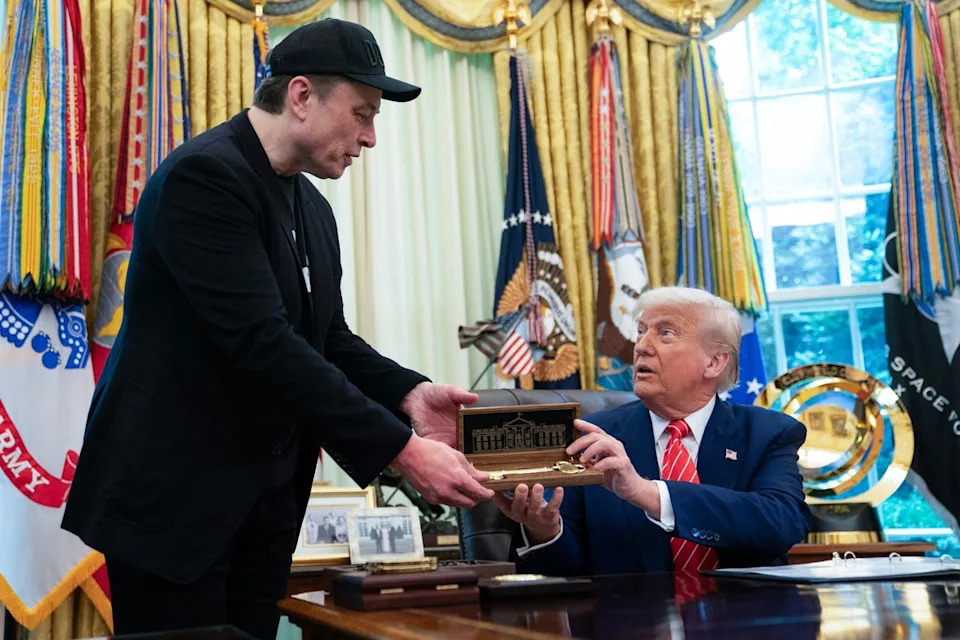
While the president and the tech titan are on good terms again, their truce is delicate, sources told the Post (AFP via Getty Images)
Trump officials, with Vance chief among them, began working behind the scenes to assuage Musk’s concerns and repair his relationship with Trump.
Instead of speaking directly to Musk, the vice president started making calls to people close to the South African-born billionaire — who said that his threats were not empty.
“Whenever Elon talks, there are only two possibilities,” an associate of his told the Post. “He’s either telling you what he wants you to do — or what he is going to do — or he is trying to be funny. I didn’t interpret [the third party announcement] as funny.”
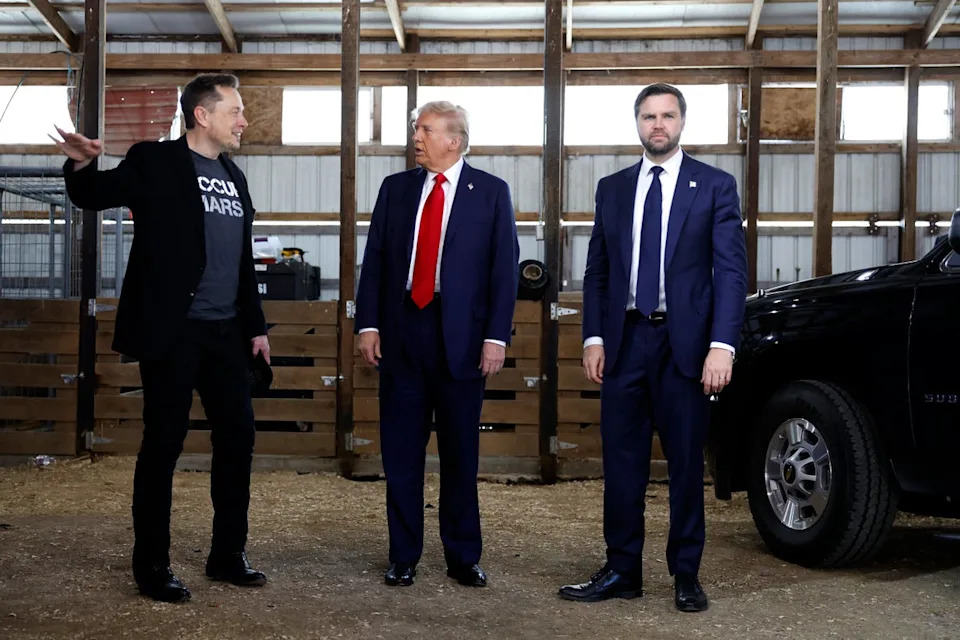
Musk speaks regularly with the vice president, whom he views as a strong candidate for 2028 (Getty Images)
A few developments changed Musk’s plans.
For one, those in his orbit were hesitant to launch a third party — a bid that they viewed as facing slim chances of success in a system long dominated by the two major parties.
And, in September, conservative activist Charlie Kirk was assassinated while speaking at a college campus in Utah. Musk was galvanized by the attack and became more engaged in Republican politics as a result — even telegraphing his desire to get back into politics ahead of the midterms.
Additionally, Vance’s attempts to reach a detente appeared to have paid off.
Privately, the vice president lobbied administration officials and senators to get Isaacman’s nomination to NASA back on track — despite facing pushback from Transportation Secretary Sean Duffy, who was acting head of the space agency, sources said.
The White House also reassigned Gor, sending him to a posting overseas.
“[Gor’s ouster] made it easier for everyone to go back to liking each other,” one source familiar with the dynamic said.
Soon enough, Musk was back in Trump world. In November, he appeared at a dinner for Saudi Arabia’s Crown Prince Mohammed bin Salman at the White House.
However, the newly formed peace remains “fragile,” sources from both camps told the Post.
Still, Vance’s standing with Musk appears solid. In a December interview, the Tesla CEO predicted that the vice president would succeed Trump in 2028, serving two terms as president.
“He enjoys kind of that kingmaker role,” a source said of Musk. “Part of being a kingmaker is making sure everybody in the world knows you’re the king.”