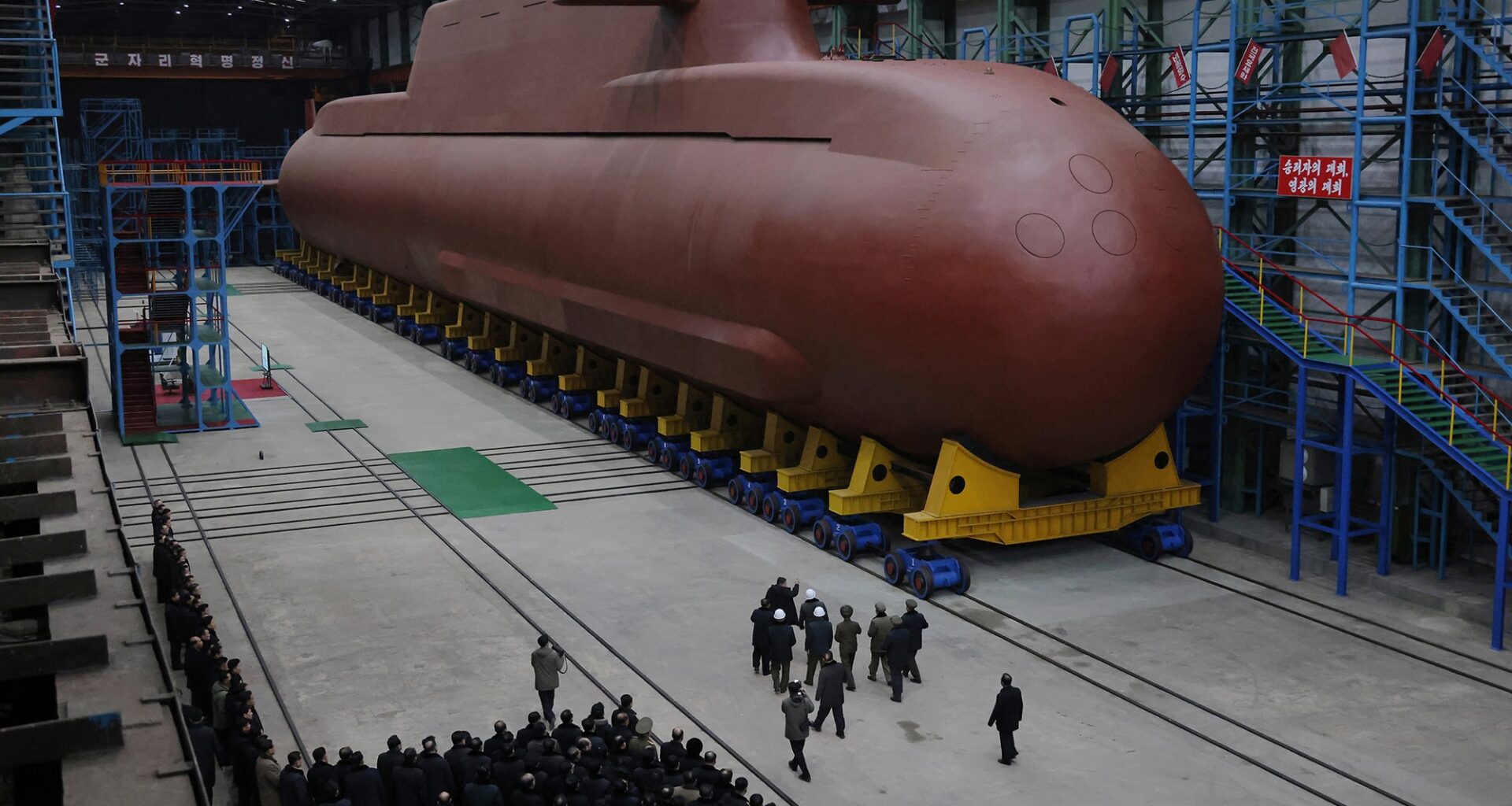
North Korea’s first dedicated nuclear-powered ballistic missile (SSBN) submarine has been unveiled during a DPRK state media broadcast showing North Korea’s leader, Kim Jong-Un, touring the construction facility.
The first of its kind in North Korean service, the submarine is a massive technological leap from the submarines currently or formerly operated by the Korean People’s Navy, this comes as all current or former boats have been conventionally powered.
Larger than any other sub in DPRK service, the sub is claimed to be over 8,000 tonnes in displacement, with added weight aboard the submarine likely due to its nuclear power plant as well as the armament of “strategic missiles,” which hints at the possibility of the submarine carrying nuclear capable SLBMs.
“The submarine is significantly larger than previous North Korean types, necessary to carry the missiles.
From outward appearance the boat appears to draw from the latest South Korean KSS-III class, although there is no serious suggestion that it is a copy. The sail mounted missile silos are also unusual.”
– Regular Naval News contributor and submarine expert H I Sutton.
The submarine is estimated to be able to carry 10 SLBMs in a sail-mounted configuration, a highly unusual method not present on any other SSBN in service across the world. This is supplemented by 6 nose-mounted torpedo tubes (presumably 533mm in diameter) and a likely present chin-mounted sonar array.
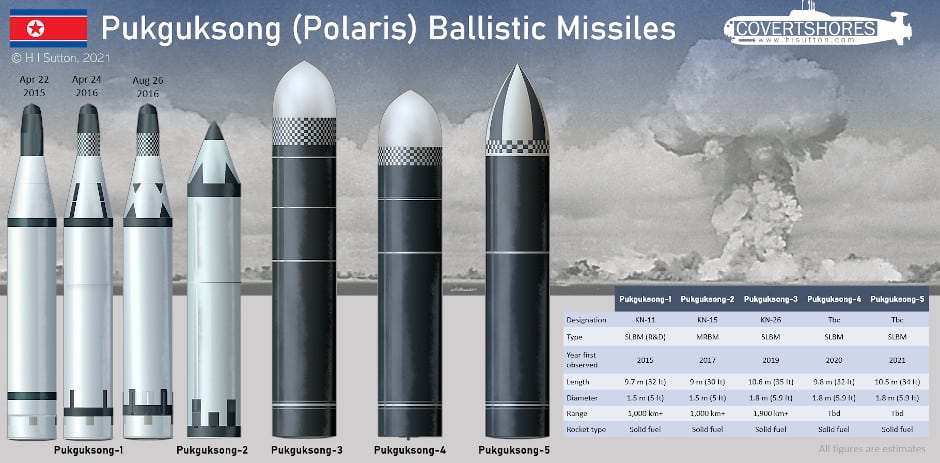
Click to enlarge. An infographic detailing the history of the Pukguksong series of SLBMs. H I Sutton/Covert Shores image.
Which SLBMs will be present on the submarine and their range is unknown, but the missiles utilized will likely be some variation of the Pukguksong series of SLBM, possibly the Pukguksong-5. The Pukguksong-5 is the latest in the DPRK’s lineage of SLBMs, being tested in 2021 with a likely range of several thousands of kilometers.
Current Status of the Korean People’s Navy
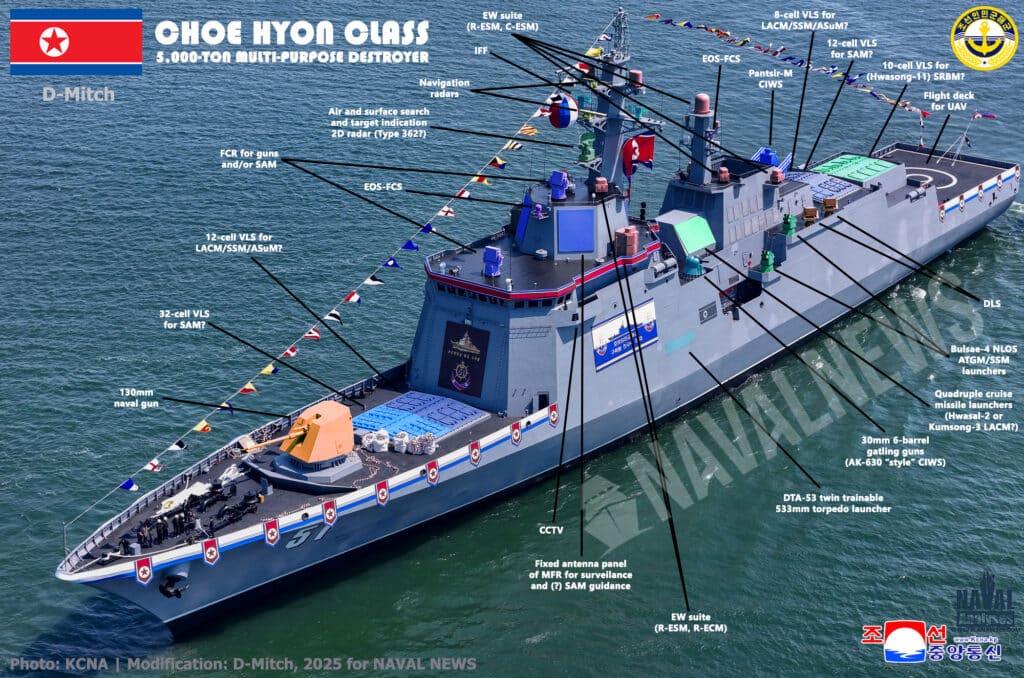
The North Korean Choe Hyon-class multipurpose destroyer, in a detailed system breakdown by Dimitris Mitsopoulos for Naval News.
The DPRK’s SSBN’s reveal occurred during a period of modernization within the North Korean Navy (KPN). This new wave of modernization is most certainly meant to alleviate the growing age of its current surface and submarine force, most of which are Soviet designs dated to the early/mid cold war.
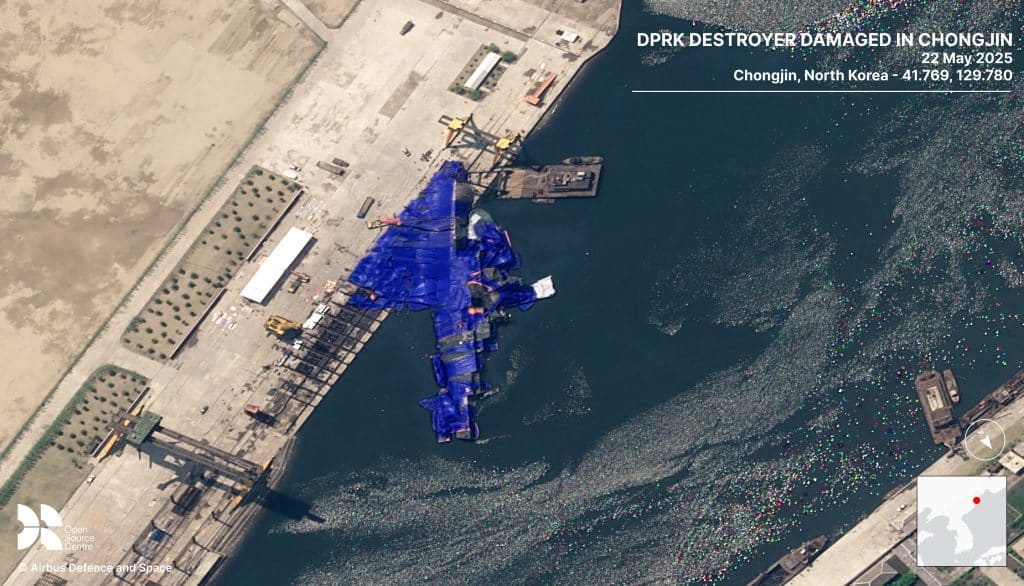
Satellite Photography of the Second Choe Hyon Class Guided Missile Destroyer, Kang Kyon capsized following a failed launch at the shipyard in Chongjin, North Korea. The vessel has since been relaunched. Open Source Center Photograph.
In particular, the North Korean Navy inducted 2 Choe Hyon-class guided missile destroyers into service in 2025, representing the most modern and heaviest surface combatants in North Korean service, with each ship surpassing 5,000 tonnes and capable of carrying nuclear weapons. This class of ship is also the first in KPN service to utilize VLS cells. The second ship, Kang Kyon was relaunched after the ship had capsized and partially sunk following a botched launching attempt.
Below the surface, the KPN had inducted two Sinpo/Gorae-Class SSKs into service since the 2010s, with each submarine capable of firing ICBMs/SLBMs. Besides these two boats, the majority of North Korea’s ~100 hull strong submarine fleet (including mini submarines) are dated to the early cold war and have weathered several decades of service with unknown maintenance cycles.
The induction of the new SSBN is stated by Korean media to augment any nuclear second strike capability currently present within the KPN, and is a part of a broader initiative to enhance the maritime limited capability currently fielded.