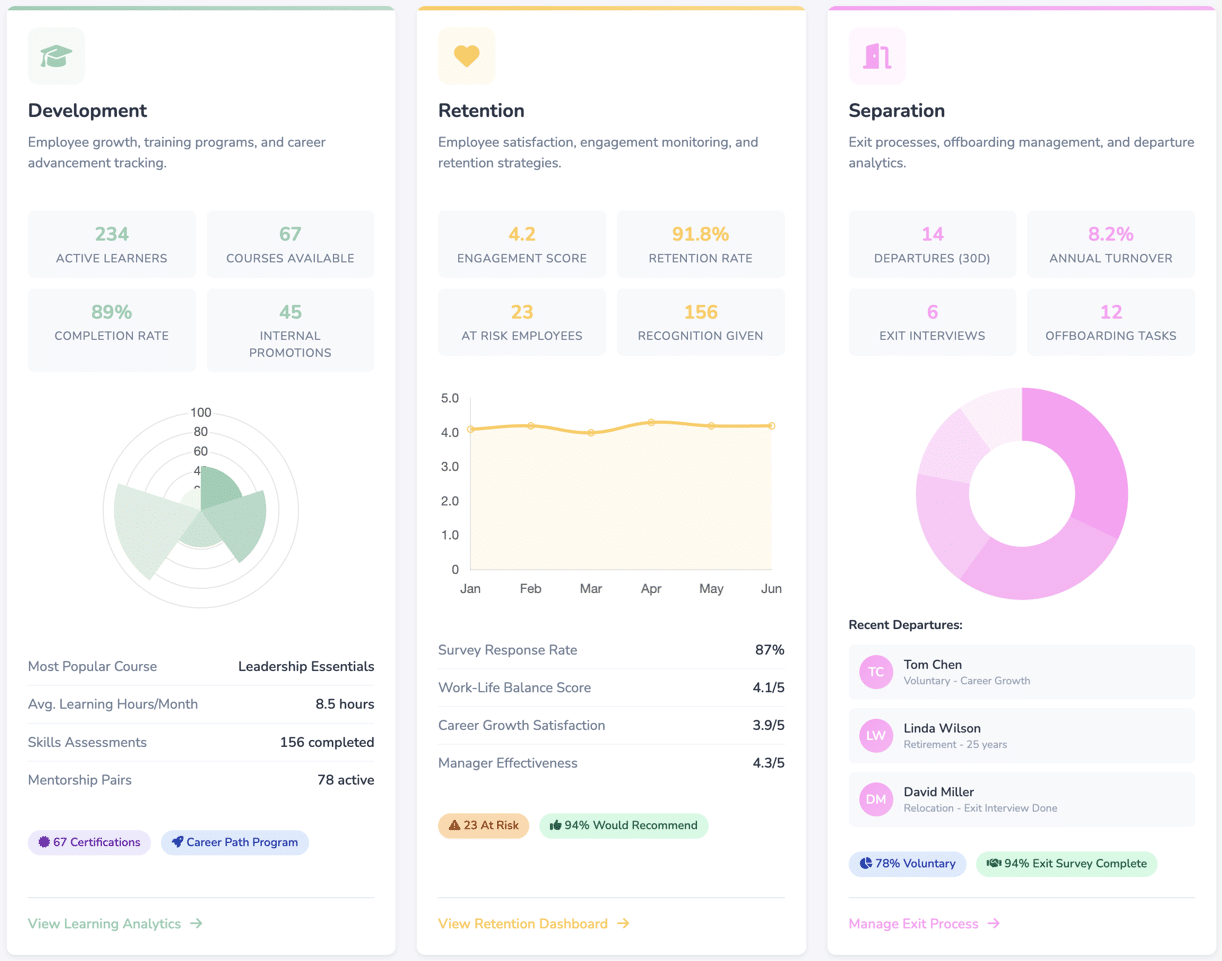
For as long as I can remember, HR leaders have been buried in data—turnover rates in the HRIS system, engagement results in another system and training participation in a third. Yes, the information was all there, but it was fragmented and slow to interpret. True insight and interpretations of the data required time, many spreadsheets and a lot of patience: three things that are in short supply in today’s busy, competitive business environment.
I’m excited to report that it is changing. The next era of HR leadership is defined by visibility and immediacy, the ability to see what’s happening across the workforce in real time and respond with precision.
That vision aligns with my ongoing work exploring how adaptive-intelligence tools are reshaping the future of HR. Over the past decade, we’ve watched dashboards, reports and analytics evolve, but today’s most advanced systems take an entirely different approach. They don’t just display data; they follow the rhythm of an organization, capturing signals as they happen and translating them into meaningful insights.
Imagine being able to see your company the way a physician sees a patient: through a living, connected set of indicators. Not just static charts. Not quarterly summaries, but a real-time view of what is happening across your workforce, where you can see the early signs of friction, the bright spots in culture, the trends that predict performance or turnover. When data becomes continuous and connected, decisions become faster, more precise and substantially more strategic.
See also: What is the role of technology in HR management?
The power of connected intelligence
The next generation of HR technology is built on a simple idea: Workforce data should not live in silos, because people do not work in silos. These adaptive systems gather information from the entire employee journey and convert it into insight with context and continuity. Instead of treating dashboards as the finish line, they become the front door to a constantly learning ecosystem that pulls from:
Recruitment: understanding which talent pipelines actually work
Onboarding: capturing early experiences that shape long-term commitment
Engagement: sensing how recognition, workload, and leadership behaviors influence daily culture
Learning and development: linking growth opportunities to performance and internal mobility
Offboarding: uncovering patterns that help prevent future turnover.
When these touchpoints speak to each other, something powerful happens: HR shifts from reacting to issues to anticipating them. Data becomes knowledge, knowledge becomes action and action becomes measurable progress. Instead of asking “What happened?”, leaders can begin asking “What’s emerging and how do we get ahead of it?”
From insight to impact
Visualization alone is not the destination. It is the bridge. When HR leaders can interpret trends instantly, they can act faster and with greater accuracy.
A spike in turnover might trigger an analysis of engagement levels or pay equity. Rising course completions could correlate with internal mobility. A manager’s team might show stronger retention after the introduction of a recognition program.
This kind of connected intelligence doesn’t show just what is happening, it illuminates why and guides HR leaders on what to do next.
5 essentials for the modern HRIS
A next-generation HRIS system must evolve beyond data storage to become a decision platform. The most forward-thinking systems deliver:
Unified data flow—Seamless integration across all HR functions, ensuring every data point contributes to the big picture.
Continuous data capture—Real-time updates reflecting the living state of the organization.
Dynamic visualization—Dashboards that evolve as data does, surfacing emerging trends intuitively
Predictive intelligence—AI-driven insights that anticipate risk and highlight opportunities.
Actionable outcomes—Tools that allow HR and managers to respond, measure results and adjust in real time.
When these capabilities work together, HR transitions from measuring change to driving it.
Collaboration for the future
In my work with emerging adaptive-intelligence systems such as Webauthor, I’ve witnessed how these tools can move HR from managing data to truly leveraging it. By connecting information from every corner of the employee lifecycle, they create a living ecosystem of insight that helps leaders act earlier, faster and with greater precision.
Leading with clarity
When HR can visualize its impact, supported by systems that think, connect and evolve, it becomes a strategic force, not a support function. Information becomes foresight. Action becomes measurable. And leadership becomes both human and data-informed. This is more than the future of HR technology. It’s the future of HR leadership.