30
Dec 2025
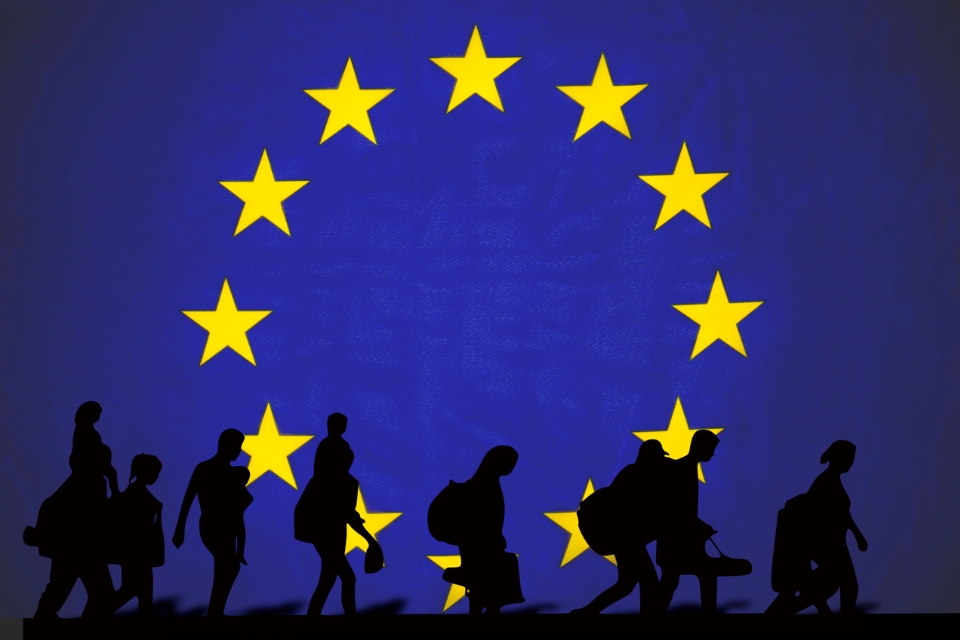
The European Union (EU) has approved a new list of seven “safe� countries to speed up the deportation of migrants as part of a major EU asylum reform.
Under the new rules, officials can expedite the rejection of claims from nationals of countries such as India, Morocco, and Egypt to alleviate pressure on European borders.
Cutting wait times
The provisional agreement reached in Brussels creates a list of seven countries designated as safe origins for migrants. The list includes Bangladesh, Colombia, Egypt, India, Kosovo, Morocco, and Tunisia.
Under the new rules, member states will be able to deal with applications for international protection more quickly. This shift means border officials can process asylum procedures for people who are unlikely to receive protection within the EU in a more effective way.
If an applicant comes from one of these countries, they must prove why their specific situation is dangerous. If they cannot provide enough evidence, their claim will be rejected as inadmissible.
Tackling boat crossings
The Danish presidency of the Council and European Parliament negotiators fast-tracked the law to address the tens of thousands who arrive in Europe and apply for asylum despite departing from safe countries.Â
Officials believe that the current system allows for claims where there is generally no risk of persecution.
Danish Minister for Migration and Integration, Kaare Dybvad Bek, representing the Council presidency, explained that member states will now be able to deal with protection requests more effectively.
The new rules are intended to reduce the pull factors that maintain the current system. Officials hope that by speeding up deportations, they can act against human smugglers who earn fortunes at the expense of migrants.
(Image courtesy of Jose Rodriguez Gil via iStock)
New rules for neighbors
A second part of the agreement updates the “safe third country� rule. This allows EU nations to consider an asylum application inadmissible when applicants could receive effective protection in a country outside Europe.
Previously, countries had different standards for what counted as “safe.� The new legislation creates a more uniform approach across the 27 member states, based on a review of current rules originally scheduled for June 2025.
The European Commission welcomed the deal, stating that it will help member states process asylum applications more swiftly and reduce pressure on asylum systems. They noted that the law ensures respect for fundamental rights while preserving legal safeguards for applicants.
Future members join list
The list also includes EU candidate countries that meet the criteria to be designated as safe countries of origin as part of their membership path. Negotiators argued that this designation is an important piece of the 2024 Migration and Asylum Pact.
This move aims to reduce incentives for illegal migration to the EU. By focusing resources on those fleeing genuine risk, officials say they can provide better support to those truly in need.
Kaare Dybvad Bek added: “It is crucial that we take action to halt the pull factors that maintain an unhealthy and inhuman system.� He pointed to the thousands of migrants drowning in the Mediterranean Sea as a reason for the urgent change.

(Image courtesy of Sohan Shingade via Unsplash)
Courts protect human rights
While politicians move forward with the deal, the Court of Justice of the European Union (CJEU) recently issued a rare judgment regarding the legal duties of border agencies.Â
The court sided with a Syrian refugee, Alaa Hamoudi, who sought damages against the border agency Frontex.
Hamoudi claimed that he was expelled alongside 21 other migrants from Greece to Turkey in 2020. The CJEU sent the case back to the General Court for re-examination, finding that it had failed to properly examine the alleged expulsion.
Two years to prepare
The new asylum rules will not start applying immediately. The EU list of safe countries of origin will begin to apply at the same time as the asylum procedure regulation on 12 June 2026.
This gives member states 18 months to train staff and update their border infrastructure. This rapid progress in the legislative process followed a call to action from EU heads of state to step up work relating to the concepts of safe third countries.
The Commission proposed this list before the Pact comes into force at the urging of many member states. They aim to have a robust system in place to handle the high volume of unfounded claims currently entering the system.

(Image courtesy of Aakash Goel via Unsplash)
Helping out frontline nations
Countries on the front line of migration, like Italy and Greece, have advocated for these changes to manage the burden of arrivals.Â
The new list is designed to help these nations pursue a more uniform approach to applications from nationals whose claims are likely to be unfounded.
If they can process such asylum claims faster and more efficiently, it reduces the long-term stay of individuals in reception centres. The “safe third country� concept specifically allows for applications to be rejected as inadmissible if protection is available elsewhere.
The Council and European Parliament negotiators stated that the revision of the “safe third country� concept was achieved in record time.
Keeping system fair
The European Commission maintained that the political agreement preserves the legal safeguards for applicants. They stated that the new rules ensure respect for fundamental rights while facilitating faster processing.
However, the general rule will be to move people through the system as quickly as possible. The EU intends to reduce incentives for illegal migration by making the rejection of unfounded claims a more certain outcome.
“The agreement between Council and European Parliament negotiators on the application of the safe third country concept shows the determination of EU legislators to make the EU’s asylum system more efficient and robust,� the Council stated in a press release.

(Image courtesy of Levin Kohrt via Unsplash)
Digital borders go live
These asylum reforms are being launched alongside a massive digital overhaul of how all non-EU nationals enter the continent.Â
The new Entry/Exit System (EES) started to be operational on 12 October 2025. This automated IT system registers non-EU nationals travelling for a short stay each time they cross an external border.
European countries are introducing the EES gradually, with full implementation expected by 10 April 2026. It replaces manual passport stamping with a digital record of the traveller’s name, biometrics, and the date and place of entry and exit.
Close behind is the European Travel Information and Authorization System (ETIAS), set to start operations in the last quarter of 2026. This will require 1.4 billion people from 59 visa-exempt countries to have a travel authorisation to enter 30 European countries.
Together, these systems create a digital net that supports the new asylum rules. While short-term visitors from visa-exempt countries will need to apply for ETIAS well in advance, the EES will help authorities spot security risks and identify people who have overstayed their permitted 90 days.Â
This combined digital and legal framework allows the EU to screen for migration risks before a visitor even reaches the border.
Border rules reset
This major EU asylum reform marks a fundamental shift in how Europe manages its borders, moving towards a system focused on fast-track rejections and stricter entry requirements.Â
By creating the first-ever unified list of safe countries, the EU aims to clear backlogs and discourage people from making dangerous journeys for claims that are unlikely to be approved.
While the agreement has been signed, its practical impact will be felt from June 2026, when the new laws officially take effect across the bloc.Â
These changes will determine the future of migration in Europe, balancing tougher security measures with the ongoing legal challenge of protecting human rights.