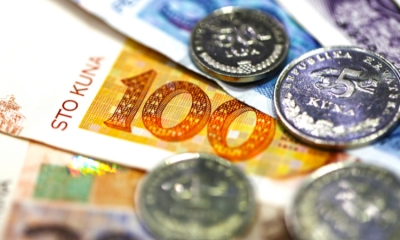
Long queues formed outside the Croatian National Bank (HNB) headquarters on Jurišićeva Street in Zagreb on Tuesday, as citizens rushed to exchange kuna coins for euros just days before the final deadline, reports tportal
Although Croatia introduced the euro on 1 January 2023, the exchange of kuna coins has remained possible until 1 January 2026. With only two days left before the deadline, many citizens appeared to have left the task to the very last moment. As a result, crowds gathered outside the HNB branch, where exchanges can still be made on Tuesday and Wednesday, 31 December, between 8:30 a.m. and 5:00 p.m.
The central bank also reminded citizens that coins can be sent by post during working hours, with the exchanged euros paid out during January 2026. While the exchange of coins ends on 1 January, kuna banknotes can be exchanged indefinitely, with no time limit.
Despite the queues, HNB officials do not expect all kuna coins to be returned. According to Tihomir Mavriček, Executive Director of HNB’s Cash Operations Sector, large quantities of the former currency will remain unexchanged.
“Approximately 74 million banknotes and around two billion coins are still outstanding,” Mavriček said, as reported by Index.hr. “Not all of this will return. Croatia is a tourist country, and a significant amount of money has been taken abroad. Some citizens will also keep kuna coins for sentimental reasons. As a result, the majority will remain unexchanged.”
In total, around 4.2 billion kuna is still estimated to be in circulation, including roughly three billion kuna in banknotes and one billion kuna in coins.
As the clock ticks down to the end of the coin exchange period, queues are expected to continue, marking the final chapter of Croatia’s transition from the kuna to the euro.