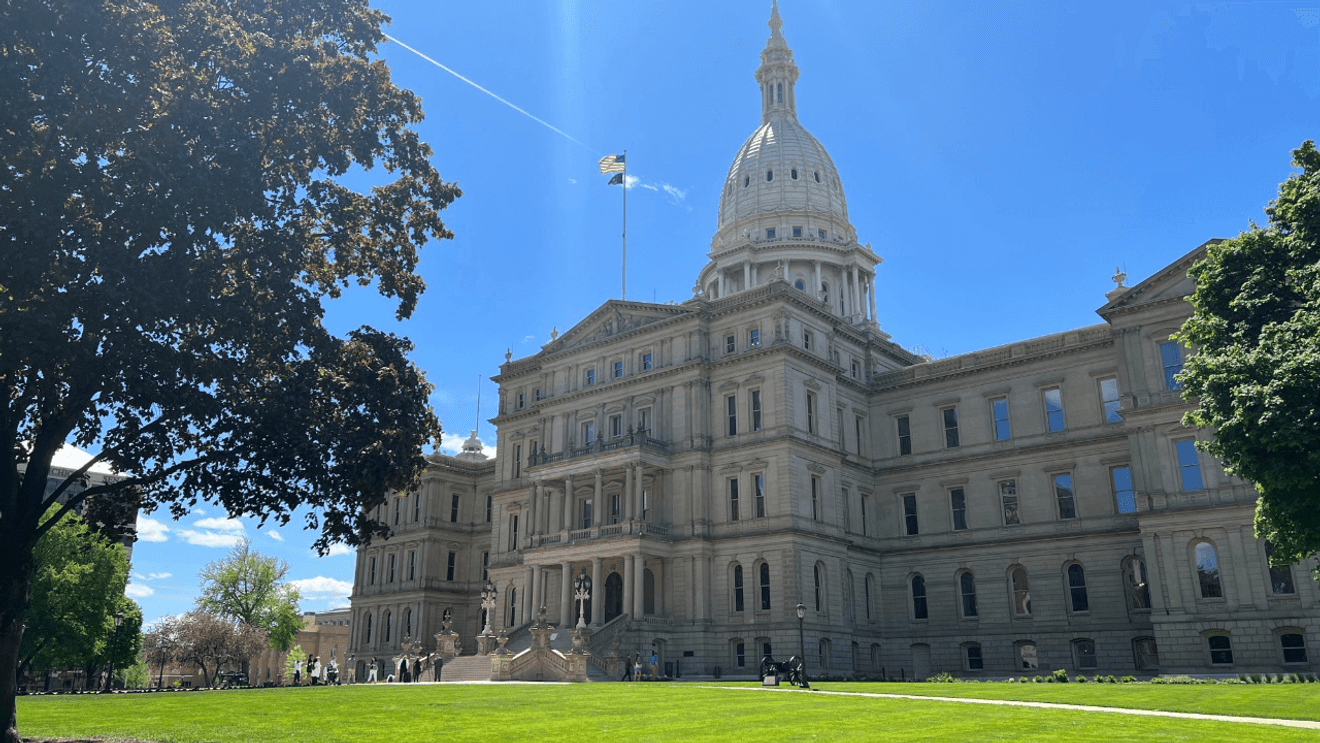
LANSING, Mich. — 2025 was a big year for politics nationwide, and Michigan was no exception. Whether it happened at the State Capitol or elsewhere in Michigan, politics dominated the headlines, with stories that had ramifications well beyond 2025.
Here is a list of some of the top political stories from the year:
Budget Showdown
After a return to divided government, there was a months-long impasse. Lawmakers took negotiations down to the wire, and past two deadlines, but in the early hours of Oct. 1, they narrowly avoided a shutdown of state government.
Such a shutdown has not been seen since 2009. Leaders on both sides felt they got something in the end.
Marijuana Wholesale Tax
A piece of the state budget takes another spot on our list. The 24% marijuana wholesale tax is set to take effect on Jan. 1, 2026.
Money collected from the tax will be used on road projects. In response, the cannabis industry sued, arguing the tax went around what voters approved in 2018 and that business could be impacted.
A judge allowed the tax to proceed, but the industry is appealing.
Work Project Cuts
Next up, another funding fight. The State House Appropriations Committee cut nearly $645 million in work projects with a rarely-used mechanism.
They argued many of the cut programs were wasteful, fraudulent or abusive.
Democrats, and some Republicans in the State Senate, criticized the move, noting the impact on projects expecting to get that money.
The Senate voted to reverse the cuts, but the House did not take up the bill.
Lawsuit Over Nine Bills
We stick in the legislature, focusing on the back and forth over nine bills passed by both chambers, but kept from the governor’s desk by House Republicans.
Several of those bills relate to cutting healthcare and retirement costs for public servants, and allowing corrections workers on the Michigan State Police retirement plan.
The Democrat-controlled Senate sued the House and a court eventually ruled the bills must be sent. The House is appealing.
Minimum Wage, Leave Compromise
And closing out our list, the bipartisan compromise on the minimum wage and paid leave.
The terms of a ballot proposal were set to go into effect in February as approved after the State Supreme Court ruled changes made by the legislature were unconstitutional.
Under the deal, the minimum wage will rise to $15 by 2027, but the subminimum wage for tipped workers remained, albeit raised to 50% by 2031.
Businesses with fewer than 10 employees will have to provide five days paid leave. Bigger companies must provide nine paid leave days.
2026 is set to be an even bigger year for politics Michigan.
Voters will elect a new U.S. Senator and every Congressional and state office is also up for grabs, including governor.