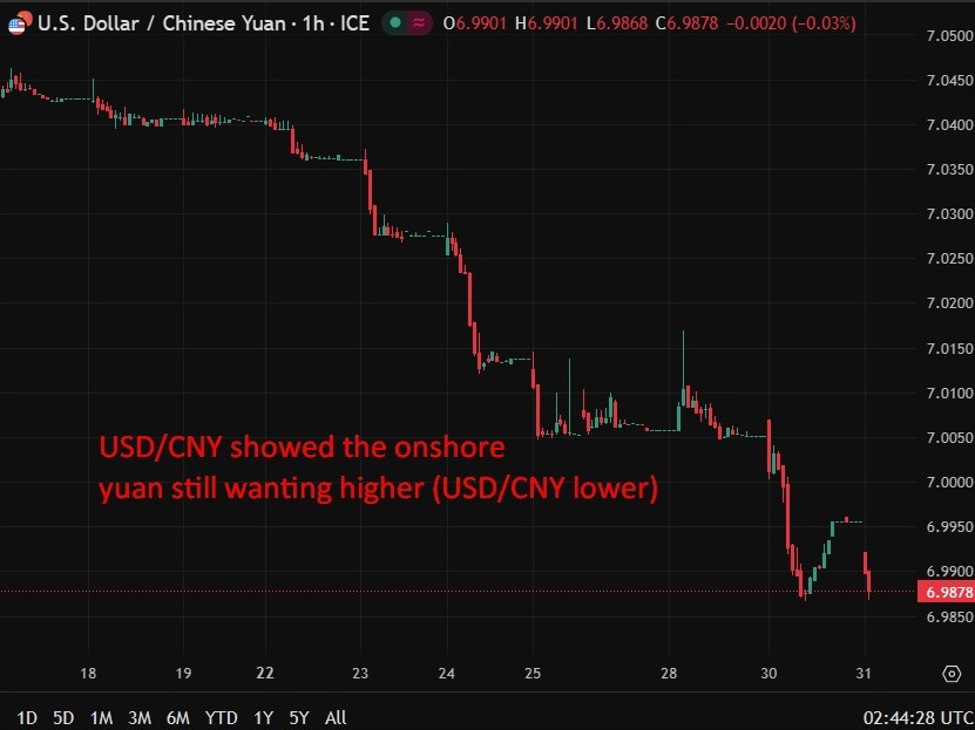
It was a relatively subdued New Year’s Eve session across financial markets, with professional participants largely still in holiday mode. Liquidity was thin and price action muted, with most desks effectively waiting for markets to return in earnest from January 5. Despite the quiet backdrop, China delivered a cluster of data points that were notably better than expected and provided a modestly constructive end-of-year signal.
China’s official manufacturing sector unexpectedly returned to expansion in December, snapping an eight-month run of contraction. The headline manufacturing PMI rose to 50.1 from 49.2 in November, moving back above the 50 threshold that separates expansion from contraction. The outcome surprised economists, who had expected no change from contracting the prior month, according to a Reuters poll. The rebound came even as factory profits recorded their steepest year-on-year decline in more than a year last month, highlighting the fragile nature of the recovery.
Encouragingly, activity in China’s non-manufacturing sector also improved. The non-manufacturing PMI, which captures services and construction, climbed to 50.2 in December from 49.5 previously, following a dip into contraction in November. The composite PMI, combining manufacturing and non-manufacturing activity, rose to 50.7 from 49.7, signalling a broader pickup in overall business conditions. The data were released by the National Bureau of Statistics.
The private-sector survey painted a similar, though still cautious, picture. The S&P Global/RatingDog manufacturing PMI edged up to 50.1 from 49.9, pointing to tentative stabilisation in operating conditions. The improvement was driven primarily by firmer domestic demand and new product launches, while export orders remained under pressure amid weak global conditions. Output returned to modest growth, but firms continued to pare back hiring, with employment contracting for a second month. Cost pressures intensified as input prices rose for a sixth consecutive month, yet manufacturers continued to cut selling prices to support sales, keeping margins under strain.
Overall sentiment among Chinese manufacturers remained positive heading into 2026, though optimism eased and stayed below historical averages. The data suggest the sector may be finding a floor, but the recovery remains fragile and heavily dependent on sustained domestic demand and ongoing policy support.
In chip news, the South China Morning Post reported that ByteDance will splurge US$14 billion into Nvidia chips in 2026, citing computing demand surging.
Asia-Pac
stocks:
Japan
(Nikkei 225) -0.37%Hong
Kong (Hang Seng) -0.85%
Shanghai
Composite +0.16%Australia
(S&P/ASX 200) -0.1%
Have a safe and happy NY eve everyone!