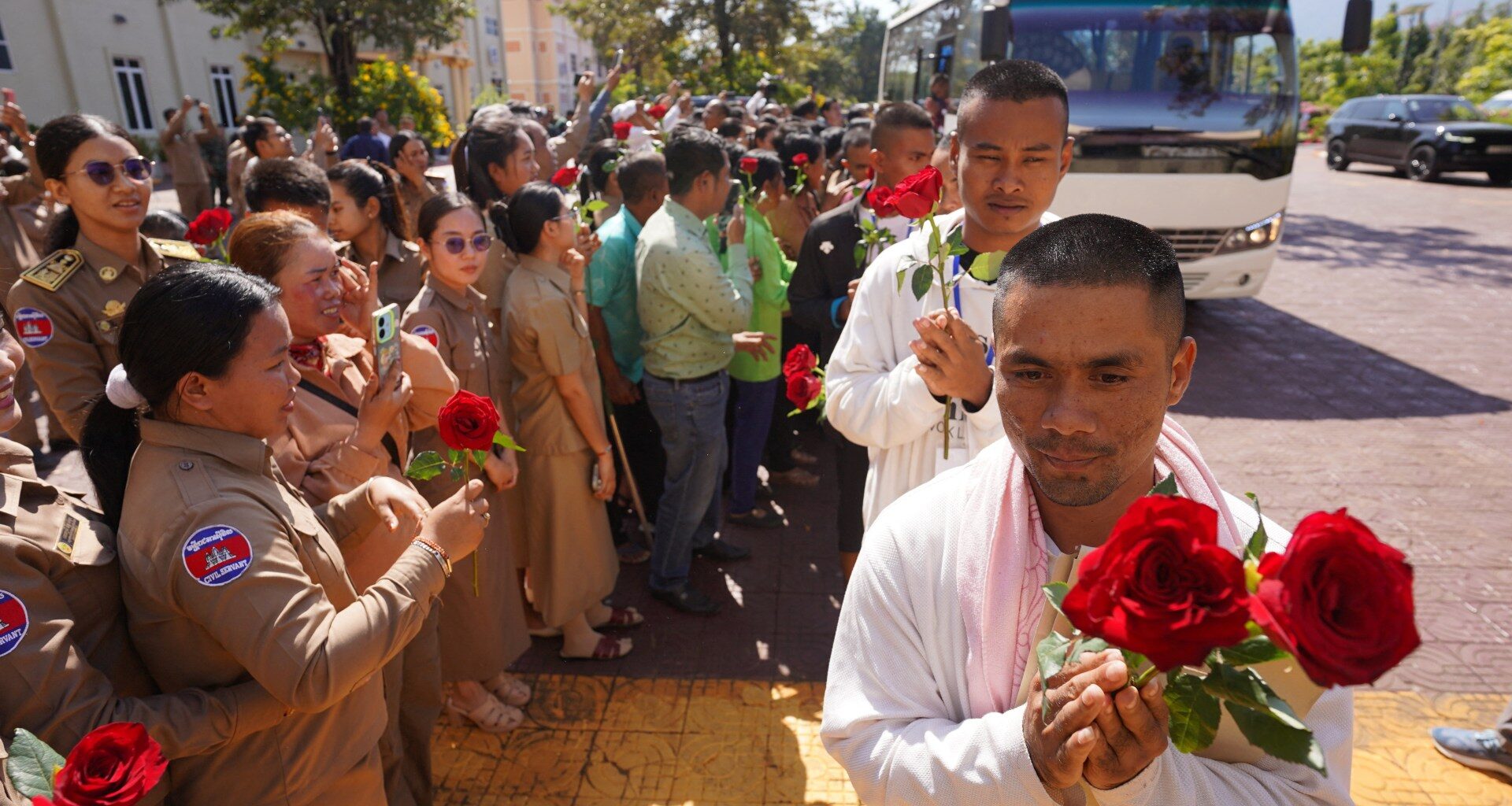
Thailand hands over 18 Cambodian soldiers after 155 days in captivity as a truce agreed over the weekend continues to hold.
Published On 31 Dec 202531 Dec 2025
Thailand has released 18 Cambodian prisoners of war, three days after the two countries agreed to a renewed ceasefire to end weeks of deadly border clashes.
Cambodia’s Ministry of National Defence said the soldiers arrived on Cambodian soil at 10am local time (03:00 GMT) on Wednesday after 155 days in Thai custody.
Thailand’s Ministry of Foreign Affairs confirmed the repatriation, saying it was done “as a demonstration of goodwill and confidence-building”, according to a statement.
The handover was coordinated by the International Committee of the Red Cross, which praised both sides for reaching a truce.
“Today’s release and repatriation of prisoners of war allows families to be reunited and marks an important step in translating the commitments outlined in the Joint Statement into action,” ICRC President Mirjana Spoljaric said.
“Respect for international humanitarian law, which includes the repatriation of prisoners of war at the end of active hostilities, is critical to helping build confidence between parties and supporting the path to lasting peace,” she added.
The ICRC said it had also visited the prisoners four times since their detention in July to ensure their conditions were in line with international law.
The border clashes between Thailand and Cambodia reignited early this month, following a breakdown in the ceasefire deal that United States President Donald Trump and Malaysian Prime Minister Anwar Ibrahim helped to broker to halt a previous round of conflict in July.
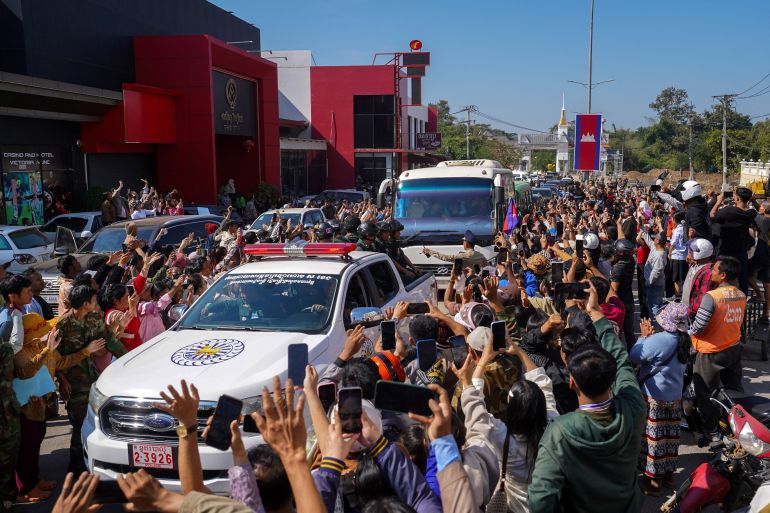 A bus carries 18 Cambodian soldiers repatriated from Thailand after being captured in July, following their release under the terms of a ceasefire agreement signed on December 27, 2025, at Prum International Border Checkpoint in Pailin province, Cambodia, on December 31, 2025. [Soveit Yarn/REUTERS]
The clashes, which lasted 20 days in December, killed at least 101 people and displaced more than half a million on both sides. The fighting included fighter jet sorties, exchanges of rocket fire and artillery barrages.
Thailand and Cambodia agreed to a renewed ceasefire over the weekend, and it took effect at noon (05:00 GMT) on Saturday.
The soldiers were due to be returned on Tuesday, but Thailand delayed the handover over alleged breaches of the ceasefire deal, which Cambodia denied.
Bangkok and Phnom Penh have also agreed to freeze troop movements and cooperate on demining their 800-kilometre disputed border.
In the long term, the two sides will need to resolve their longstanding dispute over how to demarcate an 800-kilometre section of their joint border. The disagreement dates back to the early 1900s when France occupied Cambodia.
Clashes broke out in July along the border and lasted five days, killing 48 people and displacing at least 300,000. Cambodia and Thailand blamed each other for starting the conflict.
Thai Prime Minister Paetongtarn Shinawatra was removed from office in August after she was accused of mishandling talks about the border with former Cambodian leader Hun Sen.
Cambodia and Thailand previously clashed over the same frontier between 2008 and 2011.
The disputed border zone is home to three 1,000-year-old temples built by the Khmer Empire. The most famous of the three – Preah Vihear – is a UNESCO World Heritage Site and the subject of a famous 1962 International Court of Justice case between Thailand and Cambodia. The ICJ ruled in Cambodia’s favour in 1962 and again in 2013.