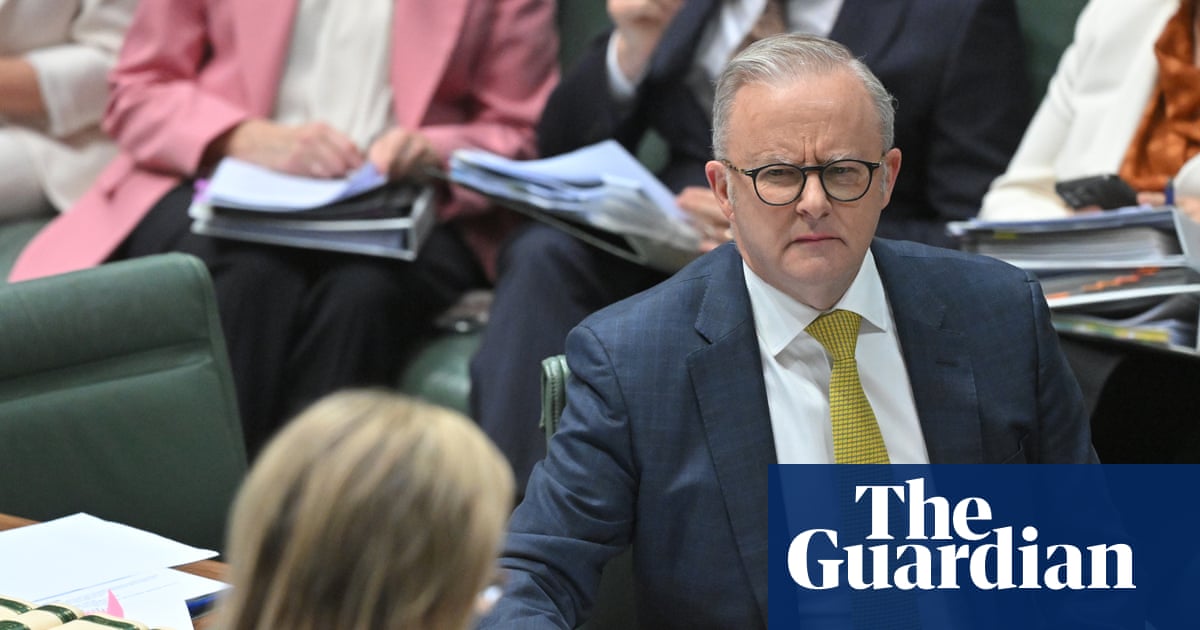
Before 14 December, Anthony Albanese was enjoying the most successful year of his long parliamentary career.
A landslide election win delivered Labor 94 lower house seats and crushed its political opponents.
But 2026 shapes as a sterner test for the prime minister as he enters a fourth year in power. The Bondi beach terrorist attack in particular has cast a pall over 2025, overshadowing – and putting into perspective – the political events of the year.
On the opposite side of politics, Sussan Ley may face renewed challenges from within her own ranks – and a resurgent Pauline Hanson’s One Nation.
The political reverberations from the Bondi massacre will continue long into the new year.
Albanese will face ongoing pressure over his refusal to hold a royal commission into the atrocity, which will intensify if his alternative inquiry – Dennis Richardson’s review of federal intelligence agencies – fails to satisfy demands for answers.
The government will also seek to rush through new hate speech laws targeting religious preachers and oversee a nationwide tightening of gun controls, the latter in the face of opposition from the gun lobby and the Nationals.
The Bondi fallout also presents a test for Ley, with some in ranks, including leadership aspirant Andrew Hastie, already using the attack to push their immigration agenda.
‘No royal commission after Port Arthur’: PM stands firm against Bondi shooting commission – video
Labor never quite declared mission accomplished in the fight to contain inflation. But it may have felt confident the years-long struggle was under control when the monthly rate dropped below 2% in June.
Official interest rates had been reduced three times to 3.6% by August, with the realistic prospect of several more rounds of relief for stretched borrowers.
Sign up: AU Breaking News email
But less than six months later, inflation is rising again. Rate hikes – not cuts – are on the agenda and the treasurer, Jim Chalmers, is talking ominously about “difficult decisions” to manage the federal finances. The latest budget outlook, released in December, forecast years of deficits.
The hip-pocket strain on mortgage holders combined with other unresolved effects of the cost-of-living crunch, including the housing crisis, will translate into political pressure on the Albanese government.
How it responds – or doesn’t – will be a defining question of 2026.
The chaos that consumed the Liberal party after its worst election defeat dominated headlines for much of 2025, diverting attention from Labor’s performance and agenda.
That is bound to change in 2026.
The rollout of new models for aged care and disability support (the latter tied to unresolved negotiations with the states) and the start of a new environmental protection regime will be heavily scrutinised. After more than a term in charge, Labor can’t blame problems on the failures of the Abbott-Turnbull-Morrison governments.
Having favoured incremental change over policy revolution throughout his prime ministership, Albanese can expect renewed pressure – including from inside the Labor movement – to start pursuing bolder reform, such as on gambling advertising.
With the next election not due until 2028, Albanese’s leadership assured, and an opposition in the doldrums, many supporters will rightly ask: if not now, when?
The triennial coming together of the Labor movement at its national conference in Adelaide in July will be a crucible for debate over what the party stands for in 2026.
Expect fights over Aukus, housing policies – including negative gearing and capital gains tax – climate action and the Middle East.
Some of Ley’s colleagues didn’t think she would make it to 1 January after a tumultuous seven months in charge of the embattled Liberal party.
After achieving the historic feat of becoming the first woman to lead the federal Liberals, Ley has endured constant outbreaks of disunity and a fight over the party’s direction.
Andrew Hastie looms as the biggest threat to her leadership after very publicly marking out a populist path for the Liberals to follow.
‘We got smashed’: Sussan Ley reflects on Coalition’s historic election defeat – video
Ley’s move to dump a net zero emissions target and shift immediately to debating immigration levels – two of Hastie’s policy priorities – averted the prospect of a challenge in 2025, either from Hastie himself or fellow conservative Angus Taylor.
Senior Liberals are willing to give Ley until at least the federal budget – perhaps longer given the Bondi massacre – to improve the Coalition’s dire position in the polls and formulate a coherent policy agenda.
But if she can’t, her time might be up.
The Coalition’s post-election turmoil coincided with a surge in support for One Nation, which recorded its highest primary vote (17%) in December’s Guardian Essential poll.
After successfully recruiting the former Nationals leader Barnaby Joyce, One Nation is already hinting at further high-profile defections in the new year.
But Hanson’s record of clashing with colleagues makes forecasting for 2026 a fraught exercise.
In one scenario, Hanson and Joyce cooperate and the party continues to peel off Coalition voters, frightening the Liberals and Nationals into pursuing more rightwing policies.
In another, the volatile pair feud and fall out, capturing headlines but alienating voters.
In September, the federal government set the trajectory for Australia’s climate action ambitions for the next decade, pledging to cut emissions between 62% and 70% below 2005 levels by 2035.
Two months later, it received a reality check on the scale of that task with the government’s own projections showing the country was only on track to reduce climate pollution 48% in that time.
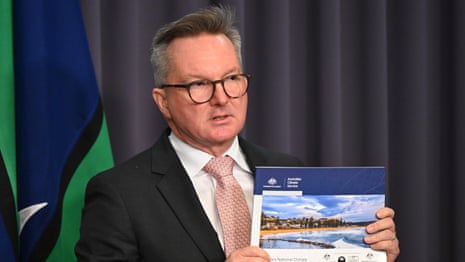
Landmark climate report shows ‘every Australian has a lot at stake’, minister says – video
Put simply, the government’s broad suite of emissions reduction policies won’t cut it.
The coming year presents a major opportunity to go further. The scheme designed to drive down pollution at the country’s heaviest polluting sites – the safeguard mechanism – is up for review in 2026-27.
Forcing big polluters to make steeper cuts or expanding the scheme to capture more sites are two options that could accelerate emissions reductions.
The climate change and energy minister, Chris Bowen, will need to manage the domestic clean energy transition while also effectively acting as the world’s chief climate negotiator ahead of Cop31.