The Space Coast had a record number of rocket launches this year, exceeding 100 orbital missions and shattering previous records.But there’s even more on the way in 2026.”The top story will absolutely be Artemis II,” research chemist Ken Kremer said.The National Aeronautics and Space Administration is preparing for one of its most ambitious missions in decades. Artemis II is scheduled to launch in early February. The historic flight will carry four astronauts on a 10-day lunar flyby to the moon’s far side, preparing for humans to eventually return to the moon on Artemis III.Crew-12 is also scheduled to launch in February from Kennedy Space Center to the International Space Station.”There could be two momentous human launches in February, just about a week apart,” Kremer said.Artemis II will take off from Launch Pad 39B. Another major launch being watched is SpaceX’s Starship rocket.WESH 2 visited Starbase, Texas, where the mega-rocket is currently being tested. It is expected to be used for deep-space missions, including supporting NASA’s Artemis III, when humans will land on the moon. Starship is targeting a launch from the Space Coast by the end of 2026.”It’s way behind schedule. SpaceX and Elon Musk have failed to produce what they were supposed to do. NASA just announced another delay to 2028 at the earliest for Artemis III,” Kremer said. “I think we need a simplified approach, and that’s where Blue Origin comes in.”Blue Origin also has contracts for lunar landers. There’s speculation the private company could pivot some of its lander work toward Artemis III, especially if Starship falls short.Additionally, newly sworn-in NASA Administrator Jared Isaacman will have to make some big decisions this year regarding NASA’s budget.”Congress is much more supportive, so what Isaacman needs to do is get Trump on board, support full funding for NASA and NASA science,” Kremer said. “Because if they don’t do that, China will beat us to the moon.”
The Space Coast had a record number of rocket launches this year, exceeding 100 orbital missions and shattering previous records.
But there’s even more on the way in 2026.
“The top story will absolutely be Artemis II,” research chemist Ken Kremer said.
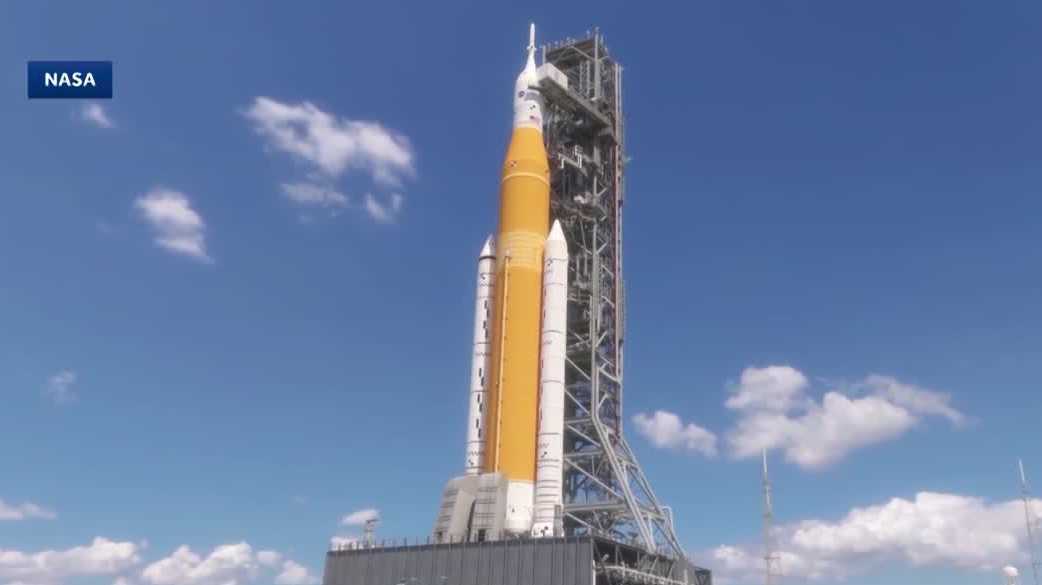
The National Aeronautics and Space Administration is preparing for one of its most ambitious missions in decades. Artemis II is scheduled to launch in early February. The historic flight will carry four astronauts on a 10-day lunar flyby to the moon’s far side, preparing for humans to eventually return to the moon on Artemis III.
Crew-12 is also scheduled to launch in February from Kennedy Space Center to the International Space Station.
“There could be two momentous human launches in February, just about a week apart,” Kremer said.
Artemis II will take off from Launch Pad 39B. Another major launch being watched is SpaceX’s Starship rocket.
WESH 2 visited Starbase, Texas, where the mega-rocket is currently being tested. It is expected to be used for deep-space missions, including supporting NASA’s Artemis III, when humans will land on the moon. Starship is targeting a launch from the Space Coast by the end of 2026.
“It’s way behind schedule. SpaceX and Elon Musk have failed to produce what they were supposed to do. NASA just announced another delay to 2028 at the earliest for Artemis III,” Kremer said. “I think we need a simplified approach, and that’s where Blue Origin comes in.”
Blue Origin also has contracts for lunar landers. There’s speculation the private company could pivot some of its lander work toward Artemis III, especially if Starship falls short.
Additionally, newly sworn-in NASA Administrator Jared Isaacman will have to make some big decisions this year regarding NASA’s budget.
“Congress is much more supportive, so what Isaacman needs to do is get Trump on board, support full funding for NASA and NASA science,” Kremer said. “Because if they don’t do that, China will beat us to the moon.”