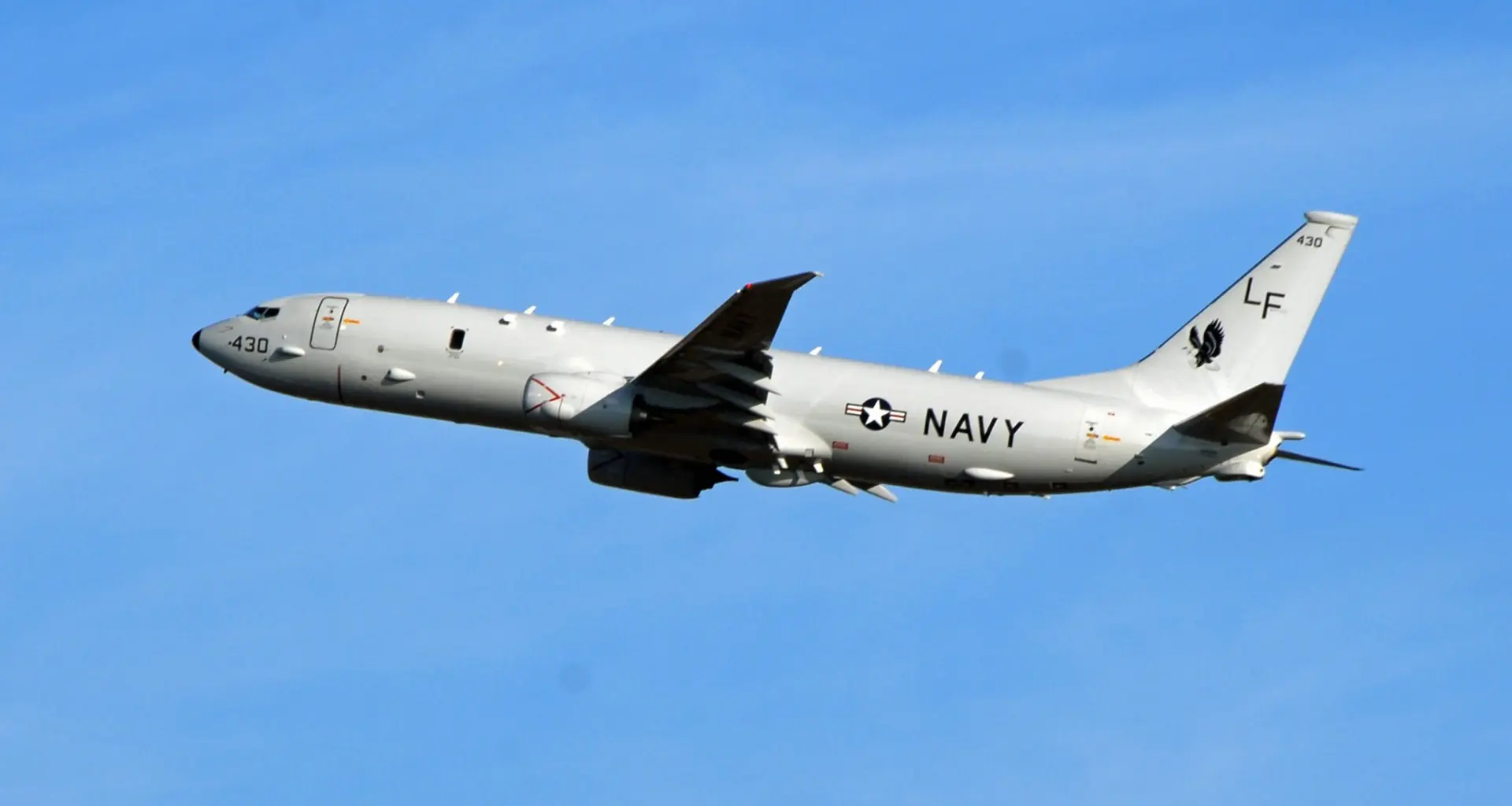
WASHINGTON- The United States government has approved the proposed sale of three Boeing P-8A maritime patrol aircraft to Denmark through the Foreign Military Sales programme.
The approval moves Denmark closer to joining other NATO allies already operating the 737-based surveillance and reconnaissance aircraft, although the sale still requires Congressional review before final confirmation.
 Photo: By Bidgee, CC BY-SA 3.0 au, https://commons.wikimedia.org/w/index.php?curid=97045286
Boeing Sells P-8As to Denmark
The Defense Security Cooperation Agency announced on 29 December 2025 that the US State Department had cleared the proposed $1.8 billion package. The approval covers three Boeing P-8A aircraft equipped with Indirect Fire Protection Capability.
It also includes four joint tactical radio systems, transmitters, and processors used with the Northrop Grumman Guardian AN/AAQ-24(V)N laser-based missile countermeasures system, and eight Northrop LN-251 navigation systems.
Denmark is also set to receive mission software, electro-optical and infrared systems, missile warning sensors, and radars. The DSCA stated the proposed sale would support US foreign policy and national security objectives by strengthening the capability of a NATO ally.
The notice added that Denmark would have no difficulty absorbing the P-8A aircraft into its armed forces. The agency has formally notified Congress as required, and the sale will only proceed after the review period and contract completion.
Neither Boeing nor the Danish Ministry of Defence responded to requests for comment, and it remains unclear when Denmark may receive the first aircraft.
 Boeing-Lufthansa Partnership
Strategic Rationale
The move follows earlier reporting in September that Denmark was exploring the acquisition of P-8A aircraft to improve surveillance coverage across the North Atlantic, including waters around Greenland and the Faroe Islands.
Danish defence minister Troels Lund Poulsen said at the time that Copenhagen intended to invest millions of Euros to secure long-range patrol capability, preferably in cooperation with other NATO members. He also stressed the need for improved situational awareness in the Arctic region.
NATO members currently operating the P-8A include the United States, the United Kingdom, Norway, and Germany. Canada is in the process of acquiring up to 16 aircraft. Outside the alliance, the aircraft is flown by Australia, India, New Zealand, and South Korea, according to FlightGlobal’s 2025 World Air Forces directory.
The DSCA, a division of the US Department of Defense that manages the Foreign Military Sales programme, confirmed the proposal has been forwarded to Congress. The deal remains subject to legislative review and formal agreement before production and delivery can begin.
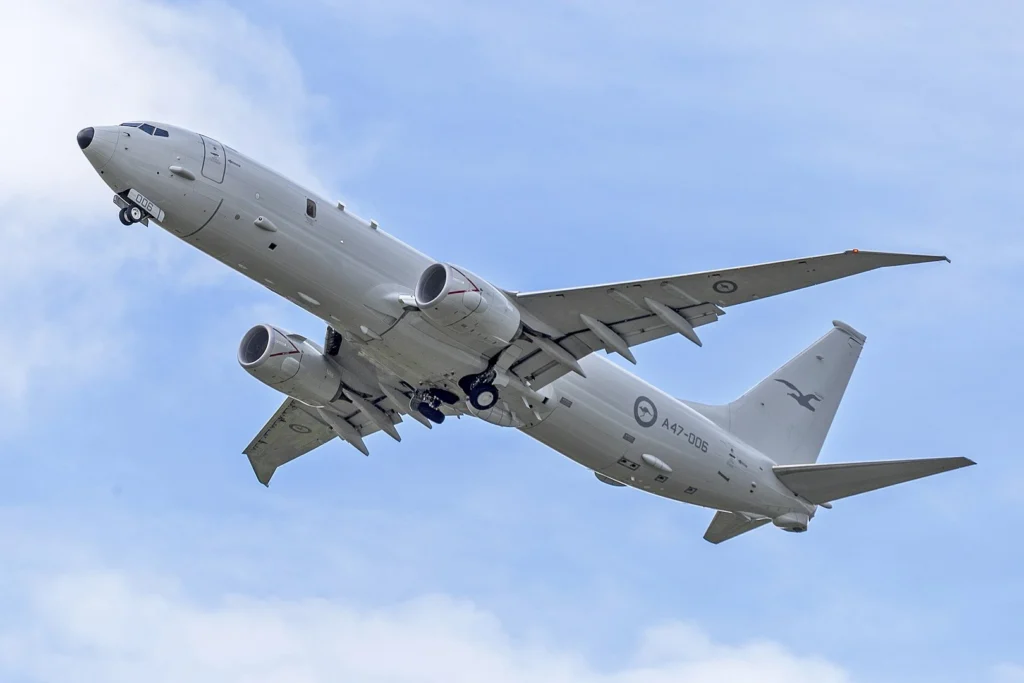 Photo: By Robert Myers (CC-BY-SA 3.0 AU), CC BY-SA 3.0 au, https://commons.wikimedia.org/w/index.php?curid=112429209
About Boeing P-8As
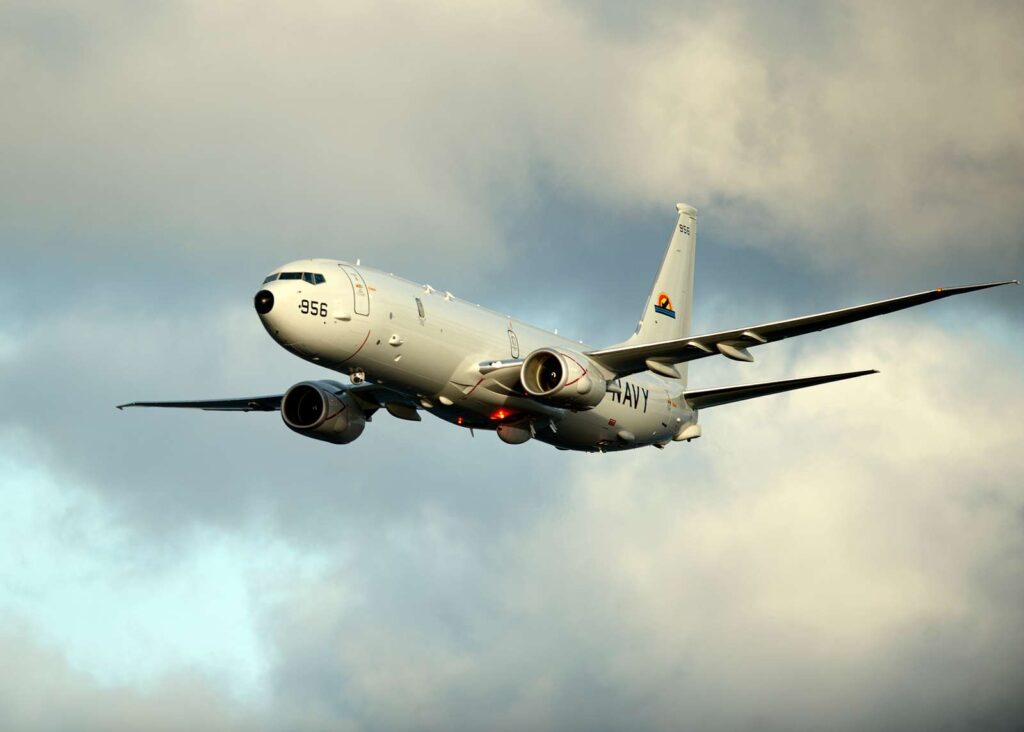
The Boeing P-8 Poseidon operates with the United States Navy from bases such as NAS Jacksonville (NIP), supporting long-range maritime patrol, anti-submarine warfare, and surveillance missions across global waters.
The aircraft also serves the Royal Air Force from RAF Lossiemouth (LMO), providing critical reconnaissance and maritime security capability.
The P-8 has become a key asset for multiple allied operators worldwide, combining advanced sensors, communications, weapons systems, and endurance to deliver anti-surface warfare, intelligence gathering, overland surveillance, and coordinated search and rescue operations.
Multimission Maritime Capability
The Boeing P-8 Poseidon is a dedicated multimission maritime patrol aircraft designed to detect, classify, track, and engage hostile submarines and surface vessels. It performs anti-submarine warfare using an advanced acoustic sensor suite, electronic support measures, sonobuoys, radar, and torpedoes to locate and destroy underwater threats.
For anti-surface warfare, the aircraft employs radar, ISR systems, and secure data links to coordinate targeting and deliver Harpoon missiles against naval surface targets. Its maritime ISR capability integrates ISAR, SAR, periscope detection, and navigation radar to support continuous surveillance of sea lanes and coastal regions.
The P-8 also conducts overland ISR and supports battlespace command and control of land forces through advanced mission systems and electro-optical and infrared sensors. In search and rescue roles, it uses high-precision sensors and can deploy UNI-PAC survival kits across large ocean and land areas.
Military communications include Link 11, Link 16, and wideband satellite connectivity, supporting coordinated operations with allies and partner nations in real time. The aircraft’s mission systems are engineered to support future upgrades, ensuring long-term capability growth.
 Photo: Unknown
Aircraft Design, Technology, and Performance
Developed from the Boeing 737 platform, the P-8 offers speed, reliability, and durability suited to long-duration patrol missions. It operates up to 41,000 feet with a maximum speed of 490 knots, and in-flight refueling extends mission endurance across remote sea regions.
The aircraft carries a full complement of operational stores, including MK-54 torpedoes, Harpoon missiles, 129 A-size sonobuoys, and search-and-rescue survival kits. Its advanced avionics suite combines radar, infrared, acoustic, and electronic surveillance tools to support both maritime and land-based missions.
Tactical, Operational, Economical, and Evolutionary Capability
Operational doctrine classifies the P-8 across four dimensions:
Tactical
Delivers high performance and reliability for maritime warfare in unpredictable environments.
Operational
Supports joint and coalition operations with secure communications and ISR integration.
Economical
Leverages the 737 platform to reduce lifecycle and maintenance costs while increasing availability.
Evolutionary
Designed with open architecture to accommodate future sensors and weapons.
 Photo: AirWorks
Global Operators and Deliveries
More than 170 P-8 aircraft have been delivered since the first handover to the United States Navy on March 4, 2012. Current customers include:
United States Navy (P-8A)
Royal Australian Air Force (P-8A)
Royal Air Force United Kingdom (P-8A)
Royal Norwegian Air Force (P-8A)
New Zealand Defence Force (P-8A)
Republic of Korea Navy (P-8A)
German Navy (P-8A)
Royal Canadian Air Force (P-8A on contract)
Indian Navy (P-8I)
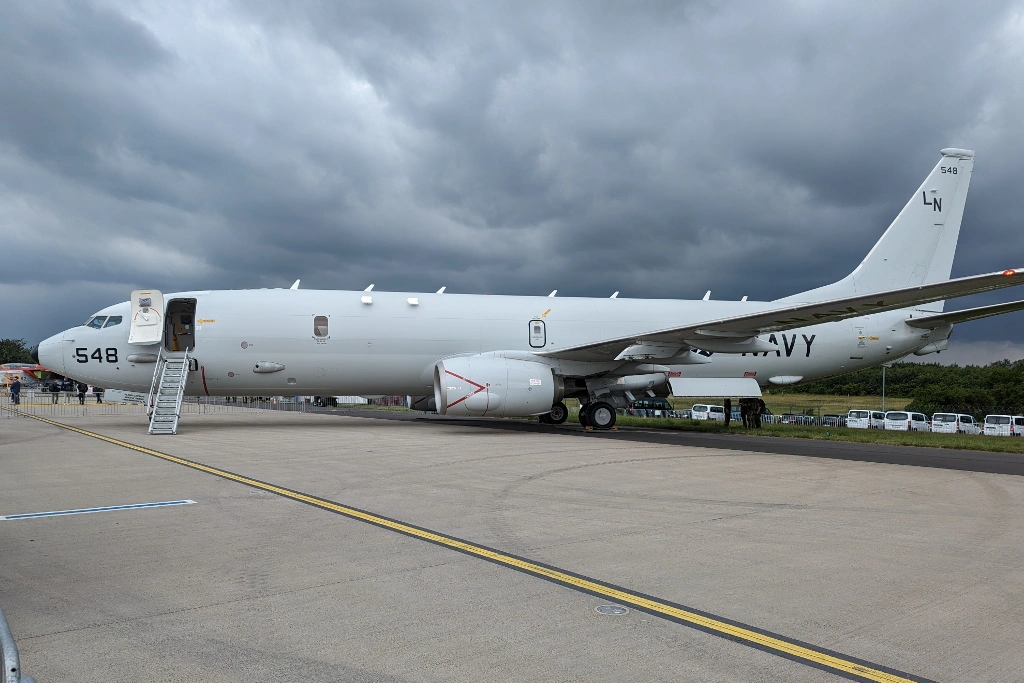 Photo: By Boevaya mashina – Own work, CC BY-SA 3.0, https://commons.wikimedia.org/w/index.php?curid=150528732
Technical Specifications
Wingspan: 123.6 ft (37.6 m)
Length: 129.6 ft (39.5 m)
Height: 42.1 ft (12.8 m)
Engines: Two CFM56-7BE
Thrust: 27,300 lbf per engine
Maximum speed: 490 knots / 564 mph / 850 kph
Ceiling: 41,000 ft (12,496 m)
Range: 1,200+ nautical miles with more than 4 hours on station
Maximum gross takeoff weight: 189,200 lb (85,820 kg)
Variants and Fleet Development
The P-8A variant is fielded by most operators, while the Indian Navy operates the P-8I variant tailored to regional mission needs. The aircraft continues to evolve through software, sensor, and mission system enhancements to support modern maritime defense requirements.
Stay tuned with us. Further, follow us on social media for the latest updates.
Join us on Telegram Group for the Latest Aviation Updates. Subsequently, follow us on Google News