The civil war in Sudan may be one of the world’s forgotten conflicts, but with more than 150,000 dead and 12 million fleeing their homes, the impact has come to our door in Northern Ireland.
The brutal conflict between the Sudanese army and the Rapid Support Forces has ripped the country apart and shows little sign of abating.
In March of this year, The Irish News reported from the country’s border with South Sudan, which became an independent state more than a decade ago.
The reports detailed the devastating impact of the conflict for those fleeing from Sudan, from health to hunger and extreme poverty.
For many, fleeing from a country where bodies lay dead in the street is the only option, and now Sudanese natives are among the highest nationalities of those seeking asylum in the north. Only Somalia, Eritrea and Syria currently have higher numbers of asylum seekers here.
According to Home Office figures, there has been a 45% rise in the last year of Sudanese arriving to the wider UK.
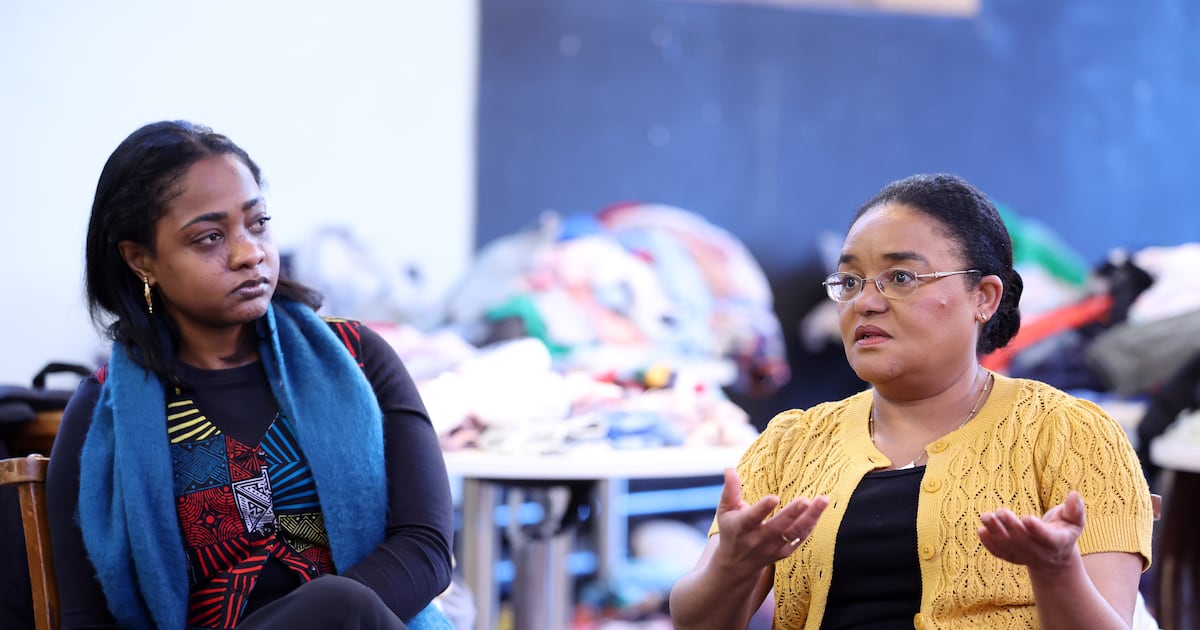
Reflecting on its reporting from the conflict earlier this year, The Irish News spoke to a number of those from the Sudanese community in the north to find out what life is like for them here.
Soma Haroun hails from the Darfur region of Sudan, which has been plagued by war and periods of famine for decades. She had moved to the country’s capital Khartoum for university before fleeing in April 2023 when the war broke out.
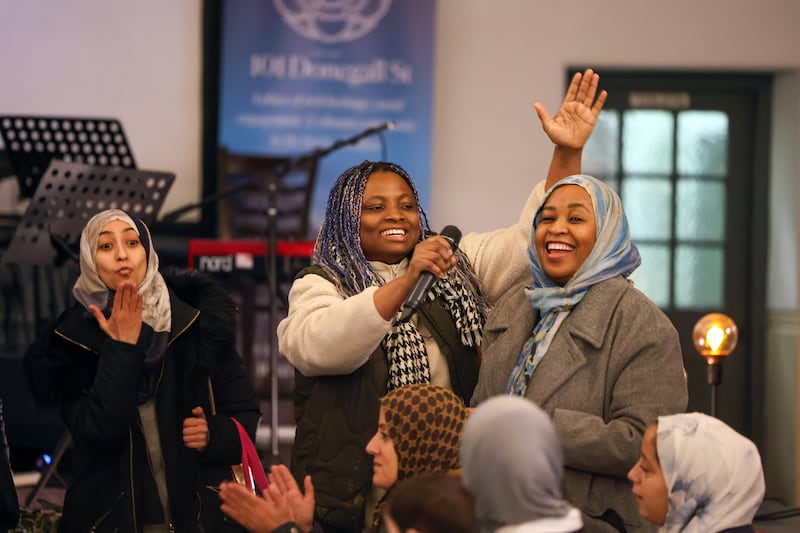 Members of the Sudanese community celebration in the Redeemer Central in Belfast. PICTURE: MAL MCCANN
“I stayed there for 10 days after the war started, it was crazy.
“I come from Darfur originally, the capital city of that region and we had heard before about the RSF coming to kill entire villages, but I never saw it with my own eyes.
“My brother was living two blocks away and I couldn’t even go to see him because there was bombing everywhere. You didn’t know where it was coming from.
“You couldn’t go outside because you would be targeted by both sides, it didn’t matter whether you supported the army or the RSF.
“There were dead bodies everywhere.”
Soma’s sister had moved to Belfast several years before, and having made her way to London initially, she decided to join her sister and describes Belfast as “quite nice”.
“My sister already was here, she came to Belfast five or six years ago.
“I’m doing an online course at King’s College, I wanted to go back to Sudan when I finished the course but there is no way to go back there now.
“My sister asked why I didn’t just stay in Belfast and apply for asylum. When I thought about it, it was the most convenient thing to do as we don’t have a country any more.
“I’ve found Belfast a little bit more welcoming than London. My sister was here and she has great friends and support system, so it was easier for me.”
The large Sudanese community, mainly made up of women and children, often comes together for weekly meet-ups at the Redeemer Central church in Belfast, where they can cook, chat and share experiences.
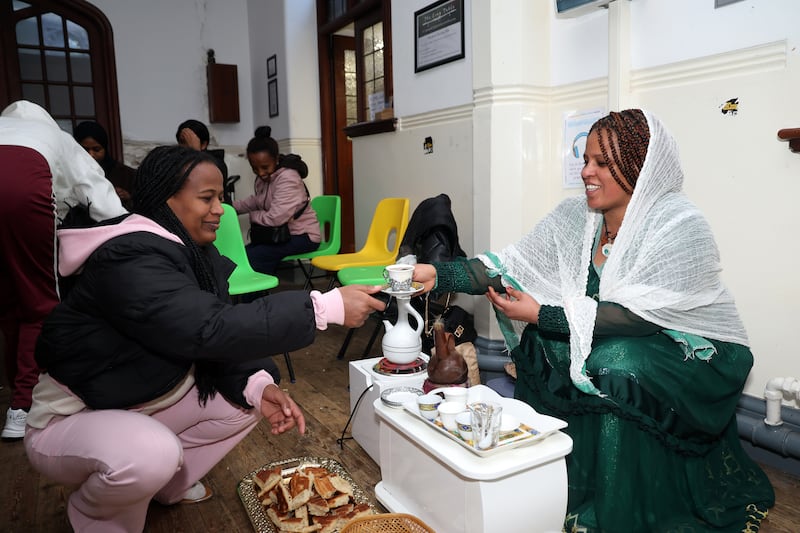 Members of the Sudanese community celebration in the Redeemer Central in Belfast. PICTURE: MAL MCCANN
One of the coordinators is Twasul Mohammed, a Sudanese national who first came to the north in 2016 and now works for PPR, a charity which supports the rights of immigrants in the north.
“If I’m asked about Belfast I would say it’s a very welcoming place. With all the racism that’s happening now, the net result for me is that it’s still a very welcoming place,” she says.
“When I came here nine years ago, most of the time it was welcoming. Most people were nice, kind and helpful.
READ MORE: ‘Tens of thousands will die’: Foreign aid cuts ‘devastating’ for refugees in South Sudan
“I lived in a few places in Belfast, one of the places I lived in was Ardoyne and I got a lot of help there. I couldn’t get a childminder at the start and an old lady in the street helped me to take care of my kids.
“I remember it clearly because I was telling the lady that I was so glad that people are kind and she told me that they understand because they have been through it, they have been through conflict and that’s why they have a strong sense of community.”
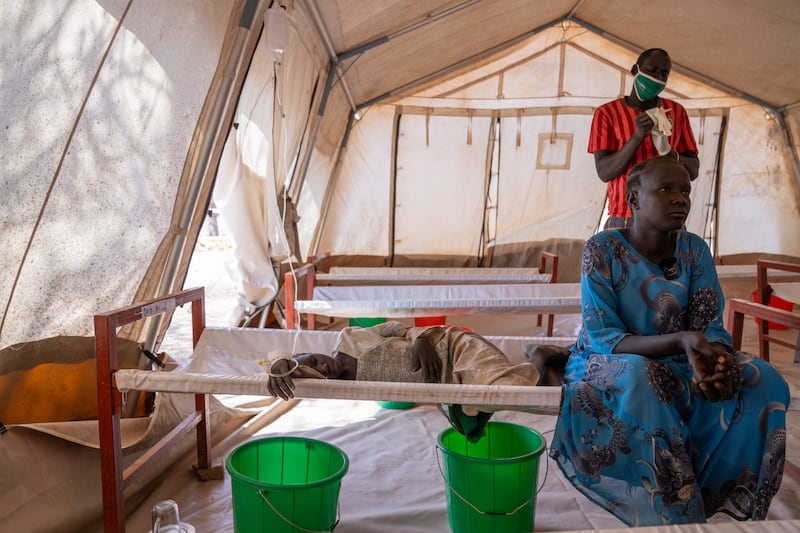 Bavita Nybvol and her 10-year-old daughter who is being treated in the cholera tent at the Malek Miir health facility in South Sudan. Pic: Eugene Ikua/Concern Worldwide
Soma says her family members found it more difficult when they first arrived to the north years ago, but since arriving she has found a more vibrant, welcoming community of immigrants which act as a support system for others.
“I feel privileged to have come here to find organisations which work to make it more friendly for us.
“I remember when I came here, on the second day there was a protest about the war in Sudan. I feel like some places they don’t even know about Sudan.
“So for me seeing all these people coming together in Belfast was something big.”
Asked why the Sudanese civil war does not receive the same international media coverage as other conflicts despite the United Nations referring to it as the world’s worst humanitarian crisis, Twasul says racism plays a big part.
“I think part of it is racism. The further you go south in Africa, the more people don’t want to touch it.
“White people think that this is just Africa and this is what they do.
“But also, governments want to neglect it because they don’t want to admit their involvement in it.
“All of the conflicts happening in Sudan now or other parts of Africa are directly as a result of colonisation.”
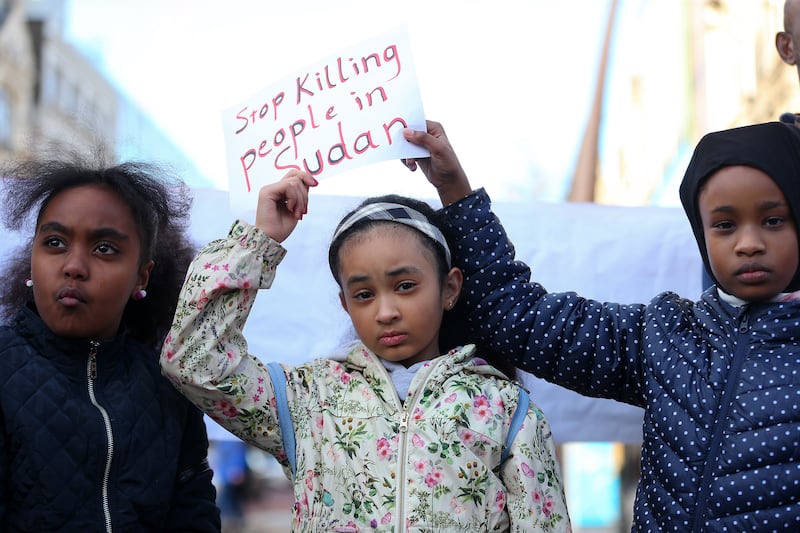 Hundreds of Sudanese people protest outside Belfast City Hall to protest against the military coup in Sudan. Picture Mal McCann (Mal McCann)
Both women say they hope one day they will be able to return to their home country, although that prospect looks distant.
“I always have hope that this war is going to stop because we have experienced a lot, between coups, revolutions and wars,” Soma says.
“We love our country so whenever the war stops you will find a lot of us coming back.”