
Motorists will pay more to register their vehicles from today, but prescription costs will drop in February – all part of a series of changes rolling out in the new year.
The cost adjustments come as the Government implements a range of policies across prescription costs, tertiary study and KiwiSaver, among others, throughout early 2026.
Some are just minor adjustments to fees, while others represent new systems or rules coming into effect.
Here’s a rundown of what’s set to change over the next few months.
‘Early 2026’
Homeowners will be able to build granny flats on their properties from early 2026 when new housing legislation takes effect.
Plans to cut costs and rules for building have been welcomed as a way to reduce homelessness, but concerns are raised about quality control. (Source: 1News)
The changes will enable property owners to build secondary dwellings on their sections without requiring the level of resource consent previously needed.
The legislation is designed to increase housing supply by making it easier for homeowners to add units on their existing properties.
Expected to be particularly helpful for families wanting to house elderly relatives or adult children, ministers say the move will also provide opportunities for additional rental income.
The specific start date in early 2026 will be set by an order in council – a change made by the government without legislation being passed.
January
Rego fees rising
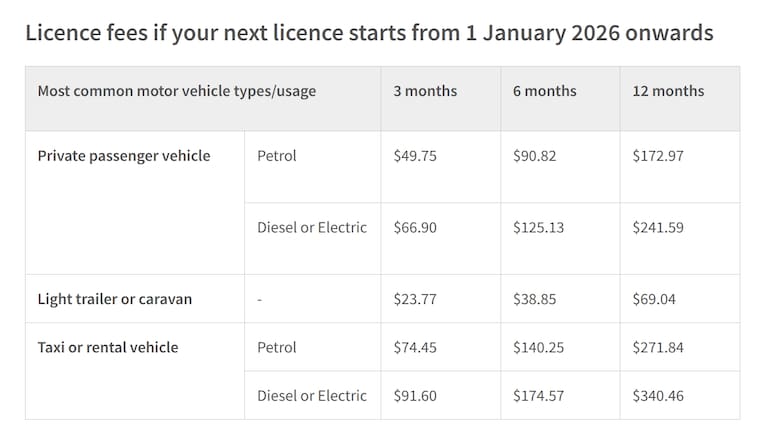
From January 1, vehicle registration fees will rise by around $25, following a government decision to increase the charges. The hike applies to all vehicle classes and will be collected when motorists renew their registration.
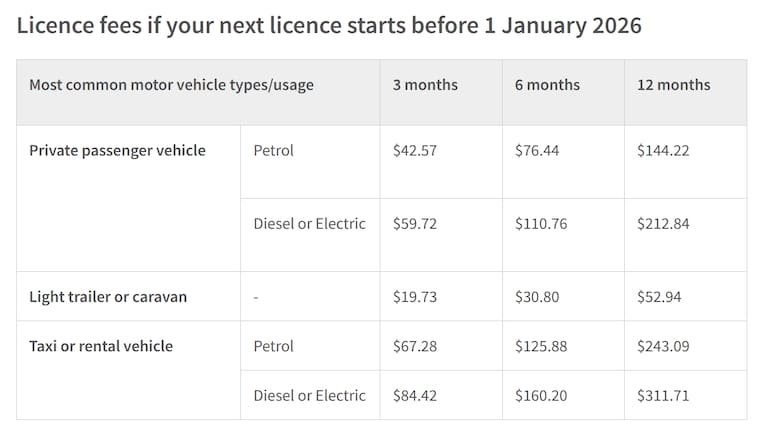
The cost of an annual licence for a petrol-running private passenger vehicle will rise from about $144 to $173.
In May 2024, then-transport minister SImeon Brown decided to increase rates to what they would be, more or less, if adjusted for inflation since 1994.
Meanwhile, there are several changes coming for the education and tertiary sector.
Changes in the tertiary sector
The fees-free scheme for tertiary students switches from first year to final year.
To get final-year fees free, you must have started your final year on or after January 1, 2025.
It is available for one year’s study or two years’ work-based learning, up to a total of $12,000.
From January 15, 2026, people who fall into this category can apply for the fees.

Learners had until December 31 to declare their eligibility or to lodge an appeal for first-year fees free, which has been phased out by the coalition government.
Also in the tertiary sector, ten polytechnics will be re-established as part of the Government’s overhaul of Te PÅ«kenga. The move represents a reversal of previous reforms that had consolidated the sector under the previous Labour government.
New attendance services and Regulatory Standards Act come into force
At schools, new attendance services will also be rolled out from January. The attendance services aim to improve student engagement and completion rates across the sector.
ERO report says attitudes to being in school have shifted markedly, but not everyone is convinced. (Source: 1News)
Meanwhile, the Regulatory Standards Act comes into effect on January 1, though the legal framework will initially exist without being fully in place.
The Government can begin preparing for implementation, with an order in council expected between January and July to activate the bill’s main provisions.
February
Easier and cheaper prescriptions
From February 1, people will be able to receive 12-month prescriptions for their medicines, delivering greater convenience for people on long-term treatments.

Patients will continue to collect their repeats from the pharmacy as usual, but will no longer need to return to their doctor each time for a new script. This could save patients up to $105 per year in reduced GP fees.
This change, announced in Budget 2025, will allow people with long-term, stable conditions to receive prescriptions of up to 12 months from their prescriber.
“It gives patients greater certainty and frees up GPs’ time by reducing the number of appointments needed to renew routine prescriptions,â€� Health Minister Simeon Brown has previously said.
ADHD prescriptions to become easier
Also, from February 1, GPs and nurse practitioners will be able to start medical treatment for adults with ADHD, following decisions by Medsafe and Pharmac last year.
Under the current system, GPs and nurse practitioners can only prescribe stimulant medicines to patients on a written recommendation from a paediatrician or psychiatrist, or after someone has already been diagnosed and given a first prescription.
Not all GPs and nurse practitioners will be equipped to carry out this work immediately after the regulatory changes come into effect.
But it’s expected over time, more GPs and nurse practitioners will be able to diagnose and start adults on treatment for ADHD.
March
Bowel cancer screening eligibility expanded
The age at which people can start taking part in the free National Bowel Screening Programme is being lowered from 60 to 58 years of age in March.
The health minister says this was the first step in the goal of lowering screening age to match with Australia. (Source: 1News)
The first stage has already started from October last year, but the second stage will begin in March in the remaining North Island regions of Midland and Central.
All newly eligible people nationwide will be invited for free screening by March 2027.
Gift card rule changes
From March 16, there are new rules that require the expiry date on a gift card to be not less than three years after the date of sale.

If a gift card is sold with an expiry date that is less than three years, the expiry date is void and taken to be three years after the date of sale.
This change brings New Zealand into line with international standards such as Australia’s minimum expiry.
April and May
Default KiwiSaver contribution rates to climb
From April 1, default employer and employee KiwiSaver contribution rates will rise from 3% to 3.5%. KiwiSaver members aged 16 to 17 will also become eligible for mandatory employer KiwiSaver contributions.
Finance Minister Nicola Willis says she wants to system to become “more fiscally sustainable”. (Source: 1News)
If they choose, members will be able to apply to Inland Revenue to continue contributing at the rate of 3% from February. If a member applies for a savings rate reduction, their employer will also be required to contribute at 3 per cent.
There will be a further rise to default contribution rates in 2028. The increases are being phased in over a three-year period and were announced last June.
Paywave surcharges expected to be eliminated
When the Government announced it was going to eliminate contactless surcharges, it said it would pass legislation in 2026 and have it come into force by May at the latest.
“We’re banning surcharges so consumers can shop with confidence knowing how much they will pay for their purchases,” said Commerce Minister Scott Simpson.
“By May 2026 at the latest, we will ban surcharges for in-store payments. Shoppers will no longer be penalised for their choice of payment method, whether that’s tapping, swiping or using their phone’s digital wallet.”