A humane immigration policy is not only a practical necessity. It is a moral obligation.
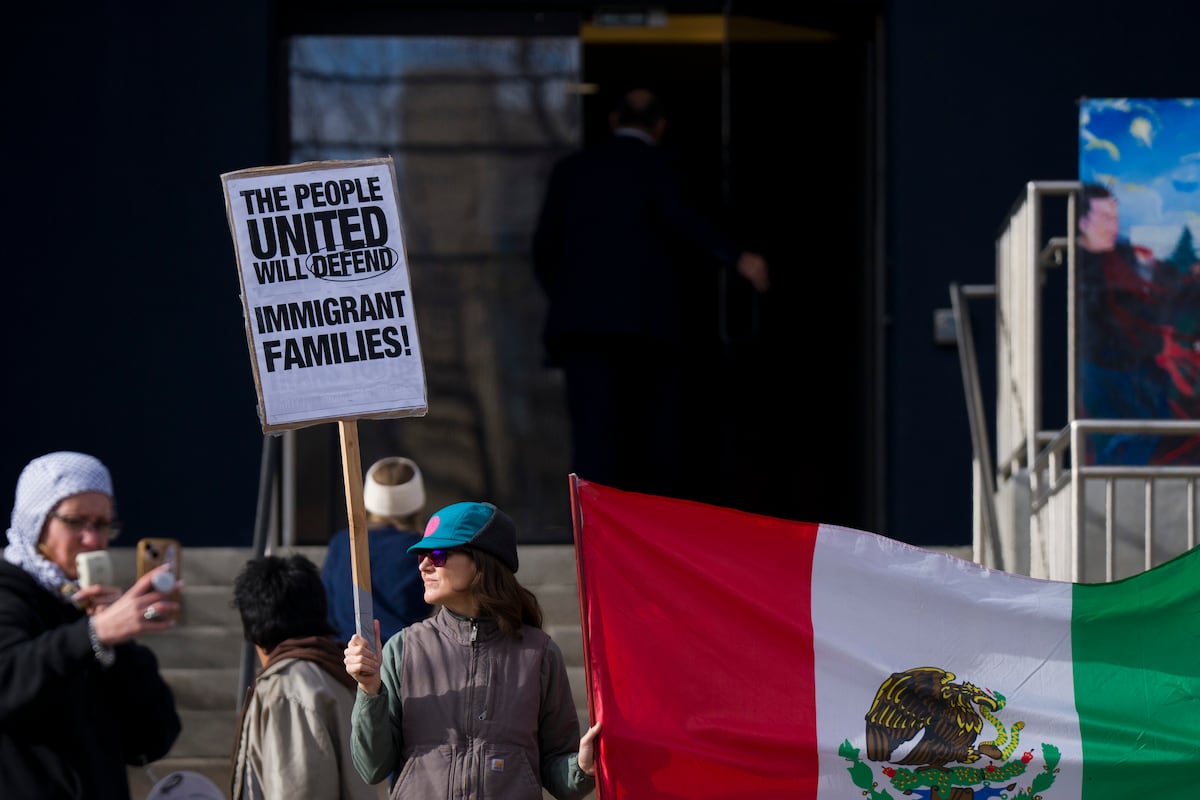
(Bethany Baker | The Salt Lake Tribune) Protesters gather outside of the U.S. Citizenship and Immigration Services building in Salt Lake City on Monday, Dec. 8, 2025.
Immigration is often reduced to quotas, statistics, deportations and walls, when at its core it is a test of moral character.
Beneath every policy dispute lies a deeper ethical question: What kind of nation, and what kind of state, will we choose to be? Each generation must answer that question anew.
Today, both nationally and here in Utah, our answer reveals a troubling failure of moral responsibility.
I teach philosophy and ethics at a local university, where several of my students are immigrants or the children of immigrants. They are here legally yet remain traumatized by the immigration policies of the Trump era. Others have family members or close friends living in fear, afraid that a traffic stop, a workplace visit or a routine check-in could lead to separation.
These fears are not abstract. They sit in my classroom. They shape students’ sense of safety, belonging and trust in the society they are trying to serve.
Utah is not immune from this reality. Immigrants are woven deeply into the fabric of our state. They harvest our crops, build our homes, care for our elderly, staff our hospitals and sit beside our children in classrooms. In agriculture, construction, healthcare and service industries, immigrant labor is not marginal. It is essential. Yet fear-driven immigration policies undermine these communities, harming not only the most vulnerable but also the social and economic health of Utah itself.
The immigration policies implemented during the Trump administration placed many individuals and families in unsafe and degrading conditions, spreading hardship and fear while showing no credible evidence of improving security or overall well-being. Even those with legal status have been swept into a climate of suspicion and intimidation. The result has been a loss of talent, creativity and service. Communities suffer morally and practically, losing educators, healthcare workers, artists, entrepreneurs and caregivers who stabilize and enrich our shared life.
A just immigration system must reflect both compassion and responsibility: compassion for those seeking refuge and opportunity, and responsibility to create fair, orderly and humane processes that serve the common good. These are not opposing values. They are complementary moral commitments.
To understand what must change, we must recall what immigration has meant, and continues to mean, to us. America’s strength has always rested in renewal. Immigrants have fueled innovation, labor and resilience, contributing to our economy, culture and civic life. Utah’s own growth tells this story clearly. Immigrants, whether documented or undocumented, contribute every day to our communities and deserve to be treated with dignity and respect.
A humane immigration policy is not only a practical necessity. It is a moral obligation. The call to welcome the stranger runs deep through our religious traditions, philosophical heritage and shared ethical ideals. History reminds us that, except for Indigenous peoples, nearly all our ancestors were once migrants and refugees, fleeing violence, famine, persecution or poverty. They relied on the kindness of strangers and the promise of opportunity. That moral inheritance binds us still.
To reject immigrants is, in a profound sense, to reject our own story. Hospitality is not mere charity. It is a civic and moral duty. A society guided by its highest principles does not see migrants as threats to be contained or problems to be managed, but as human beings, parents, children and neighbors, capable of contributing to the common good when welcomed with dignity.
Immigration is not a peripheral issue. It is central to the moral health of our democracy and the integrity of our communities. The way we treat the stranger among us reveals whether our professed values still live within us. Utah prides itself on faith, family and responsibility to community. Those values demand more than fear and exclusion. They require a moral condemnation of the immoral Trump immigration policies.
The renewal America needs, and that Utah can help model, is one that replaces fear with fairness and suspicion with solidarity. By modernizing our immigration laws, creating earned pathways to legal status, protecting children and families, managing borders with humanity, and partnering internationally to address the root causes of migration, we can build a system that reflects both compassion and responsibility.
In welcoming the stranger, we do not weaken ourselves. We strengthen the moral foundations of our communities and remain faithful to the ideals we claim to cherish. Immigration, rightly understood, is not a threat to our future. It is part of how we secure it. In welcoming the stranger, we become who we are meant to be — a shining city on a hill.
(Jeffrey Nielsen) Jeffrey Nielsen teaches philosophy and ethics at Utah Valley University and is the author of the forthcoming book “Charter 2026: A Proposal for National Renewal.”
Jeffrey Nielsen teaches philosophy and ethics at Utah Valley University and is the author of the forthcoming book “Charter 2026: A Proposal for National Renewal.” The views expressed here are solely the opinion of its author and do not reflect the views of Utah Valley University.
The Salt Lake Tribune is committed to creating a space where Utahns can share ideas, perspectives and solutions that move our state forward. We rely on your insight to do this. Find out how to share your opinion here, and email us at voices@sltrib.com.